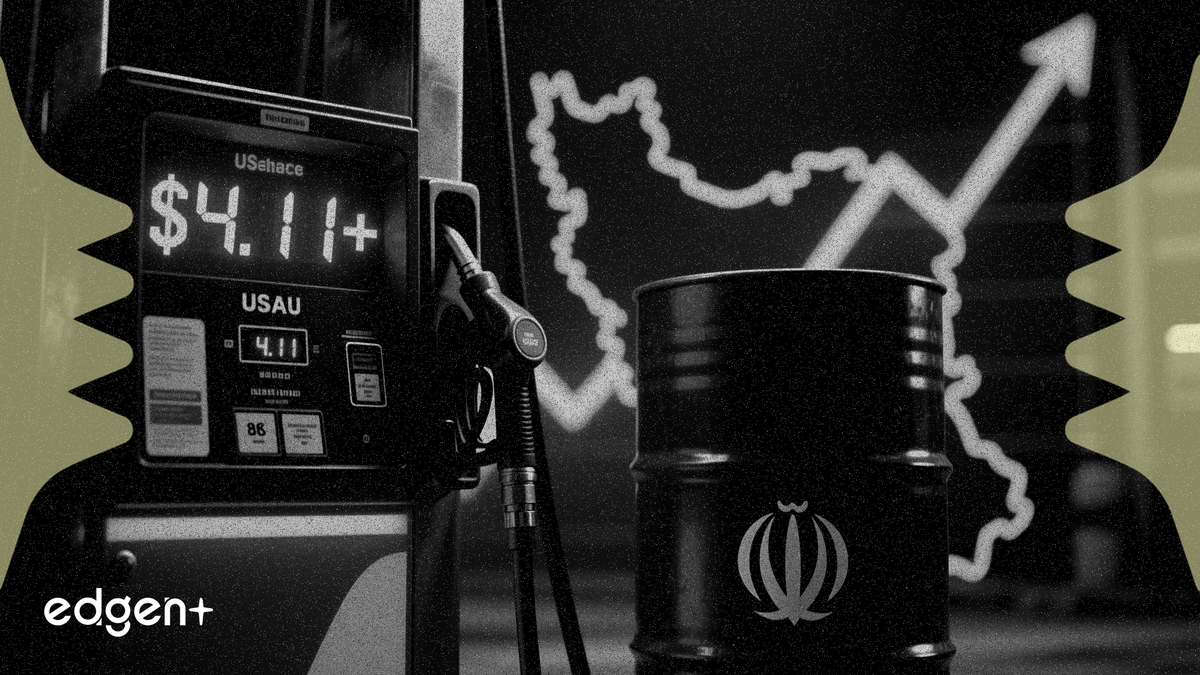
A flare-up in geopolitical tensions with Iran is sending fresh inflation shocks through the U.S. economy, pushing the national average for gasoline to $4.11 a gallon and threatening to complicate the Federal Reserve's policy path.
"The oil market is pricing in a significant risk premium after the latest rhetoric," said John Hess, a senior analyst at the Energy Policy Research Foundation, in a note. "We are seeing a direct pass-through to consumers at the pump, which could dampen discretionary spending if sustained."
The impact was immediate across energy markets. West Texas Intermediate (WTI) crude for May delivery surged 3.2% to $90.50 a barrel, its highest level since October 2025. In California, the effects were more pronounced, with diesel prices in San Francisco crossing the $8 a gallon threshold. The move triggered a risk-off tone in broader markets, with the S&P 500 transportation index falling 1.5% on fears of higher fuel costs.
The sustained price increase puts pressure on the upcoming Consumer Price Index (CPI) reading and complicates the Federal Reserve's next move. While the central bank has signaled a pause, markets are now watching if energy-driven inflation will force a more hawkish stance, potentially delaying any planned rate adjustments for the second half of 2026.
The sharp increase follows a fresh warning issued by former President Trump regarding Iran, which has historically led to volatility in energy markets. The last major geopolitical event in the region in 2024 saw WTI crude spike by 15% over two weeks, leading to a measurable, albeit temporary, slowdown in consumer spending.
Current U.S. commercial crude inventories, reported last week by the Energy Information Administration (EIA), were already 2% below the five-year average for this time of year, providing a tight backdrop for the price surge. The U.S. rig count has also remained flat, suggesting that a rapid supply response from domestic producers is unlikely. This combination of tight supply and renewed geopolitical fears creates a firm floor for prices in the near term.
For consumers, the pain is immediate. The $4.11 average represents a 20% increase from the same period last year and adds a significant burden to household budgets. The impact is disproportionately felt in the logistics and transportation sectors, where fuel is a primary operating cost, potentially leading to higher prices for goods and services in the coming months.
This article is for informational purposes only and does not constitute investment advice.