
Key Takeaways:
- US, EU sign MOU to secure critical mineral supply chains.
- Pact aims to reduce dependence on China, which dominates processing.
- Joint measures may include price floors and coordinated stockpiling.
Key Takeaways:
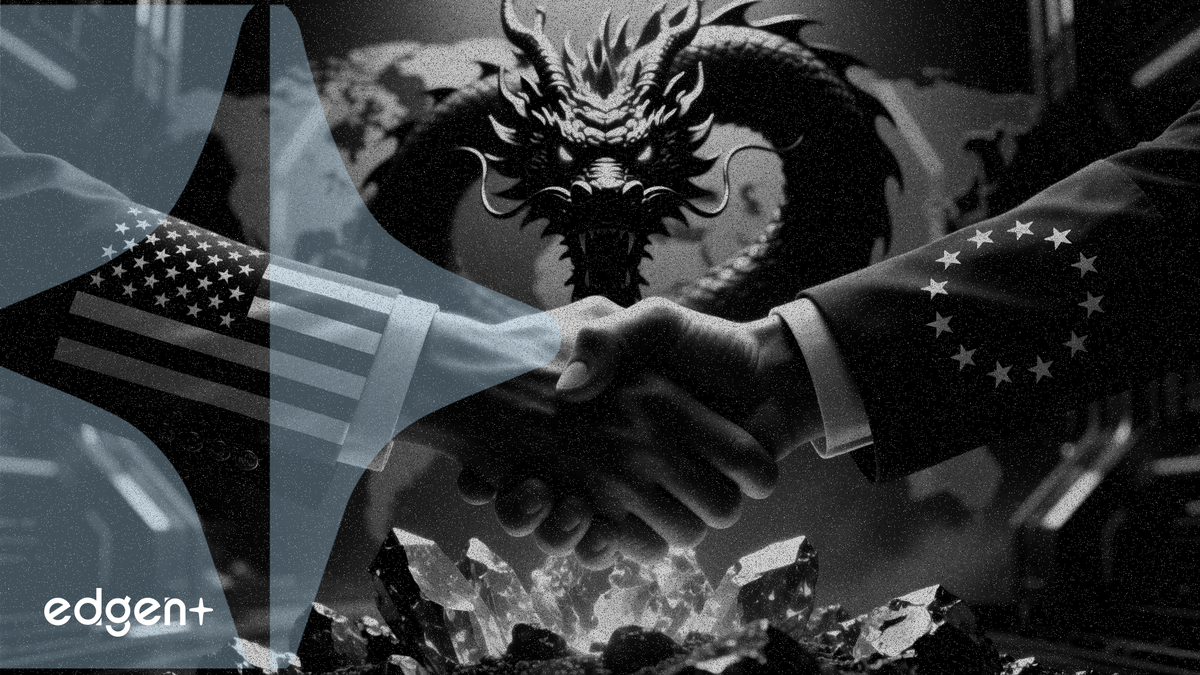
The United States and European Union launched a partnership to secure critical mineral supply chains, aiming to reduce their dependence on China for materials vital to the defense, semiconductor, and electric vehicle industries. The agreement, signed in Washington D.C. on Friday by U.S. Secretary of State Marco Rubio and EU trade chief Maros Sefcovic, establishes a framework for cooperation on everything from extraction to recycling.
"The overconcentration of these resources, the fact that they're dominated by one or two places, is an unacceptable risk," Rubio said at the signing. The move reflects a growing concern in Western capitals over supply chain vulnerabilities, particularly after Beijing has previously restricted exports of certain minerals during times of tension.
The partnership will explore several concrete measures, including setting minimum prices to prevent market flooding by state-subsidized producers, coordinating on subsidies and strategic stockpiles, and aligning standards to facilitate trade. U.S. Trade Representative Jamieson Greer and Sefcovic also outlined an action plan to coordinate trade policies, with the goal of forming a broader, binding plurilateral agreement.
For the EU, the pact is a direct lesson from its recent energy crisis. "For us, it's really a matter of economic security. It's a matter of overcoming dependencies," Sefcovic said, referencing the high cost of relying on Russian fossil fuels. "We simply want to learn from that experience and have a much more diversified portfolio of suppliers." The last major transatlantic trade agreement focused on critical minerals was the Atlantic Charter in 1941, which sought to secure resources during World War II and underscores the historical significance of the new pact.
The agreement is a clear response to China's long-standing dominance in the sector. While not always named directly, "non-market practices" were a key theme. China currently accounts for an estimated 85 percent of global rare earth processing and a significant majority of other critical minerals like magnesium and gallium. This concentration gives Beijing significant leverage over global supply chains.
The action plan will address these practices by exploring border-adjusted price floors and long-term offtake agreements for specific minerals. These measures are designed to create a more predictable and stable market for Western firms, encouraging private investment in domestic mining, processing, and recycling. Pilot projects under the new framework are expected to be launched before the end of the year.
This article is for informational purposes only and does not constitute investment advice.