
A conflict-driven closure of the Strait of Hormuz has rerouted global energy flows, cementing the US as the world’s top exporter and pushing its export infrastructure to its limits.
A conflict-driven closure of the Strait of Hormuz has rerouted global energy flows, cementing the US as the world’s top exporter and pushing its export infrastructure to its limits.
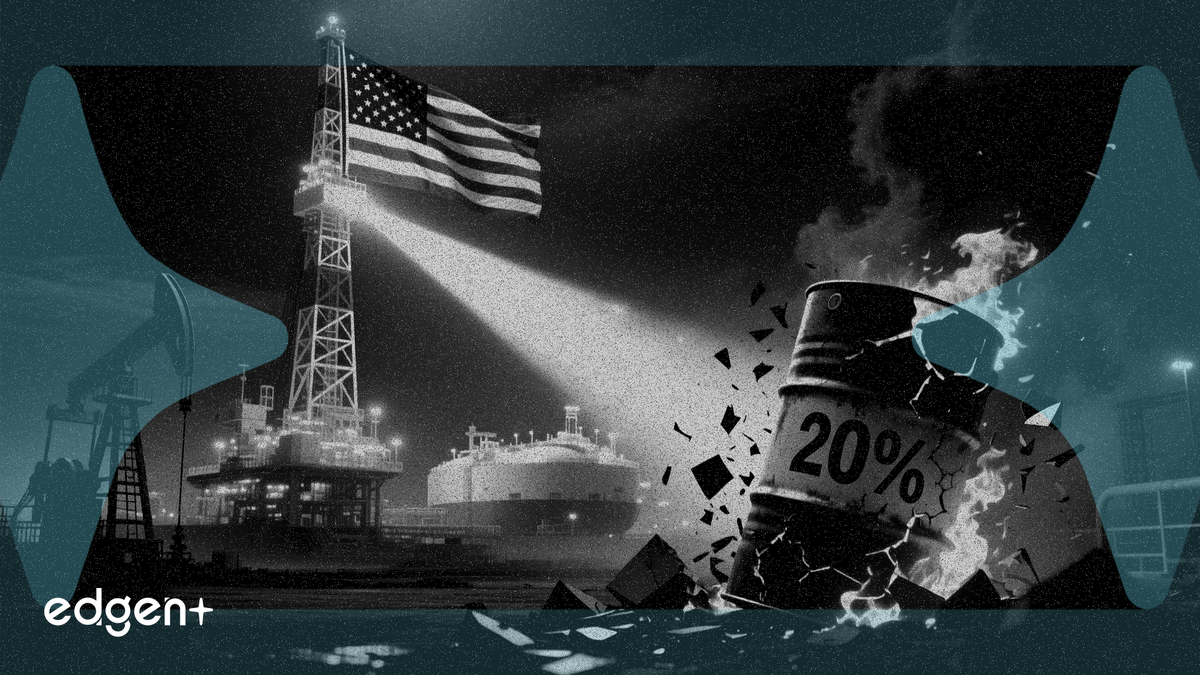
The United States has become the world’s indispensable energy supplier, with crude oil and LNG exports hitting record highs in April after a regional war in the Middle East shut down a waterway responsible for 20% of global supply.
“Should trade and shipping remain curtailed by more than a few weeks from today, we anticipate the supply disruption to persist, and the market to normalize only in 2027,” Saudi Aramco Chief Executive Officer Amin Nasser said in a statement.
The disruption sent Brent crude prices soaring to a peak of $138 a barrel in early April, though they have since moderated to around $106. The surge in demand for non-Gulf supply saw US commercial crude inventories fall by 2.3 million barrels last week, according to the Energy Information Administration.
With the Strait of Hormuz expected to remain closed through May, the world’s reliance on US barrels is set to intensify, testing the limits of American export capacity and reshaping global energy trade for years to come. The key question is whether the US can sustain this pace without impacting its own domestic supply.
The transformation of the US into the world’s leading energy exporter is the culmination of a two-decade shale boom. This domestic oversupply has now become a critical safety valve for global markets, particularly after the war in Iran, which began with US-Israeli strikes on February 28, effectively closed the Strait of Hormuz. The closure has stranded roughly a fifth of the world’s oil and liquefied natural gas supply.
In response, US export volumes have surged. The Port of Corpus Christi, the primary outlet for Texas’s Permian Basin, reported a record month of shipments in March, and national crude exports reached a new high in April. Shipments of refined products like gasoline and diesel also soared to a record last month.
The LNG market has seen a similar pivot. US export capacity, which grew by 900 million cubic feet per day in April with the opening of the Golden Pass LNG terminal in Texas, is being fully utilized. Buyers in Europe and Asia, cut off from Qatari cargoes, are turning to the US. LSEG data showed that South Korea, Spain, Italy, and France each bought at least 50% more US LNG in March than in February.
“The question arises as to how long the U.S. can maintain this high pace of exports without jeopardizing its own security of supply,” Commerzbank analyst Norman Liebke wrote in a recent note to clients.
The conflict has triggered a complex geopolitical response. The Trump administration is preparing for a summit with Chinese President Xi Jinping, even as it imposes new sanctions on Chinese and UAE companies accused of facilitating Iran’s oil trade. China, the largest buyer of Iranian crude, saw its imports drop by 2.4 million barrels per day in April as it struggled with sourcing.
Meanwhile, hopes for a de-escalation that could reopen the strait remain tentative. Iran is reportedly considering a US proposal to end the fighting, which has seen oil prices swing with every headline. Brent crude, which lost almost 8% in one session on peace hopes, has remained volatile, trading near $110 per barrel as the ceasefire appears fragile.
The supply shock has also hit other producers. OPEC’s collective output fell by 830,000 barrels per day in April, with Kuwait posting the largest drop, according to a Reuters survey. This has forced major buyers to seek alternatives, with Iraq slashing its prices to Asia to compete for market share.
This article is for informational purposes only and does not constitute investment advice.
