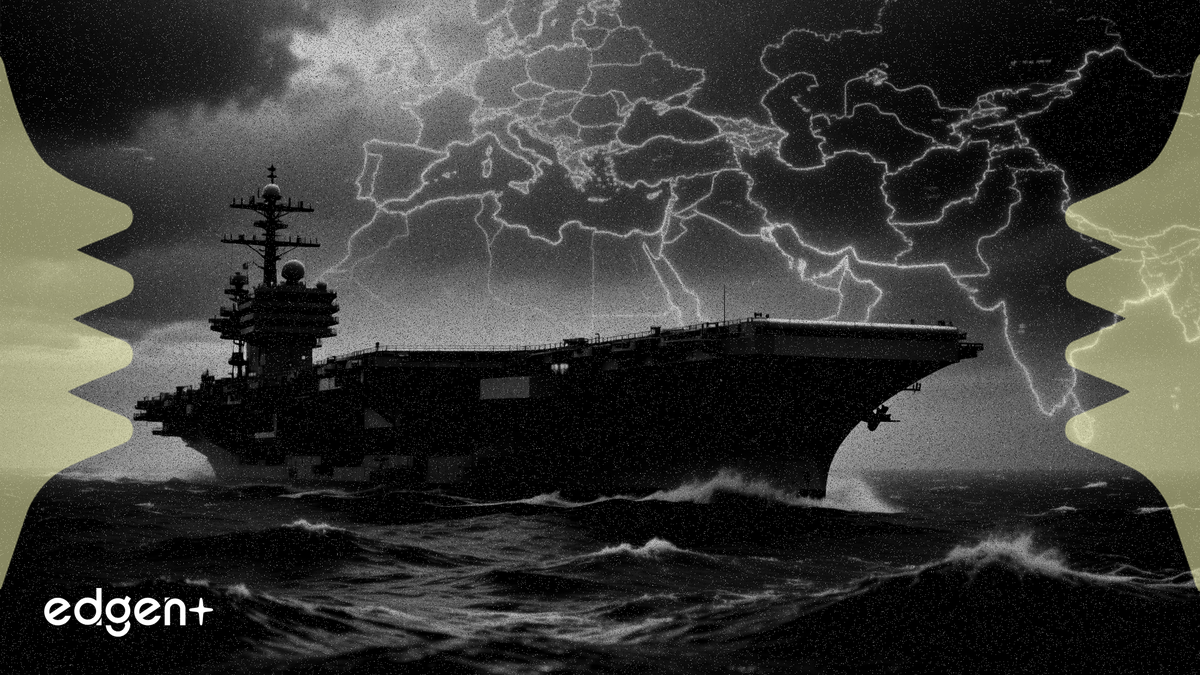
(P1) The United States dispatched a third aircraft carrier strike group to the Middle East on March 31, a major force projection aimed at Iran that immediately raises the geopolitical risk premium for global markets. The USS George H.W. Bush departed from Norfolk, Virginia, and is expected to join two other carrier groups, the USS Lincoln and USS Ford, already tasked with operations related to Iran.
(P2) "The deployment of a third carrier is a significant force multiplier and sends an unambiguous signal," said a former senior Pentagon official. "It provides redundant, persistent combat power and a strong deterrent message to any potential adversary."
(P3) The move comes as the USS Ford undergoes repairs in Croatia, leaving its immediate operational status uncertain. The addition of the Bush carrier group ensures a constant two-carrier presence, a heightened posture not seen in the region for several years. This escalation will likely trigger a rise in crude oil prices, with Brent crude potentially testing the $90 per barrel mark, and could cause a rally in defense contractor stocks like Raytheon and Lockheed Martin.
(P4) The concentration of three US carrier strike groups—a naval force of more than 15,000 sailors and dozens of warships and aircraft—dramatically increases the potential for miscalculation in the Strait of Hormuz, a chokepoint for 21% of global oil consumption. Markets will now be pricing in a higher probability of direct military confrontation, with the next two to three weeks being critical as the USS Bush travels to the region.
Heightened Risk in the Strait of Hormuz
The immediate market impact is centered on the global energy supply. The Strait of Hormuz is the world's most important oil chokepoint, and the increased military presence raises the specter of supply disruptions. Previous escalations in 2019 saw oil prices spike more than 10 percent in a single day. Investors will be closely watching for any Iranian response, such as naval exercises or rhetoric, which could add further volatility to energy markets.
Beyond oil, the deployment signals a broader risk-off sentiment. Investors may rotate out of equities and into safe-haven assets like gold and US Treasury bonds. The CBOE Volatility Index (VIX), often called the market's "fear gauge," is likely to rise from its current subdued levels. The situation creates a complex dynamic for the Federal Reserve, as a surge in oil prices could complicate its efforts to control inflation while navigating a slowing economy.
This article is for informational purposes only and does not constitute investment advice.