
Mediators are racing to extend a fragile truce set to expire on April 22, as a US naval blockade of Iranian ports threatens to reignite a conflict that has already sent shockwaves through global energy markets.
Mediators are racing to extend a fragile truce set to expire on April 22, as a US naval blockade of Iranian ports threatens to reignite a conflict that has already sent shockwaves through global energy markets.
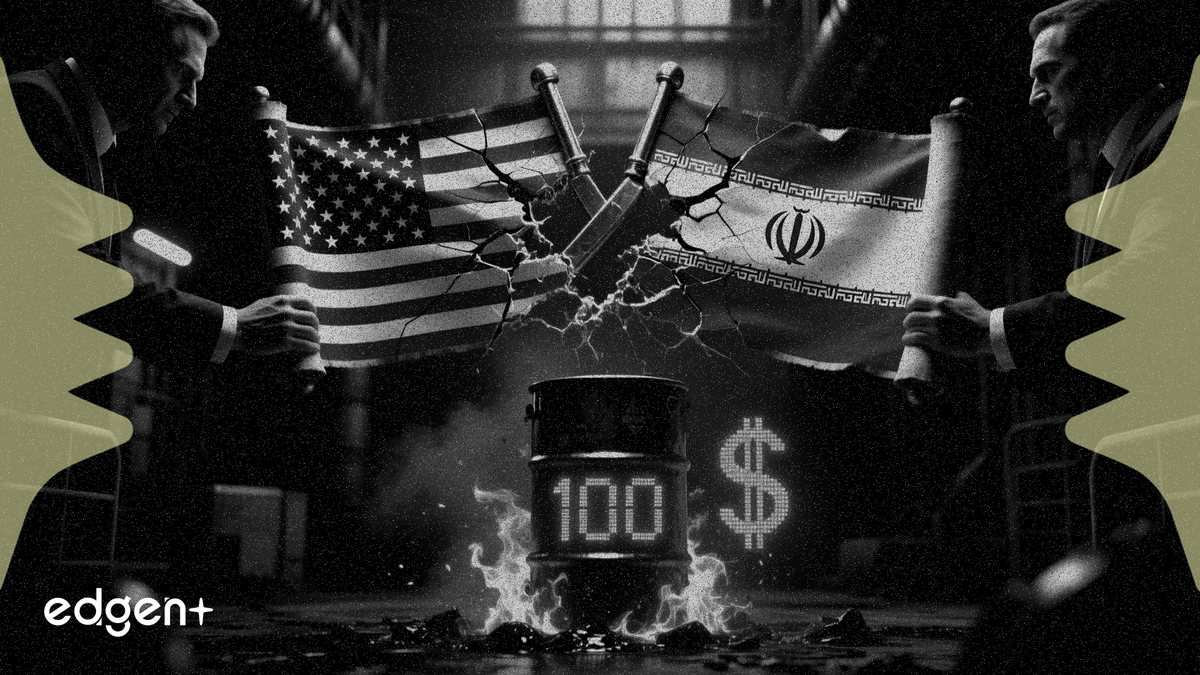
The United States and Iran are considering a two-week extension to their ceasefire agreement, buying time for further negotiations as a US naval blockade of the Strait of Hormuz enters its first full day. Oil prices pulled back from session highs on hopes for a diplomatic breakthrough, with Brent crude settling around $99 a barrel after briefly topping $103.
"The game is on," a Pakistani official involved in the mediation efforts said Tuesday, telling the Associated Press that both sides have given an "in principle agreement" to extend the ceasefire. A White House spokesperson, however, stated the U.S. has not formally requested an extension but confirmed that "engagement with Iran continues."
The standoff has injected fresh volatility into markets. Brent crude, the global benchmark, settled at $99.36 a barrel, while West Texas Intermediate crude ended the session at $99.08. This follows a surge that saw prices top $119 a barrel last month after Iran’s near-total closure of the strait, a waterway that handles about a fifth of the world’s oil supply. US Central Command reported Tuesday that its blockade of Iranian ports was "fully implemented," with at least six merchant vessels directed to turn back.
With the current two-week ceasefire expiring on April 22, failure to secure an extension could lead to a swift resumption of hostilities, further endangering global energy supplies and risking a wider regional conflict. Mediators are focused on finding a compromise on key sticking points, including the future of Iran's nuclear program and its demand for war reparations, before the deadline.
The primary obstacle in the first round of talks in Islamabad was Iran's nuclear program. According to US reports, Vice President JD Vance’s delegation demanded a 20-year suspension of Iran's uranium enrichment, a non-starter for Tehran, which reportedly offered a moratorium of less than 10 years. An Iranian official accused the US of making "maximalist demands," stating Iran "will not surrender behind the table."
Another unresolved issue is Iran's stockpile of highly enriched uranium (HEU), which is believed to be close to weapons-grade. While Iran had previously offered to dilute the HEU, the US has called for its complete removal. Russia’s Foreign Minister Sergey Lavrov stated Wednesday that Moscow was ready to help by reprocessing the uranium or storing it, while affirming Iran's "inalienable right" to enrich uranium for peaceful purposes.
Pakistan has emerged as a key mediator, with Prime Minister Shehbaz Sharif embarking on a trip to Saudi Arabia, Turkey, and Qatar to build support for the peace process. The diplomatic push has been bolstered by financial support, with Saudi Arabia announcing it will deposit $3 billion into Pakistan’s central bank to help stabilize its economy amid the regional turmoil.
Other nations are also feeling the economic fallout. Japan announced a $10 billion financial support fund for Southeast Asian nations struggling with surging oil prices, while South Korea has secured emergency fuel deals with Gulf states to mitigate the impact. The conflict has created winners as well; Norway, a major oil and gas producer, reported record-high export revenues of nearly 200 billion kroner ($21 billion) in March, driven by the supply shock.
The conflict's ripple effects continue to be felt in Lebanon, where Israel has continued strikes against Hezbollah targets despite the first direct talks between the two countries in decades. The fighting there has displaced more than 1 million people, according to Lebanese officials.
This article is for informational purposes only and does not constitute investment advice.