
Direct negotiations between Washington and Tehran are set to begin in Islamabad as soon as this week, following a Pakistan-brokered ceasefire that sent oil prices down 16%.
Direct negotiations between Washington and Tehran are set to begin in Islamabad as soon as this week, following a Pakistan-brokered ceasefire that sent oil prices down 16%.
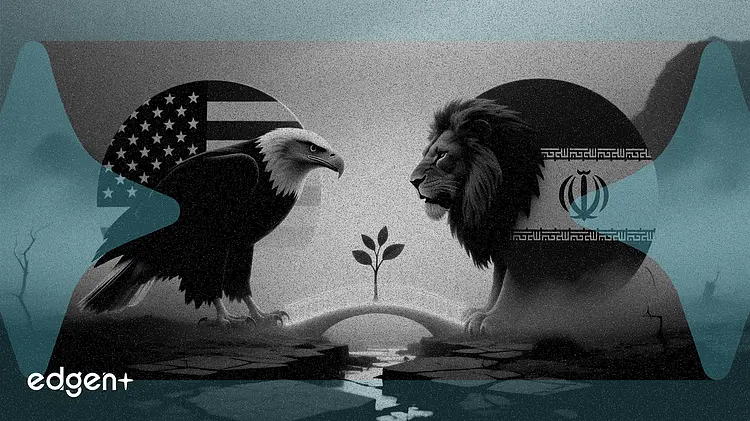
United States and Iranian officials are expected to hold their first face-to-face negotiations in Islamabad as soon as this week, a significant diplomatic step after a Pakistan-brokered ceasefire temporarily halted more than five weeks of military conflict. The talks aim to build a long-term peace agreement after the truce caused the biggest one-day drop in oil prices since the 1991 Gulf War.
Iran’s ambassador to Pakistan, Reza Amiri Moghadam, said Tuesday that Islamabad’s "positive and productive endeavours" were approaching a "critical, sensitive stage." The statement was the clearest public signal from Tehran that the intensive mediation efforts, which also involved Turkiye, Saudi Arabia and Egypt, were advancing beyond preliminary discussions.
The breakthrough follows President Trump’s announcement of a two-week ceasefire, which sent global crude prices tumbling. Brent crude futures fell roughly 16% to about $93 a barrel, while the U.S. benchmark WTI dropped 19% to about $92 a barrel. The war had previously driven the physical price of Dated Brent to a record $144.42 as the de facto closure of the Strait of Hormuz choked off nearly a fourth of the world’s seaborne oil trade.
At stake in the upcoming talks is whether a durable peace agreement can be reached to formally end a conflict that has assassinated senior Iranian leaders and disrupted 7.5 million barrels per day of crude production from Middle East producers. President Trump confirmed the talks were expected "very soon" and that the U.S. delegation may include special envoy Steve Witkoff and his son-in-law Jared Kushner.
A central figure in the backchannel negotiations has been U.S. Vice President JD Vance. While Vance is not expected to attend the Islamabad talks due to security concerns, according to President Trump, his involvement was crucial in bringing the parties to the table. Iran had reportedly grown to distrust previous negotiators Witkoff and Kushner after pre-war talks in Geneva were followed by a U.S.-Israeli attack that killed Supreme Leader Ali Khamenei.
Tehran views Vance as more sympathetic to ending the conflict, given his past arguments against new wars in the Middle East, according to analysis from Al Jazeera. As a senator in 2023, Vance argued that avoiding foreign entanglements was key to Trump's success. This perception made him a more justifiable negotiating partner for Iran's leadership, which is navigating internal power struggles following Khamenei's death.
For Vance, who is widely seen as a frontrunner for the 2028 Republican presidential nomination, positioning himself as a key figure in ending the war could balance his loyalty to Trump with his long-held skepticism of prolonged overseas conflicts. The success or failure of the Islamabad talks will serve as a major test of his diplomatic influence.
The negotiations are expected to follow a framework for a sequenced de-escalation, beginning with confidence-building measures. If those steps hold, a formal and permanent ceasefire could be established, allowing for the full reopening of the Strait of Hormuz and the restoration of global energy supply chains.
This article is for informational purposes only and does not constitute investment advice.