
The US and Iran finalized a peace deal after more than 100 days of war, sending gold to a weekly high as markets weigh the terms.
The US and Iran finalized a peace deal after more than 100 days of war, sending gold to a weekly high as markets weigh the terms.
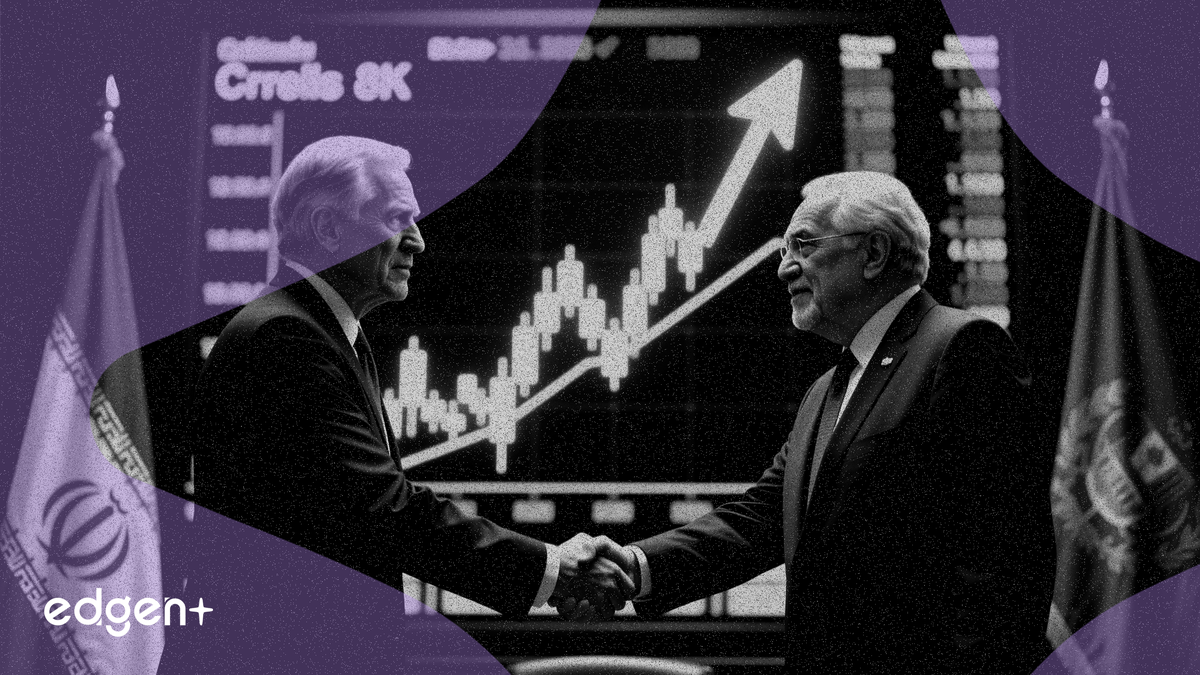
The United States and Iran have reached an agreement to end their war, with an official signing ceremony set for Friday in Switzerland, Pakistani Prime Minister Shehbaz Sharif announced Monday. The deal calls for "the immediate and permanent termination of military operations on all fronts, including in Lebanon," Sharif said on social media, while President Donald Trump confirmed the pact on Truth Social, declaring the Strait of Hormuz would be open "toll free" and the US naval blockade would end.
"The Iranians are not agreeing to this for nothing," a senior Israeli official told Channel 12, warning the terms "endanger Israel's security interests." The official noted that Iran is "paying on credit," with Tehran only agreeing to discuss its nuclear program once the war formally ends and conditions including the release of frozen funds are met.
Under the draft deal, the US would release $25 billion of frozen Iranian assets while Iran agrees not to produce or acquire nuclear weapons, a senior Iranian official told Reuters. The agreement extends the current ceasefire by 60 days, during which technical talks will address Iran's nuclear program, including its stockpile of highly enriched uranium buried under rubble at sites bombed by the US in June 2025. Iran has agreed to maintain the nuclear status quo with no uranium enrichment or expansion of nuclear facilities until a final deal is reached.
The Strait of Hormuz, through which about a fifth of the world's oil supplies are shipped, has been blockaded by Iran since February, charging tolls for vessels seeking passage and attacking others that tried to pass. The US responded by blockading Iranian ports, halting Tehran's oil shipments. The reopening removes a major supply disruption risk that had added a geopolitical premium of roughly $10 to $15 per barrel to crude benchmarks, traders said.
Gold Rallies as Markets Digest Uncertainty
Gold rose to a weekly high as the announcement created a paradoxical market reaction: the resolution of a major conflict typically reduces safe-haven demand, but the deal's ambiguous terms and conflicting statements from Washington and Tehran injected fresh uncertainty. Trump said Saturday the deal would be signed Sunday, a claim Iran's Foreign Ministry immediately contradicted, with spokesperson Esmaeil Baghaei saying "the possibility of this happening in the coming days cannot be ruled out" but "it will not be tomorrow."
The last time a major Middle East peace framework faced such conflicting public statements from signatories was the 2020 US-Taliban agreement, where the initial announcement was followed by weeks of disputed interpretations before implementation stalled. The parallel has not been lost on traders pricing risk across energy, currency, and precious metals markets.
Israel Objects, Iran Protests
Israel, which was not party to the negotiations, has voiced deep objections. Prime Minister Benjamin Netanyahu, who differed with Trump over demands that Israel curb military action in Lebanon, plans to convene his security cabinet to discuss the agreement. Senior Israeli officials said the deal fails to address key war goals, including constraining Iran's ballistic missile program and ending its support for terror proxies.
In Iran, protests erupted Saturday in the northeastern city of Mashhad and in Tehran, with demonstrators chanting against chief negotiator Abbas Araghchi and parliament speaker Mohammad Baqer Qalibaf. "Death to the compromiser," some chanted, arguing the agreement does not serve Iran's interests and would deprive Tehran of leverage over the Strait of Hormuz.
The virtual signing — dubbed "the Zoom accords" by Axios reporter Barak Ravid — will include Pakistani and Qatari mediators alongside US and Iranian officials. Trump is scheduled to meet with the leaders of Egypt, Qatar, and the United Arab Emirates during the G7 summit in France on Tuesday to discuss demining the strait and post-war arrangements.
This article is for informational purposes only and does not constitute investment advice.
