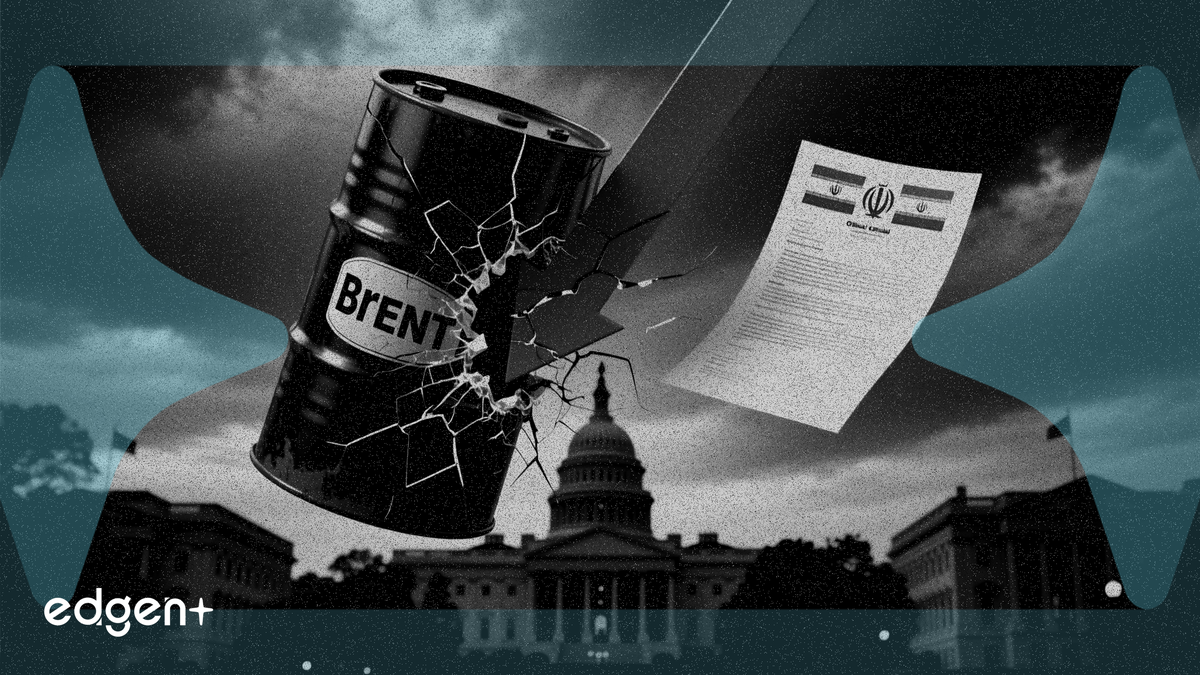
The United States and Iran are advancing toward a one-page memorandum to end their military conflict, a development that is easing tensions over global energy supplies.

The United States and Iran are nearing an agreement on a one-page memorandum to end their military conflict and establish a framework for detailed nuclear negotiations, with Brent crude prices falling on the prospect of a de-escalation.
"We’re in good shape," President Donald Trump told reporters at the White House, adding that he felt there was a "very large" possibility of a deal. "We're dealing with people that want to make a deal very much. We’ll see whether or not they can make a deal that’s satisfactory to us."
According to sources familiar with the proposal, the memorandum would trigger a 30-day negotiation period to resolve key issues. The framework reportedly includes the gradual reopening of the Strait of Hormuz and the lifting of some US sanctions in exchange for Iran pausing its uranium enrichment program. Iran is expected to deliver its official response via Pakistani mediators within days.
The diplomatic push comes as rising energy costs and falling approval ratings increase pressure on the Trump administration to find an off-ramp to the conflict. US retail gasoline prices have surpassed $4.50 a gallon for the first time since July 2022, according to the American Automobile Association, putting price pressures at the center of voter concerns just six months before midterm elections.
The potential agreement aims to break a dangerous stalemate in the Strait of Hormuz, a critical artery for global trade. About 1,600 ships remain stuck in the waterway, with shipping companies unwilling to risk transit after 32 vessels were hit with missiles since the war began, resulting in 10 deaths, according to the International Maritime Organization. The US has maintained what Trump calls a "wall of steel" blockade around Iranian ports, and recently disabled an Iranian-flagged tanker attempting to breach it.
French President Emmanuel Macron has called for all parties to lift the blockade "without delay and without conditions," and encouraged the formation of a multinational mission to secure the waterway.
Despite Trump’s optimism, Iranian officials have sent mixed signals. Professor Seyed Mohammad Marandi, in an interview with India Today, claimed Iran holds the upper hand and insisted that the country’s enriched uranium stockpile "is not leaving the country" under any circumstances. This contradicts reports that a potential deal would require Tehran to ship its enriched uranium to the US.
Meanwhile, Mohammad Ghalibaf, Iran's parliament speaker and a key negotiator, warned Iranians of a "hard road ahead" and urged them to practice "saving and frugality," suggesting the US intends to break the country through economic pressure.
The prospect of a US-Iran agreement has sparked alarm in Israel. Prime Minister Benjamin Netanyahu held talks with Trump administration officials to understand the latest developments, receiving assurances that Washington's primary goal remains the removal of nuclear material from Iran.
Still, an Israeli source said the country is concerned about potential last-minute US concessions. Netanyahu has reportedly instructed the Israel Defense Forces to prepare for all possible scenarios, including the potential to restart military operations if necessary. The concerns were heightened after an Israeli strike targeted a top Hezbollah commander in Beirut, the first such attack since a ceasefire in Lebanon was established.
This article is for informational purposes only and does not constitute investment advice.