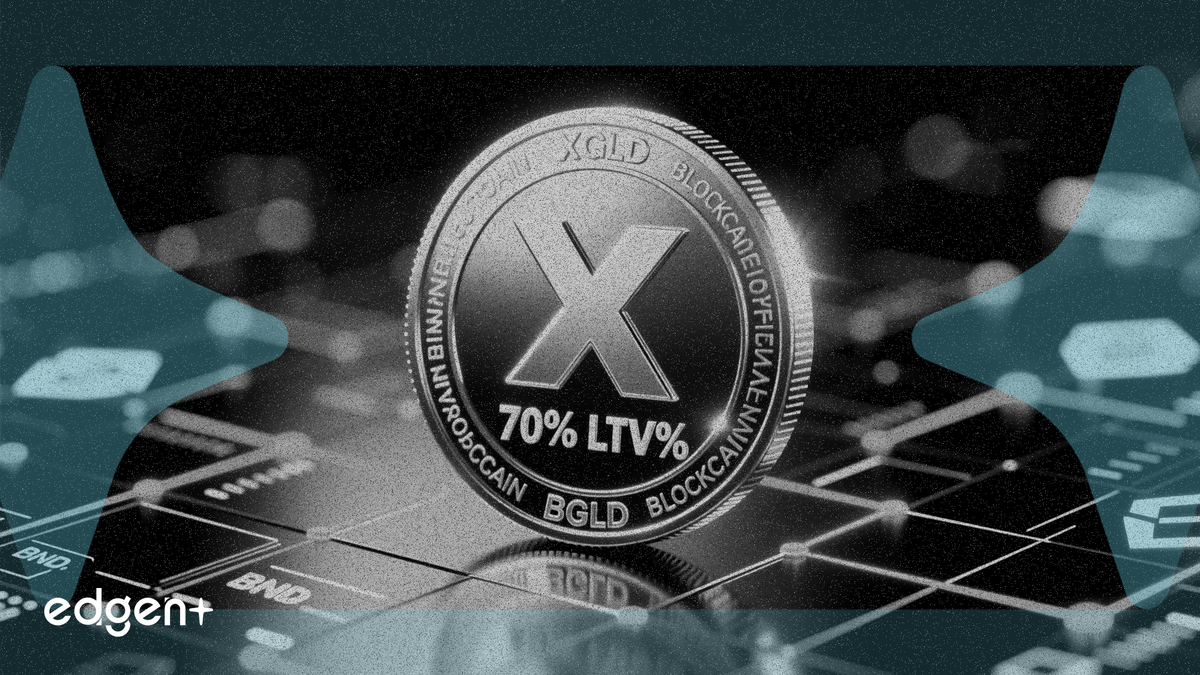
Unitas Labs launched XGLD on BNB Chain on June 3, a token backed 1:1 by Tether Gold that generates yield through DeFi lending strategies.
The protocol builds on infrastructure Unitas previously developed for USDu and sUSDu, a synthetic dollar token and its yield-bearing counterpart, according to the project's documentation. That architecture — collateralizing one asset to generate yield on a wrapped version — maps directly onto the XGLD model.
Each XGLD unit represents one troy ounce of physical gold stored in Swiss vaults, collateralized by Tether Gold (XAUt). Unlike simply holding XAUt in a wallet, XGLD generates yield through on-chain strategies. XAUt can be used to borrow stablecoins at up to 70% loan-to-value ratios, with those borrowed funds deployed into yield-generating DeFi strategies. Returns flow back to XGLD holders, meaning investors get gold price exposure plus yield without selling their gold position.
Unitas deployed natively on BNB Chain at the end of February, and Tether Gold debuted on the chain on March 26, giving the protocol the foundational building block it needed. The team previously built USDu and sUSDu before expanding into tokenized commodities. The BNB Chain ecosystem has seen growing interest in real-world asset tokenization, with protocols like Ondo Finance and Mountain Protocol also bringing yield-bearing products to the chain.
XGLD enters a market where gold-backed tokens have struggled to gain traction beyond niche use cases. Paxos Gold and PAX Gold have accumulated modest market caps relative to the broader crypto market, and the key challenge has always been that gold generates no yield on its own. XGLD attempts to solve that by layering DeFi yield on top of gold exposure, but the mechanism introduces complexity.
XGLD carries multiple layers of counterparty and smart contract exposure. Investors are trusting Tether to maintain XAUt's gold backing, Unitas Labs' smart contracts to manage collateralized borrowing without liquidation events, and the DeFi strategies to generate yield without losses that impair principal. The 70% LTV ratio is relatively aggressive — if gold prices drop sharply, positions could approach liquidation thresholds faster than they would with a more conservative ratio. Actual yield rates have not been publicly specified, and no trading volume or adoption data is available to gauge early market reception. Unitas has indicated plans to bring XGLD to Base using LayerZero's interoperability framework, though no specific timeline has been confirmed.
This article is for informational purposes only and does not constitute investment advice.