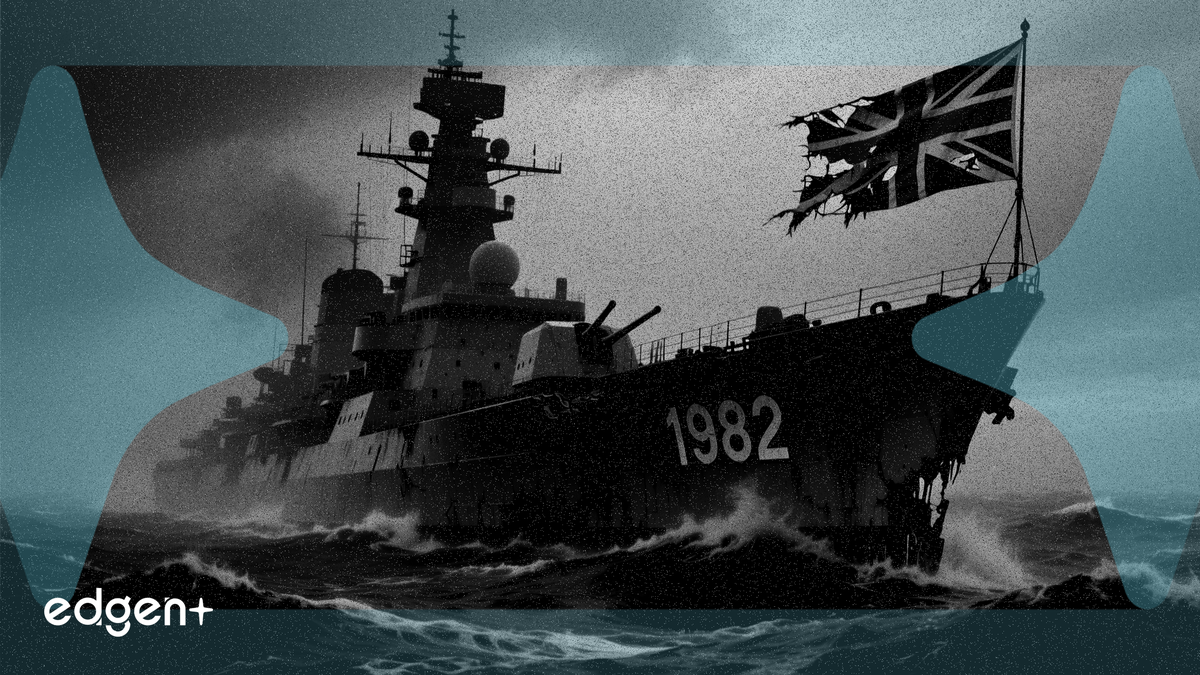
A recent letter to the editor in the Wall Street Journal argues that Great Britain's naval power has severely diminished, a development that carries significant geopolitical and economic risks. The piece contrasts the Royal Navy's capabilities during the 1982 Falklands War with its present-day struggles, suggesting a loss of will to project power and protect national interests on the global stage.
The author, Charles D. Eden of Atlanta, quotes Ronald Reagan’s 1982 speech to the British Parliament, where he praised the UK's fight for the principle that "armed aggression must not be allowed to succeed." Eden juxtaposes this with the current situation, stating the British military is now an "embarrassment" that struggles "to deploy the navy to the Mediterranean."
The letter points to the UK's perceived reluctance to counter Iran as evidence of this decline. This erosion of military strength, the author contends, renders the historic phrase "Britannia rules the waves" an "empty slogan." The last major naval conflict involving a G7 nation was the Falklands War, where the UK's naval power was decisive.
The implications of a weakened Royal Navy extend beyond military capability, potentially impacting the UK's geopolitical standing and its currency. A reduced ability to secure trade routes or respond to global crises could increase risk premiums for UK assets and exert long-term downward pressure on the British pound (GBP). This situation unfolds as other nations, including China, continue to expand their naval forces, shifting the global balance of power.
This article is for informational purposes only and does not constitute investment advice.