
A month-long surveillance operation by the UK and Norway has exposed a covert Russian mission to map critical undersea energy and data infrastructure, escalating tensions in the North Atlantic.
A month-long surveillance operation by the UK and Norway has exposed a covert Russian mission to map critical undersea energy and data infrastructure, escalating tensions in the North Atlantic.
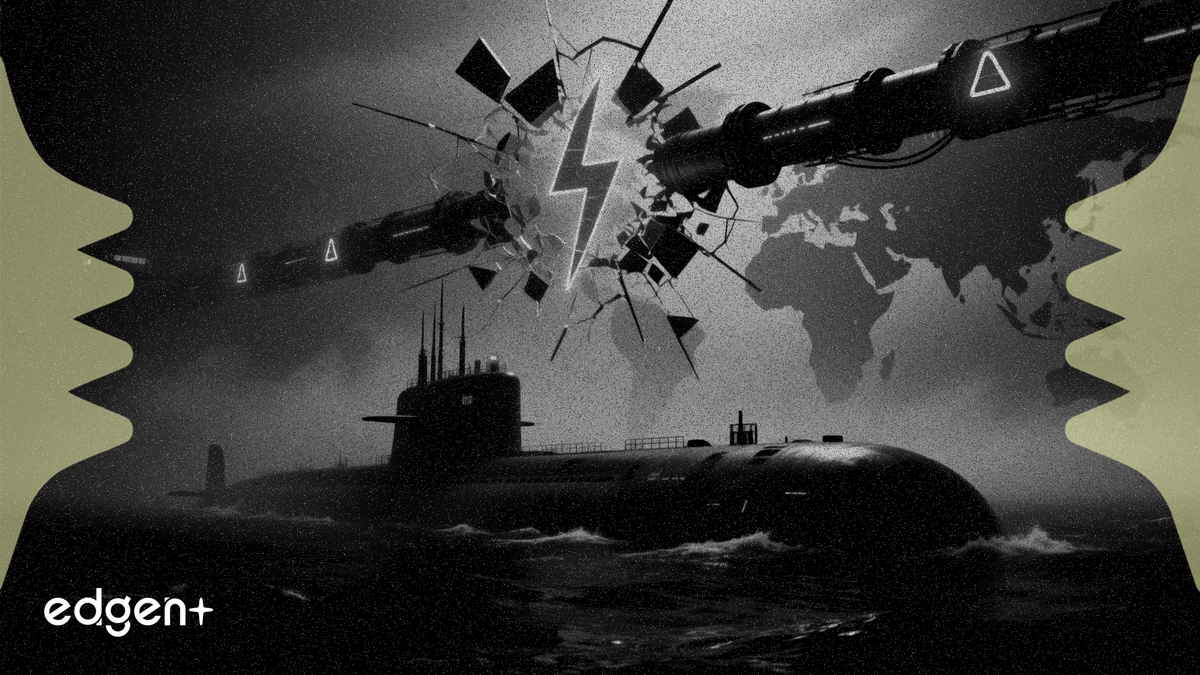
The United Kingdom’s military, in partnership with Norway, announced Thursday it successfully deterred a secret month-long Russian submarine operation targeting critical energy pipelines and communication cables, a move that heightens concerns over the security of Europe's 100,000km of undersea infrastructure.
"To Putin, I say this: we see you, we see your activity over our underwater infrastructure," UK Defence Secretary John Healey said at a news conference. "You should know that any attempt to damage it will not be tolerated and would have serious consequences."
The operation tracked three Russian vessels: an Akula-class nuclear-powered attack submarine acting as a decoy, and two specialist spy submarines from the Kremlin’s elite Main Directorate for Deep-Sea Research (GUGI). The joint UK-Norwegian response involved the frigate HMS St. Albans, aircraft, and hundreds of personnel, eventually forcing the Russian vessels to return to their base.
The incident raises the specter of sabotage against the undersea networks that carry 97 percent of global communications and trillions of dollars in daily financial transactions. For energy markets, the threat to pipelines like those connecting Norway to the UK and mainland Europe introduces a new geopolitical risk premium, with a successful attack capable of triggering severe price shocks and supply disruption.
The operation comes just months after the UK and Norway announced a new joint defense agreement in December to protect critical infrastructure with a combined fleet of at least 13 warships. British officials report that Russian naval activity near UK waters has increased by 30 percent in the past two years, reflecting a broader pattern of assertive Russian undersea operations.
NATO has repeatedly warned of Russia's decades-long program to map Western infrastructure. "The Russians are carrying out a programme they have had for decades... mapping out all of our cables and our energy pipelines," James Appathurai, NATO's senior expert on cyber and hybrid threats, told Euronews late last year. This latest incident provides a concrete example of the activity long suspected by Western intelligence.
The Russian vessels were from the secretive GUGI unit, which operates a fleet of specialized submarines designed for deep-sea espionage and sabotage. According to Norwegian Defense Minister Tore Sandvik, the activity was a clear reminder that Russia is developing its ability to sabotage critical Western infrastructure at ocean depths. The use of a nuclear attack submarine as a diversion highlights the sophistication and strategic planning behind the mission.
This is not the first encounter. Last year, the Russian spy ship Yantar, also linked to GUGI, was chased from British waters after lingering near undersea cables. The exposure of this three-vessel submarine operation, however, represents a significant escalation in both Russian intent and Western counter-measures.
The revelation sent a chill through European energy markets. While no damage was reported, the perceived threat to Norwegian gas pipelines, which are vital to the UK and continental Europe's energy security, could lead to increased volatility. The event may trigger a flight-to-safety in broader financial markets, potentially benefiting traditional safe-haven assets like gold and the US dollar while pressuring infrastructure and telecommunications stocks.
The UK and Norway are set to accelerate the integration of their naval forces, with eight British ships and five new Norwegian frigates expected to operate jointly along NATO's northern flank. The focus will be on "hunting Russian submarines," according to the UK government. For markets, the key question is whether this heightened state of alert is the new normal, with the associated risk premium permanently priced into North Sea energy assets.
This article is for informational purposes only and does not constitute investment advice.