

Key Takeaways:
- Uber shares hit a 52-week low of $68.00, down 19.9% over the past year
- Waymo and Tesla's autonomous driving advances are pressuring Uber's valuation
- Uber trades at 17x earnings with analysts seeing up to 83% upside to $150
Key Takeaways:
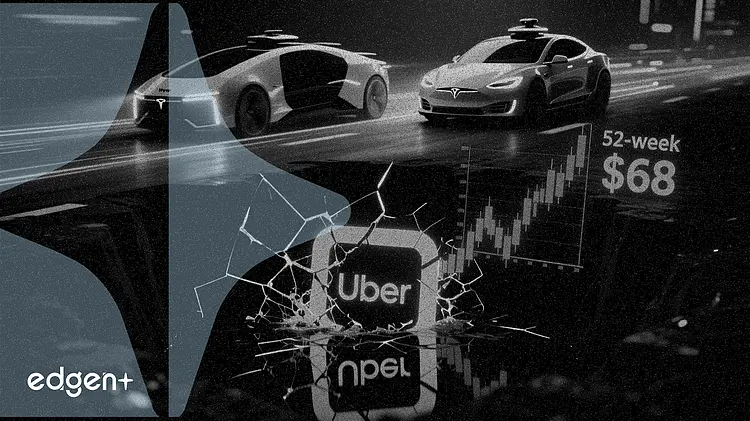
Autonomous driving rivals are closing in on Uber's rideshare dominance, and investors are pricing in the threat.
Uber Technologies Inc. shares tumbled to a 52-week low of $68.00 on Thursday, extending a 19.9% decline over the past year as fears that Alphabet Inc.'s Waymo and Tesla Inc. will capture market share in the autonomous rideshare market weighed on the stock. The $139.7 billion company now trades 33% below its 52-week high of $101.99.
"Uber is still in first place of the rideshare race, for now," said Megan Brantley, analyst at LikeFolio. "But the market is looking ahead to a world where autonomous fleets don't need a human driver, and that future is getting closer."
Uber's revenue grew 18% over the past year, and the stock trades at a price-to-earnings ratio of 17.08, a discount to the broader tech sector. Analysts at Guggenheim reiterated a buy rating with a $125 price target, citing expected benefits from the 2026 World Cup, which they estimate will boost Mobility Gross Bookings by 100 basis points in the second and third quarters. Bank of America analysts have said Uber is well-positioned to outperform during the current artificial intelligence cycle.
The competitive threat is materializing on multiple fronts. Waymo, owned by Alphabet, has expanded its commercial robotaxi operations in several U.S. cities and recently began testing in new markets. Tesla has promised to unveil its own robotaxi network, though a timeline remains unconfirmed. Uber has responded by opening a waitlist for its robotaxi service in London, allowing customers to express interest before a launch expected later this year. The company is also cutting less than 1% of its global workforce in a restructuring of its People and Places division.
For investors, the question is whether Uber's first-mover advantage in rideshare can survive the transition to autonomous fleets. The company's 18% revenue growth and $139.7 billion market cap reflect a still-dominant business, but the 33% discount from its 52-week high suggests the market is already assigning significant value to the autonomous threat. With Waymo expanding commercially and Tesla promising a robotaxi network, the next 12 months will be critical for Uber's valuation narrative.
This article is for informational purposes only and does not constitute investment advice.
