
The leadership crisis at $70 billion quant fund Two Sigma has escalated, with a newly appointed executive attempting to oust his co-CEO within two weeks of his arrival, revealing the persistent grip of its feuding founders.
The leadership crisis at $70 billion quant fund Two Sigma has escalated, with a newly appointed executive attempting to oust his co-CEO within two weeks of his arrival, revealing the persistent grip of its feuding founders.
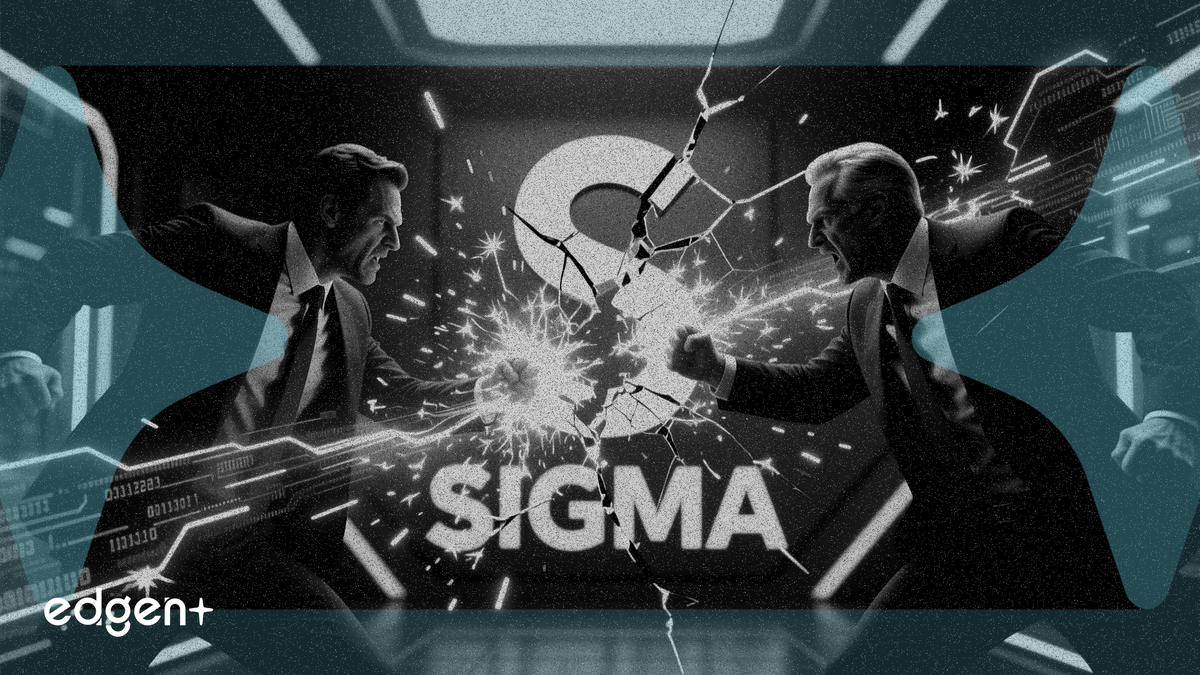
A leadership shuffle intended to stabilize Two Sigma Investments has instead plunged the $70 billion quant hedge fund into a fresh crisis, after a new appointee tried to fire his counterpart just weeks into the job. The move highlights the intractable nature of a years-long feud between billionaire co-founders John Overdeck and David Siegel, which continues to create “management dysfunction” even after they stepped down from day-to-day control.
"We are focused on sustaining our positive momentum and providing differentiated returns for our investors,” a Two Sigma spokesperson said, adding the firm was grateful for the contributions of the recently departed co-CEO, Scott Hoffman.
The latest turmoil began after Scott Hoffman, a former Lazard executive chosen by Siegel, resigned as co-CEO in March 2026, citing “ongoing governance challenges.” Siegel then designated Seth Platt, a former executive at activist hedge fund Sarissa Capital, as his replacement on the firm's two-person management committee. According to a regulatory filing, Platt then moved to terminate the other co-CEO, Carter Lyons, for allegedly undermining his authority. Overdeck, who originally appointed Lyons, has blocked the dismissal and pushed the matter into a dispute resolution process.
The conflict underscores the fundamental governance problem plaguing one of the world’s most successful quant funds. While its investment strategies continue to deliver strong returns—with its Absolute Return Enhanced fund gaining 3.7 percent this year—the internal war threatens its ability to retain talent and make critical business decisions. An arbitration panel that dismissed prior claims between the founders had already issued “adverse credibility findings” against both, noting their disputes have caused significant management issues.
The current structure was a compromise reached in August 2024, when Overdeck and Siegel stepped down as co-CEOs to insulate the firm from their acrimony. The arrangement allowed each founder to appoint one member to the management committee. However, the system quickly broke down.
The core of the dispute now centers on the power of these appointees. Overdeck is disputing whether Siegel’s choice, Platt, automatically becomes a co-CEO. Meanwhile, Platt’s immediate attempt to remove Lyons demonstrates that the proxy battle between the founders is now being fought by their chosen executives. The firm’s own regulatory filings warn that the committee has been unable to agree on organizational structure, executive responsibilities, and succession plans, which could impact its ability to retain employees.
Amazingly, the firm's performance has remained robust. Its Spectrum fund gained 3.1 percent in the first quarter, and the firm successfully raised over $1 billion for a new fund last year, bringing assets under management to a record high of over $70 billion.
However, the stability of the firm cannot be guaranteed if the leadership crisis continues. The arbitration panel noted that "despite the firm’s undeniable success, the Co-Chairmen’s ongoing disputes and differing views on corporate governance have caused management dysfunction at Two Sigma." The risk for investors is that this dysfunction eventually spills over, impacting research, talent retention, and ultimately, the performance that has so far remained resilient. Anecdotal evidence suggests some top talent is already looking for opportunities at rivals like Jane Street and Hudson River Trading.
This article is for informational purposes only and does not constitute investment advice.
