
Trump's call for Canadian firms to relocate marks the sharpest escalation in a trade war that has already severed the US-Canada free trade pact.
Trump's call for Canadian firms to relocate marks the sharpest escalation in a trade war that has already severed the US-Canada free trade pact.
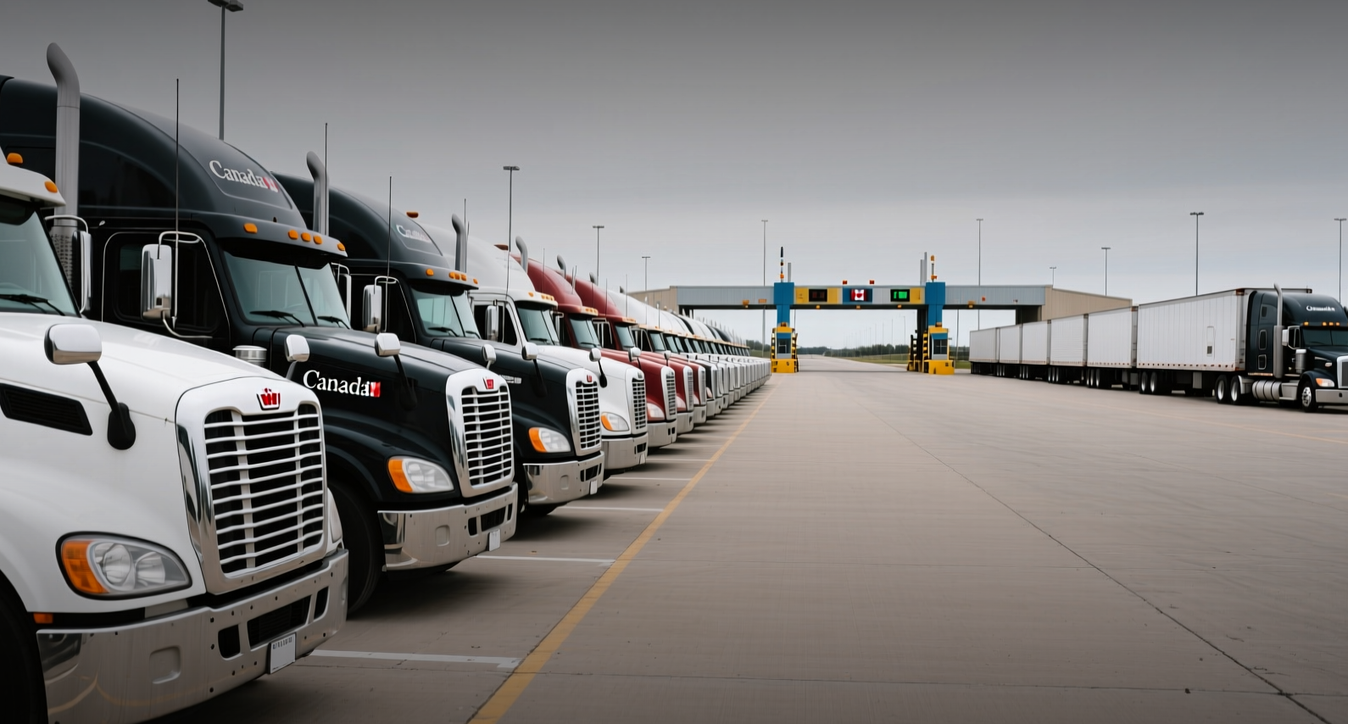
President Donald Trump urged Canadian companies to relocate to the US on Saturday, promising tariff-free entry, as his 50 percent duties pushed the two economies toward a permanent break.
"I don't want Canadian anything," Trump said, defending the tariffs as a response to what he called decades of Canada "ripping" off the US.
The escalation follows Prime Minister Mark Carney's decision on Aug. 21 to pull out of all trade talks with Washington, rejecting last-minute demands that Canada mirror US tariff protocols with third countries and abandon its own free trade agreements. Trump's newest round of 50 percent duties covers roughly $20 billion of Canadian exports, about 5 percent of the $400 billion in goods Canada ships to the US annually, and threatens about 90,000 jobs in small industries.
The breakdown has already reshaped North American trade. The US share of Canadian exports has fallen to 68 percent from 76 percent before the dispute, as Ottawa redirects shipments to Europe and Asia. Carney, backed by 80 percent of Canadians in opinion polls, is scheduled to address the European Parliament in September, part of a push to build alternatives to the US market.
The three demands that scuttled the deal — exempting specific Canadian-built trucks from tariff relief, forcing Canada to apply US tariff rates to all its trading partners, and dropping French-language requirements for US streaming services — were, in Carney's words, "totally unacceptable." "We cannot accept what they've offered, and we will not give what they've asked," he said.
The rupture echoes the Smoot-Hawley Tariff Act of 1930, when US duties on 20,000 imported goods triggered retaliation from Canada and nine other countries and helped push global trade down 66 percent. Trump has invoked that law to impose tariffs without congressional approval, and the trilateral CUSMA agreement renewed during his first term now sits in suspension with no clear path to revival.
The economic asymmetry makes the standoff lopsided. The US economy is roughly 13 times larger than Canada's, with GDP of $31 trillion versus $2.3 trillion, and per-capita income of $90,000 versus $56,000. Yet both countries carry debt loads above 100 percent of GDP — 125 percent for the US and 113 percent for Canada — leaving little fiscal room for either side to cushion a prolonged disruption.
For Canadian companies, the choice is stark. Trump's relocation offer — no tariffs for firms that move production across the border — would accelerate a capital outflow that threatens to weaken the Canadian dollar and hollow out manufacturing in Ontario and Quebec. For US firms, the tariffs raise input costs on the cross-border auto supply chain, where parts cross the border multiple times before final assembly.
Markets have begun pricing the fallout. Canadian equities have underperformed their US peers since the talks collapsed, and the loonie has weakened against the dollar as investors weigh the risk of a prolonged tariff regime. Trump's broader tariff agenda has also drawn legal challenges, with the US Supreme Court ruling that the largest category of his tariffs was illegal — a decision that complicates any new trade architecture he tries to impose.
The stakes extend beyond the two countries. Trump's tariff campaign has forced deals with dozens of nations, including Sri Lanka, all agreeing to his terms to avoid higher rates. China has defied the tariffs from the outset, and Beijing's state media now calls Canada and China "the only countries daring to respond to US pressure with reciprocal measures."
With Trump's approval ratings falling and Republican prospects in November's midterm elections deteriorating, the political calculus may shift. But Carney has shown no appetite for a deal on US terms, and the September EU address signals Canada is building a post-US trade architecture. The question is no longer whether the old relationship can be restored, but what replaces it.
This article is for informational purposes only and does not constitute investment advice.
