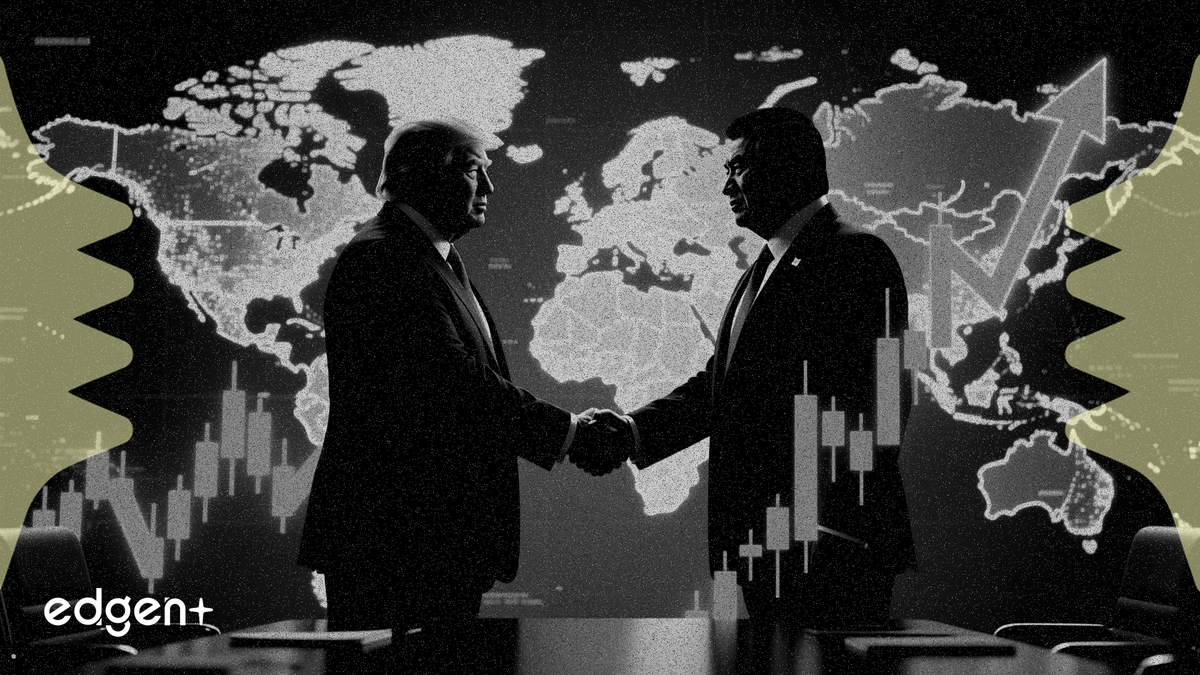
The upcoming mid-May summit between U.S. President Donald Trump and Chinese President Xi Jinping is fueling expectations for a tactical, short-term rally in Chinese stocks, according to a Goldman Sachs strategy report, even as the two powers navigate a landscape fraught with economic and military friction.
"The summit will fall far short of his last trip in 2017," said Rush Doshi, director of the China Strategy Initiative at the Council on Foreign Relations. Doshi notes that while Trump may believe he is winning, the current uneasy detente favors Beijing, which has successfully countered U.S. tariff pressure by leveraging its dominance in rare earth minerals, forcing Trump to retreat from his "liberation day" tariffs in 2025.
Goldman Sachs economists anticipate a transactional outcome rather than a "grand bargain." They expect China to agree to purchase more U.S. agricultural and energy products in exchange for relief from some technology restrictions and a slight reduction in tariffs. This could provide a specific boost to Chinese companies that export to the U.S. and to heavily shorted Hong Kong-listed stocks, which may deliver short-term excess returns, the bank said, maintaining its Overweight view on A-shares and H-shares.
The meeting occurs against a backdrop of deep-seated rivalry. While leader-level diplomacy can provide temporary calm, the underlying competitive pressures are surging across multiple fronts. The agenda is shadowed by four key issues: a potential trade package, U.S. restrictions on artificial intelligence technology, escalating tensions over Taiwan, and the ongoing U.S. war with Iran, a key Chinese partner in the Middle East.
China's Mineral Leverage
A significant shift in economic power underpins the summit: China's structural control over critical minerals and rare earth supply chains. This dominance, which proved decisive in the 2025 trade standoffs, has become a systemic lever of geopolitical influence. "The United States heads to the summit facing an uncomfortable reality: Its rapid expenditure of advanced weapons systems in the Middle East and Ukraine will compound deep vulnerabilities in supply chains tied to rare earth elements," noted Heidi E. Crebo-Rediker, a senior fellow at the Council on Foreign Relations. For Beijing, this enhances the value of its strategic investments, allowing it to project calm confidence and control the equilibrium of the relationship. While the U.S. and its allies are investing in alternative supply chains, these efforts are years, if not decades, from diluting China's advantage.
The AI and Taiwan Flashpoints
Beyond economic coercion, the rivalry is intensifying in technology and geopolitics. The U.S. retains a narrow lead in artificial intelligence, but Chinese firms are closing the gap, raising the stakes for national security. The Trump administration has eased some curbs on high-end chip sales, hoping to "addict" Beijing to U.S. tech, but many in Washington fear this strategy is giving China the tools to surpass the U.S.
Taiwan remains the most perilous issue. Chinese Foreign Minister Wang Yi has warned that Taiwan "is the biggest risk in China-U.S. relations," and Beijing is expected to press Trump for changes to U.S. policy. Trump's own ambivalence toward the island, including delaying a requested transit by President Lai Ching-te, has created what China sees as an opening. Xi may push for the U.S. to formally oppose Taiwan independence—a shift from the current policy of not supporting it—and could offer economic concessions in return. "What we are the most afraid is to put Taiwan on the menu of the talk between Xi Jinping and President Trump," a senior Taiwanese official told Bloomberg.
For Xi, the summit is a tactical tool to buy time, slow the competitive squeeze, and strengthen China for a confrontation he views as inevitable, having directed the PLA to be ready for a Taiwan contingency by 2027. For Trump, the goal is less clear: a series of transactional wins to tout, or a more strategic "hide and bide" approach to address U.S. economic weaknesses. While the summit may produce a temporary truce and alpha opportunities for traders, the fundamental rivalry between the U.S. and China continues to deepen.
This article is for informational purposes only and does not constitute investment advice.