
Key Takeaways:
- US to increase tariffs on EU car and truck imports to 25% next week.
- Trump cites EU's non-compliance with a previous trade agreement.
- The move is expected to negatively impact European automakers and could escalate trade tensions.
Key Takeaways:
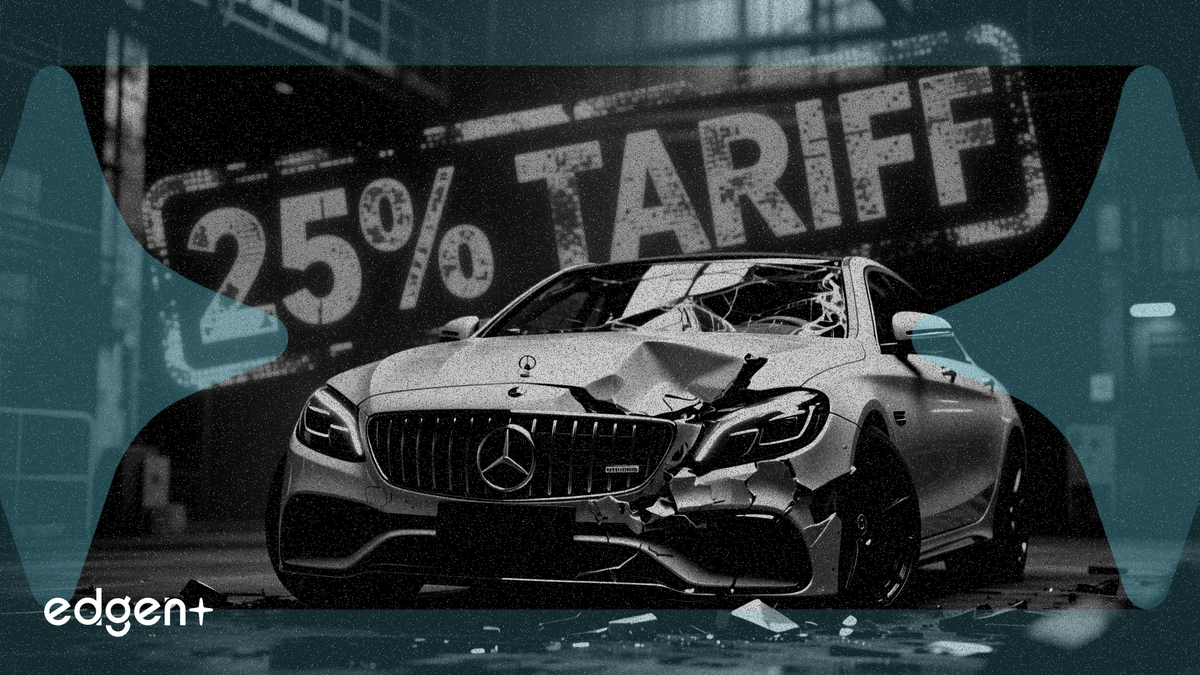
US President Donald Trump announced plans to increase tariffs on cars and trucks from the European Union to 25% next week, alleging the bloc has failed to comply with a trade agreement reached last July. The move threatens to reignite transatlantic trade tensions and could have significant repercussions for the global auto industry.
"I am pleased to announce that, based on the fact the European Union is not complying with our fully agreed to Trade Deal, next week I will be increasing Tariffs charged to the European Union for Cars and Trucks coming into the United States," Trump said in a post on social media. He added that companies could avoid the tariff by producing vehicles in the US.
The new 25% tariff marks a significant escalation from the 15% level agreed upon in July 2025 between Trump and European Commission President Ursula von der Leyen. The announcement immediately hit European auto stocks, with Mercedes-Benz ADRs falling 2% in early trading. The Stoxx Europe 600 Automobiles & Parts index was also down.
The move threatens to unravel the fragile trade truce between the two economic giants and could trigger a new round of retaliatory tariffs, creating fresh uncertainty for a global economy already grappling with multiple headwinds. The decision comes ahead of a series of key US economic data releases and the next Federal Reserve meeting.
The July 2025 agreement was seen as a de-escalation in the trade conflict that had been simmering between the US and the EU. The deal, which set a 15% tariff on most European exports to the United States, was reached just days before a deadline set by Trump. However, the latest announcement suggests that the truce was short-lived. Trump did not specify which part of the agreement the EU had violated.
This is not the first time the Trump administration has used tariffs as a tool of economic policy. In 2018, the administration imposed tariffs on steel and aluminum imports, sparking a global trade war. The Supreme Court overturned his emergency tariffs on imports from other countries in February, but he has vowed to impose the fees under other statutes.
The new tariffs will be a major blow to European automakers, who export billions of dollars worth of vehicles to the US every year. Germany's auto industry is particularly vulnerable, with major players like Volkswagen, BMW, and Mercedes-Benz relying heavily on the US market. In 2023, the EU exported €38 billion ($41 billion) worth of cars to the US.
The tariffs will increase the cost of European cars for American consumers, potentially leading to lower sales. This could force European automakers to either absorb the costs, which would hurt their profit margins, or pass them on to consumers, which could reduce their market share. Some automakers may also consider increasing their production capacity in the US to avoid the tariffs, a move that Trump has encouraged.
This article is for informational purposes only and does not constitute investment advice.

