
A phone call between Donald Trump and Vladimir Putin revealed the first signs of a potential breakthrough in US-Iran nuclear negotiations after months of stalled diplomacy.
A phone call between Donald Trump and Vladimir Putin revealed the first signs of a potential breakthrough in US-Iran nuclear negotiations after months of stalled diplomacy.
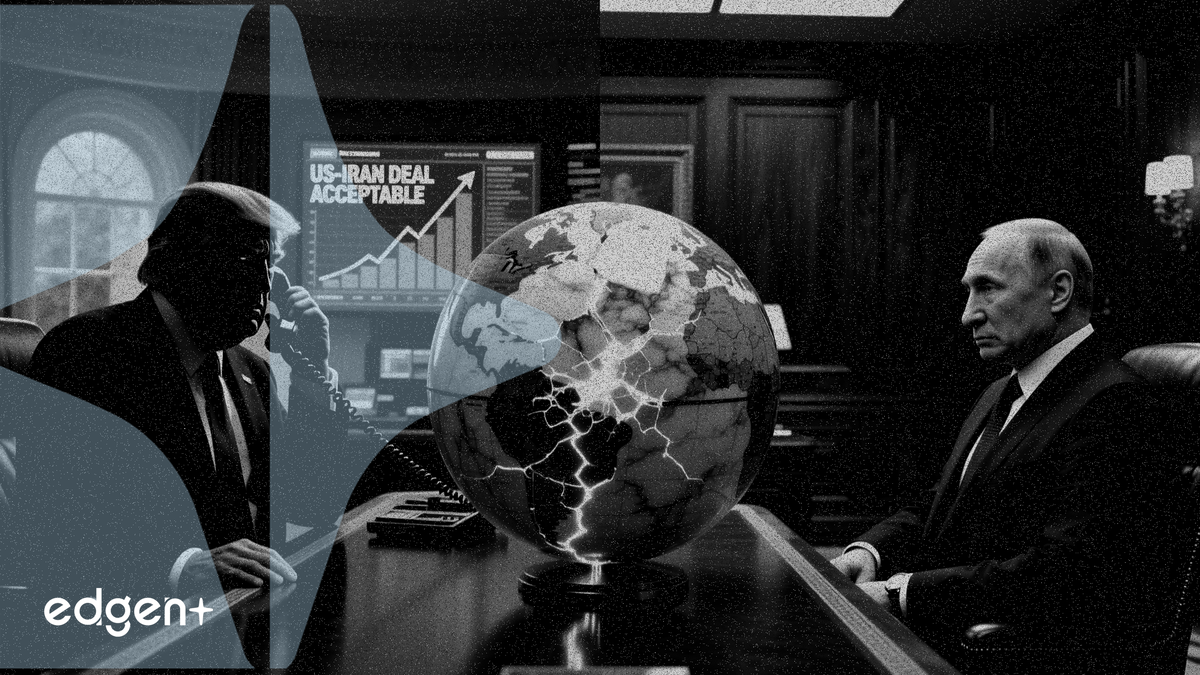
A phone call between Donald Trump and Vladimir Putin revealed the first signs of a potential breakthrough in US-Iran nuclear negotiations after months of stalled diplomacy.
President Donald Trump told Russian President Vladimir Putin during a phone call that US-Iran negotiations, while difficult, have produced an acceptable result, Russian Presidential Aide Yuri Ushakov said June 14, signaling a potential diplomatic opening after more than 100 days of conflict.
"The American president informed his Russian counterpart that the negotiation process with Iran, despite being very difficult, achieved results that can be considered acceptable," Ushakov said in a statement carried by Russian state media.
The call, which lasted roughly one hour, marked the first time Trump has briefed a foreign leader on the status of US-Iran talks since hostilities escalated earlier this year. Putin was the first world leader to congratulate Trump on his 80th birthday during the same conversation, according to reports. The development comes as Iran and Israel continue to trade attacks, with Trump's military engagement in the region passing the 100-day mark.
A breakthrough in US-Iran negotiations could lead to the easing or lifting of sanctions on Iran, potentially adding hundreds of thousands of barrels of crude to global markets and putting downward pressure on oil prices. Brent crude has traded with a geopolitical risk premium of $8 to $12 per barrel since the conflict escalated, according to traders. Any agreement would also reshape the Middle East's security landscape, with implications for Israel, Gulf Arab states, and the broader energy supply chain.
The Kremlin's decision to publicly relay Trump's assessment suggests Moscow is positioning itself as a potential intermediary — or at minimum, a stakeholder — in any final deal. Russia has maintained close ties with Tehran, supplying military technology and providing diplomatic cover at the United Nations, even as Western sanctions have squeezed both economies.
Oil Markets Price a Potential Détente
Crude oil futures fell in early Asian trading following Ushakov's remarks, with Brent slipping toward $72 a barrel as traders weighed the prospect of sanctions relief. Iran currently exports roughly 1.5 million barrels per day, much of it through opaque channels to Chinese refineries. A formal lifting of US restrictions could bring an additional 500,000 to 1 million barrels per day onto the open market within six months, analysts estimate.
The last time Washington signaled a willingness to negotiate a nuclear deal with Tehran — during the 2015 Joint Comprehensive Plan of Action — Brent crude fell roughly 30 percent over the following 12 months as Iranian supply returned. The current context differs sharply: Trump's military campaign has deepened US entanglement in the region, and any memorandum of understanding would likely defer the toughest issues, including Iran's ballistic missile program and its support for proxy forces.
Geopolitical Chessboard: Russia's Role
For Putin, the call represents an opportunity to reassert Russian influence in Middle East diplomacy after being sidelined by Western powers over the Ukraine war. The Russian leader has consistently opposed US-led sanctions on Iran and has provided Tehran with drone technology used in attacks on Israeli positions, according to US intelligence assessments.
Former US Ambassador to the UN Nikki Haley has urged Trump to threaten Russia and China with force over their military aid to Iran, underscoring the domestic political pressure the president faces. Any deal that appears to reward Russian or Iranian aggression could face stiff opposition in Congress, where bipartisan support for maintaining pressure on Tehran remains strong.
The "acceptable result" framing leaves considerable ambiguity about the specific terms. Whether the agreement covers only nuclear enrichment limits or extends to Iran's regional military activities — including its support for Hamas, Hezbollah, and Houthi forces — remains unclear. A narrow memorandum of understanding that kicks hard decisions down the road would leave the US worse off than before the war, critics argue, while a comprehensive deal could fundamentally alter the Middle East's power dynamics.
This article is for informational purposes only and does not constitute investment advice.
