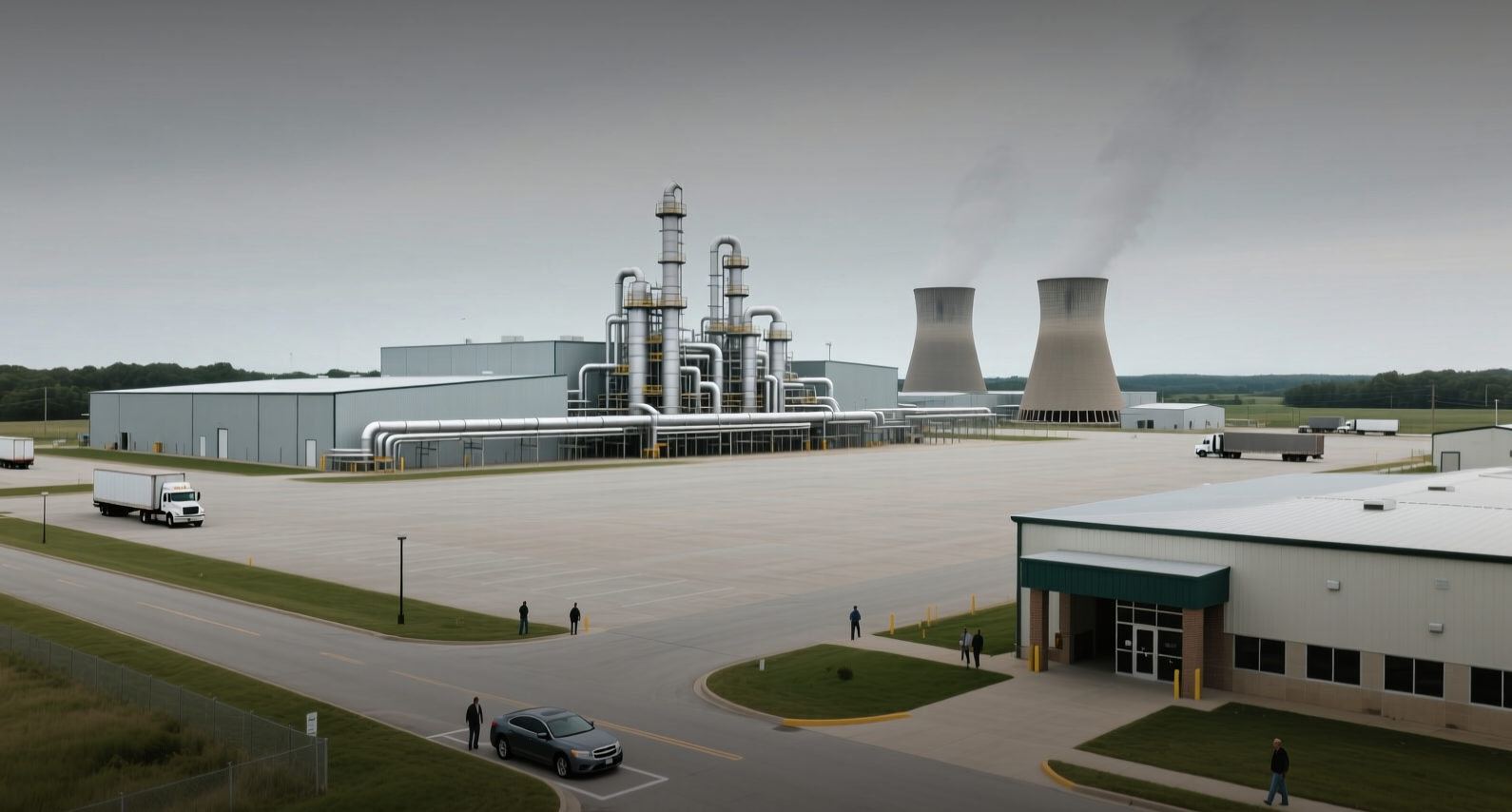
A trade intervention designed to fortify the U.S. chip supply chain is pushing one of its flagship factories toward the exit. Germany's Wacker Chemie is weighing whether to close its $2.5 billion Charleston, Tennessee polysilicon plant — a facility employing about 600 people — after the Trump administration's new Section 232 measures drove away its two remaining customers, according to people familiar with the matter.
"We don't expect the Section 232 tariffs, as currently structured, to boost demand for U.S. polysilicon," said Elissa Pierce, a research analyst at Wood Mackenzie.
The measures, announced Aug. 6, impose a price floor and a tariff on inbound polysilicon ingots, wafers, cells and solar panels. But they apply equally to products made abroad with polysilicon from anywhere, treating Chinese and American-origin material the same. That preserves the cost disadvantage for U.S. polysilicon, which can run four times more expensive than imports, according to market research firm Bernreuter Research.
Munich-based Wacker, which produces polysilicon for both chips and solar panels, will decide in the coming weeks whether to shutter the Charleston facility, the sources said, declining to be named because the matter was not public. Reuters could not confirm the identity of the two customers that walked away. The company said the proclamation "does not, as it reads now, effectively support the use of U.S. made polysilicon" and that it was in active discussions with the administration.
A policy that treats domestic and foreign material alike
The design flaw is structural. Because the tariffs hit imported ingots, wafers, cells and panels regardless of where their polysilicon originated, foreign buyers face no penalty for sourcing cheaper Chinese material — and U.S. producers gain no edge. Only two companies make polysilicon domestically: Wacker and Hemlock Semiconductor, whose owner Corning buys its solar-grade output to produce wafers in-house, insulating it from the policy.
The Coalition for a Prosperous America, which advocates for tariffs and industrial policy, argues the implementing rules, which take effect in December, should reward purchases of U.S.-made polysilicon. "Without a clear signal that domestic polysilicon will be the foundation of both the solar and semiconductor supply chains, we risk ceding both to foreign competitors and adversarial nations like China," said Nick Iacovella, a spokesperson for the group. "That is a direct national security threat."
The dilemma echoes an earlier Trump trade intervention. Steel and aluminum tariffs raised input costs for U.S. automakers and damaged their ability to compete with imports until additional measures were layered on. The polysilicon case carries a sharper risk: Chinese firms, long dominant in solar-grade material, have been making inroads into the more refined semiconductor-grade variety that feeds chip fabrication.
A $2.5 billion bet already under strain
Wacker's German and American operations have been squeezed by Chinese competition for years. The company cut jobs at the Charleston plant last year, and CEO Christian Hartel warned investors days before the proclamation that the company could have "one plant too many" if the expected trade action proved unhelpful. The proclamation does authorize Commerce to negotiate company-specific incentives for investment in U.S. polysilicon production, but none have been announced.
A Trump administration official said the government "continues to engage with industry stakeholders" to inform its strategy on reshoring polysilicon manufacturing. Commerce did not respond to requests for comment. The measure was welcomed by United Solar Polysilicon, an Oman-based rival with China ties that stands to gain from any retreat by U.S. producers.
The stakes extend beyond one factory. If Wacker closes Charleston, the United States would be left with a single domestic polysilicon producer at a moment when Washington is trying to wean the chip supply chain off Chinese inputs. Wacker shares fell 3.53 percent on the news, and the episode raises the question of whether protectionist industrial policy can deliver the supply-chain security it promises — or whether, as in steel, the first casualty is the very industry it was designed to save.
This article is for informational purposes only and does not constitute investment advice.