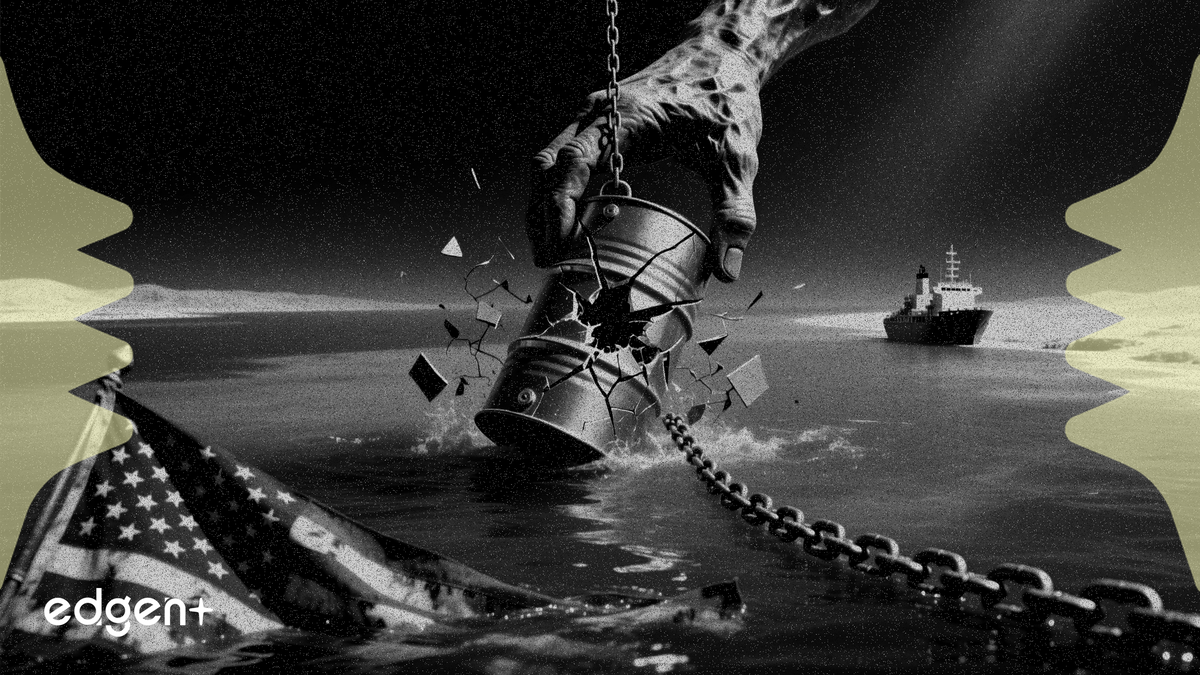
President Donald Trump announced the lifting of the US naval blockade on Iranian ports on May 29, even as the US Navy Central Command confirmed hours later that the blockade remains in effect, creating a stark contradiction that underscores the fragility of negotiations to reopen the Strait of Hormuz.
"Ships caught in the Strait due to our amazing and unprecedented Naval Blockade, which will now be lifted, may start the process of 'heading home!'" Trump wrote on Truth Social, adding that he would convene a Situation Room meeting to "make a final determination" on a memorandum of understanding with Iran.
The disconnect between Trump's declaration and operational reality highlights the unresolved state of talks. NAVCENT issued guidance Friday afternoon stating the "military blockade of Iranian ports remains in effect restricting all traffic inbound and outbound from these ports," warning that enforcement actions include "disabling and destructive fires upon vessels who do not demonstrate immediate compliance." The Joint Maritime Information Center, a US-led multinational advisory body, reiterated Saturday that the blockade continues and that US forces will fire on non-compliant vessels.
The Strait of Hormuz handles about 21 percent of global oil trade, and its effective closure since late February — after Iran restricted traffic following the launch of Operation Epic Fury — has sent crude prices sharply higher. As of May 29, US Central Command reported 115 commercial vessels had been redirected to prevent commerce from entering or leaving Iranian ports.
Iranian officials swiftly rejected Trump's characterization of the talks. "No final understanding has been reached between Iran and the US so far," the IRGC-connected Tasnim News Agency reported, calling Trump's post "a mixture of truth and falsehood" and an attempt to portray a "manufactured victory." Iran's Foreign Ministry spokesman Esmail Baghaei said the "musts" Trump raises in his social media posts "are actually requests."
The proposed memorandum of understanding, as described by Axios and other outlets, would establish a 60-day negotiation window covering Iran's nuclear program, sanctions relief, and the reopening of the Strait. Trump reiterated his red line that "Iran must agree that they will never have a Nuclear Weapon or Bomb." He also claimed the US would unearth and destroy Iran's enriched uranium stockpile — estimated at more than 440 kilograms of highly enriched material — in coordination with Iran and the International Atomic Energy Agency. Iranian state media called that claim "baseless," saying no nuclear clauses exist in the draft MOU.
The nuclear issue remains the central obstacle. Iran's stockpile of enriched uranium was buried after US B-2 bomber strikes 11 months ago collapsed mountains above the enrichment site. Trump said the US — which he called the only country along with China with the mechanical capability to excavate the material — would handle the removal. Iran has insisted it will not transfer enriched uranium to a third country, according to Ebrahim Azizi, head of the Iranian parliament's National Security Commission.
Financial terms are also unresolved. Iran is demanding the immediate unfreezing of billions of dollars in overseas assets. The semi-official Fars News Agency reported that the MOU requires an immediate $12 billion payment from frozen Iranian assets, while Tasnim said $24 billion could be released under a final deal. Trump said "no money will be exchanged, until further notice," directly contradicting Tehran's demands.
The uncertainty has not dampened equity markets. The S&P 500 rose 0.2 percent on May 29, extending a six-session winning streak, while the Dow Jones Industrial Average gained 382 points, or 0.8 percent. Every major US index is on track for records and a ninth straight winning week — the longest such streak since 2023 — driven by hopes of a diplomatic resolution that would lower oil prices and reduce geopolitical risk premiums.
The last time the US imposed a naval blockade on a major oil-exporting nation was during the Iran-Iraq War in the 1980s, when the "Tanker War" saw the US Navy escort reflagged Kuwaiti tankers through the Persian Gulf. That conflict ended without a formal blockade structure, making the current situation — a declared blockade that the president says is lifted but the Navy continues to enforce — historically unprecedented.
Even as Trump met in the Situation Room for two hours, the White House said afterward that "President Trump will only make a deal that is good for America and satisfies his redlines." Iran's Parliament Speaker Mohammad Bagher Ghalibaf, who serves as Tehran's senior negotiator, said Friday that "we do not gain advantages through negotiations; we gain them through missiles."
This article is for informational purposes only and does not constitute investment advice.