
US President Donald Trump's extended deadline for Iran to reopen the Strait of Hormuz now appears to be 8 p.m. EST on Tuesday, April 7th, a one-day postponement of his previous ultimatum.
US President Donald Trump's extended deadline for Iran to reopen the Strait of Hormuz now appears to be 8 p.m. EST on Tuesday, April 7th, a one-day postponement of his previous ultimatum.
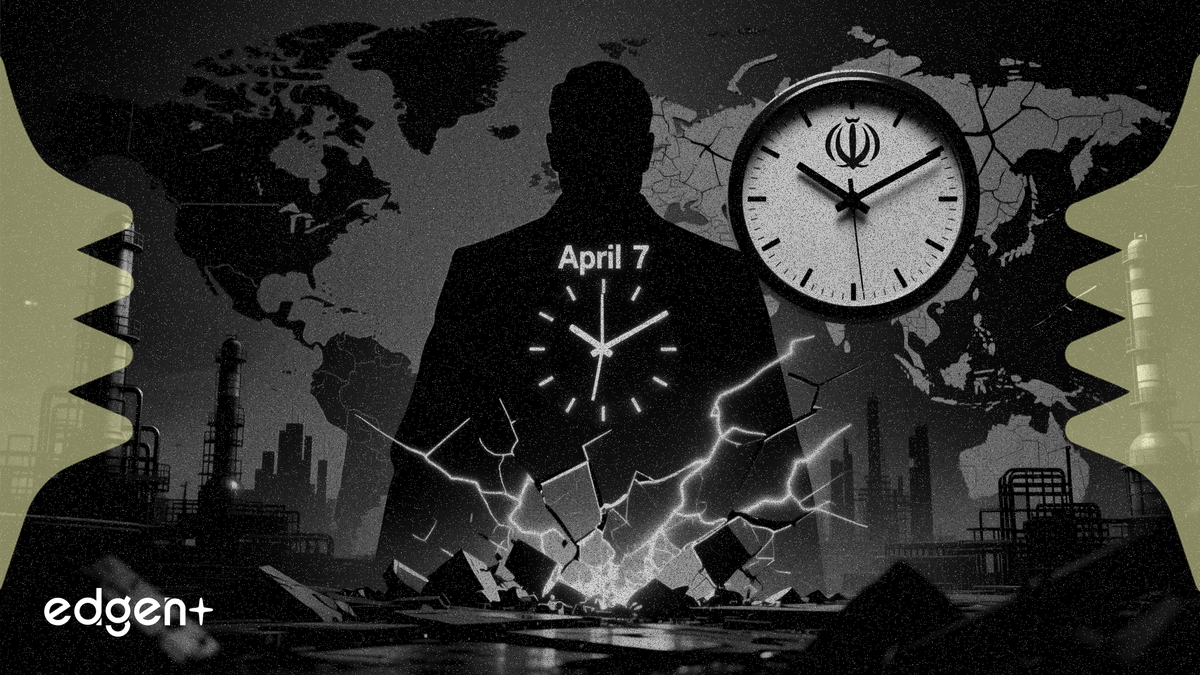
US President Donald Trump's extended deadline for Iran to reopen the Strait of Hormuz now appears to be 8 p.m. EST on Tuesday, April 7th, a one-day postponement of his previous ultimatum.
US President Donald Trump issued a new, expletive-laden threat to Iran on Sunday, extending a deadline for the country to reopen the Strait of Hormuz to all shipping and threatening to attack key infrastructure. The move pushed oil prices further above $100 a barrel and heightened fears of a wider conflict that has already dragged on for more than five weeks.
“It seems Trump has become a phenomenon that neither Iranians nor Americans are able to fully analyze,” Iranian Culture Minister Sayed Reza Salihi-Amiri told The Associated Press in Tehran, adding that the U.S. president “constantly shifts between contradictory positions.”
The war has already seen both the US and Iran attack civilian infrastructure, with Iran halting traffic through the vital Strait of Hormuz, through which about 20 percent of the world's oil passes. In recent days, Iranian drones and missiles have struck petrochemical facilities in the United Arab Emirates and Kuwait, while a residential building in Haifa, Israel was hit by a ballistic missile, injuring four people. More than 1,900 people have been killed in Iran since the war began, according to the AP.
The escalating conflict threatens to trigger a global economic shock, with soaring energy prices fueling inflation and spooking investors. A CNN/SSRS poll released this week found that just 31 percent of Americans approve of Trump’s handling of the economy, a record low, as the war’s impact hits consumers at the gas pump.
The latest escalation began with a post on Trump’s Truth Social platform. “Tuesday will be Power Plant Day, and Bridge Day, all wrapped up in one, in Iran,” the president wrote, demanding the reopening of the strait. He later told Fox News there was a “good chance” a deal could be reached but also considered “blowing everything up and taking over the oil.”
Iran’s military leadership dismissed the threats as “helpless, nervous, unbalanced and stupid,” with Gen. Ali Abdollahi Aliabadi warning that “the gates of hell will open” for the US leader. Iran’s U.N. mission characterized Trump’s threat to hit power plants and bridges as “clear evidence of intent to commit war crime.”
The laws of armed conflict consider causing excessive suffering to civilians a potential war crime, and dozens of international law experts have signed an open letter raising concerns that recent US strikes could fall into that category.
The rhetoric followed a dramatic US military operation to rescue a second crew member from an F-15E Strike Eagle jet downed in a mountainous region of south-western Iran on Friday. Trump said the serviceman was “seriously wounded” and rescued from “deep inside the mountains” in an operation involving dozens of aircraft.
The conflict continues to ripple across the region. On Sunday, US-Israeli strikes hit the Qasem Soleimani international airport in south-western Iran. Meanwhile, authorities in the UAE and Kuwait reported fires and significant damage to oil and petrochemical facilities from Iranian drone and missile attacks.
Diplomatic efforts are ongoing, with officials from Oman, Egypt, Russia, and Turkey engaging with both US and Iranian counterparts to de-escalate the crisis. Bahrain has urged the U.N. Security Council to authorize defensive action to ensure safe passage through the strait. An Iranian presidential spokesperson said the strait could reopen if some transit revenues were used to compensate Iran for war damages, a proposal unlikely to be accepted by the US.
This article is for informational purposes only and does not constitute investment advice.