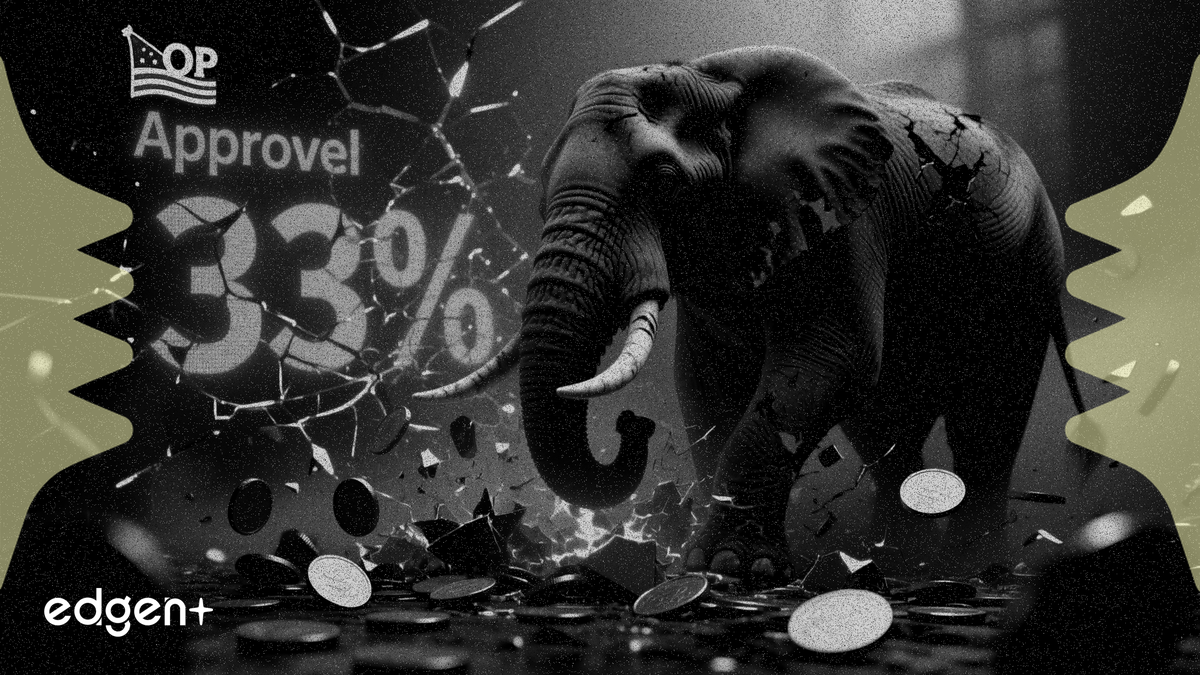
President Donald Trump’s approval rating has fallen to a historic low, raising alarms for the Republican party as economic discontent erodes support among key voter demographics less than seven months before the 2026 midterm elections.
A University of Massachusetts Amherst poll released this week shows President Donald Trump’s overall approval rating has fallen to 33 percent, a new low for his second term, as voter frustration with inflation and the economic fallout from the war in Iran intensifies. The erosion of support is most pronounced among working-class voters and independents, threatening to complicate Republican efforts to hold onto power in the upcoming midterm elections.
"It's tough to win a national midterm when independents view your primary brand as a deal-breaker," Brett Loyd, a polling and research specialist for the Independent Center, previously told Newsweek. "That's not to say Democrats are doing anything incredible to court the center; it's just that Republicans are doing a remarkably efficient job of shedding them."
The latest polls deliver a stark message: Trump's approval on the economy has sunk to just 31 percent, according to a new CNN poll, while a Harvard CAPS/Harris poll shows his approval has declined across every major policy area over the past year. His net approval rating, the difference between those who approve and disapprove, has collapsed to a record -18 points, according to a poll aggregate by CNN data analyst Harry Enten.
The decline in Trump’s political standing appears to be a significant drag on the Republican party’s prospects in November. The political fallout may even extend to the 2028 presidential race, with prediction markets showing a steady decline in Vice President J.D. Vance’s odds for the Republican nomination.
Independents Drive the Decline
The most significant driver of the president’s declining approval is a historic collapse in support among independent voters. Trump’s net approval rating with independents has plummeted to -45 points, a level that CNN’s Harry Enten described as “eye-popping” and the worst for any president at this point in a second term.
This figure is substantially worse than George W. Bush’s standing during the Iraq War and nearly ten points lower than Richard Nixon’s -36 point rating among independents at the height of the Watergate scandal in 1974. The data suggests a deep and broad-based dissatisfaction with the administration's performance that transcends partisan lines.
Economic Pain Hits Home
Rising consumer prices, particularly for gasoline, appear to be a primary cause of the discontent. The national average price for a gallon of gas has climbed above $4, and 63 percent of respondents in one poll said the increase has caused their family some degree of financial hardship. Only 24 percent of voters approve of the administration's handling of inflation, down from 33 percent a year ago.
The economic pressure is creating fissures in Trump’s political base. Among households with incomes under $50,000, the president’s net approval has fallen to -22 points. Furthermore, a notable 17 percent of his 2024 voters now say they have doubts about their choice, a clear signal that his electoral coalition is under strain. In a recent national address, Trump acknowledged the “short-term” economic pain, attributing high gas prices to Iran’s actions in the Strait of Hormuz, a sign the White House is aware of the political damage.
This article is for informational purposes only and does not constitute investment advice.