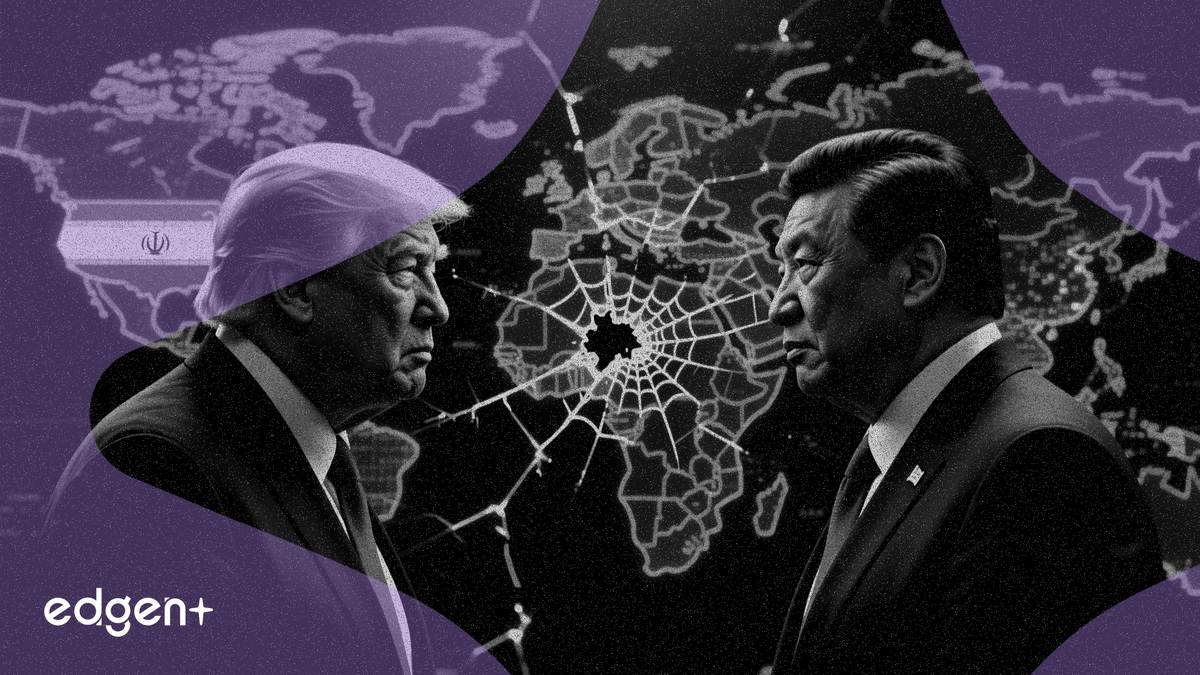
(P1) U.S. President Donald Trump and Chinese President Xi Jinping held a second day of talks in Beijing’s leadership compound, seeking to manage a relationship strained by the ongoing war in Iran and fresh tensions over Taiwan. The May 15 meeting at Zhongnanhai followed more than two hours of discussions the previous day, signaling a mutual desire to maintain stability between the two superpowers.
(P2) "Economies are melting down because of this crisis," U.S. Secretary of State Marco Rubio said ahead of the summit, referencing the war in Iran and underscoring the urgency of the talks. Trump later told Fox News that Xi offered to help reopen the Strait of Hormuz, through which about 20 percent of the world's oil passed before the conflict.
(P3) The discussions covered critical economic and security issues, with Trump saying Xi "would like to see the Hormuz Strait open." In exchange for stabilizing energy supplies, the leaders discussed potential Chinese purchases of U.S. agricultural products and Boeing aircraft. However, Xi also issued a stark warning that mishandling the Taiwan issue could lead the two countries toward “clashes and even conflicts,” according to the Associated Press.
(P4) With the global economy on edge, the primary goal of the summit appears to be preventing a complete breakdown in relations. While no major agreements were announced, the talks establish a framework for future dialogue, including a planned meeting at the APEC summit in Shenzhen this November and a potential White House visit for Xi on September 24.
Iran, Taiwan Dominate Talks
The conflict in Iran and its disruption to global energy markets was a central theme of the two-day summit. Before the war, the Strait of Hormuz was a conduit for roughly 20 percent of the world's oil supply. Its effective closure has sent crude prices soaring, threatening a wider economic slowdown that would impact Chinese exports.
Trump said Xi expressed a desire to see the strait reopened and opposed any proposal to impose tolls on ships passing through. The U.S. delegation, which includes Secretary of State Marco Rubio and Defense Secretary Pete Hegseth, has been urging Beijing to use its leverage as Iran’s largest trading partner to help end the conflict.
While the tone of the meetings was publicly cordial, Xi delivered a private warning to Trump over Taiwan, which China considers a part of its territory. The Chinese leader cautioned that the issue, if handled improperly, could push the U.S. and China toward conflict. Rubio later told reporters that U.S. policy on Taiwan remains "unchanged."
Business and Politics Intersect
The high-stakes diplomatic talks were accompanied by a significant U.S. business delegation, highlighting the deep economic ties between the two nations. Prominent executives including Apple's Tim Cook, Nvidia's Jensen Huang, and Tesla's Elon Musk were part of the entourage, underscoring the importance of the Chinese market for America's largest tech companies. Boeing's Kelly Ortberg was also present as the leaders discussed potential aircraft deals.
In a personal gesture, Xi hosted Trump for tea at Zhongnanhai, a venue historically reserved for significant diplomatic engagements, such as Richard Nixon's 1972 meeting with Mao Zedong that paved the way for normalizing relations.
Wrapping up his visit, Trump took to Truth Social to frame the talks positively, claiming Xi’s previous remarks about the U.S. being a “declining nation” were aimed at the prior Biden administration. “Two years ago, we were, in fact, a Nation in decline,” Trump wrote. “But now, the United States is the hottest Nation anywhere in the world.”
This article is for informational purposes only and does not constitute investment advice.