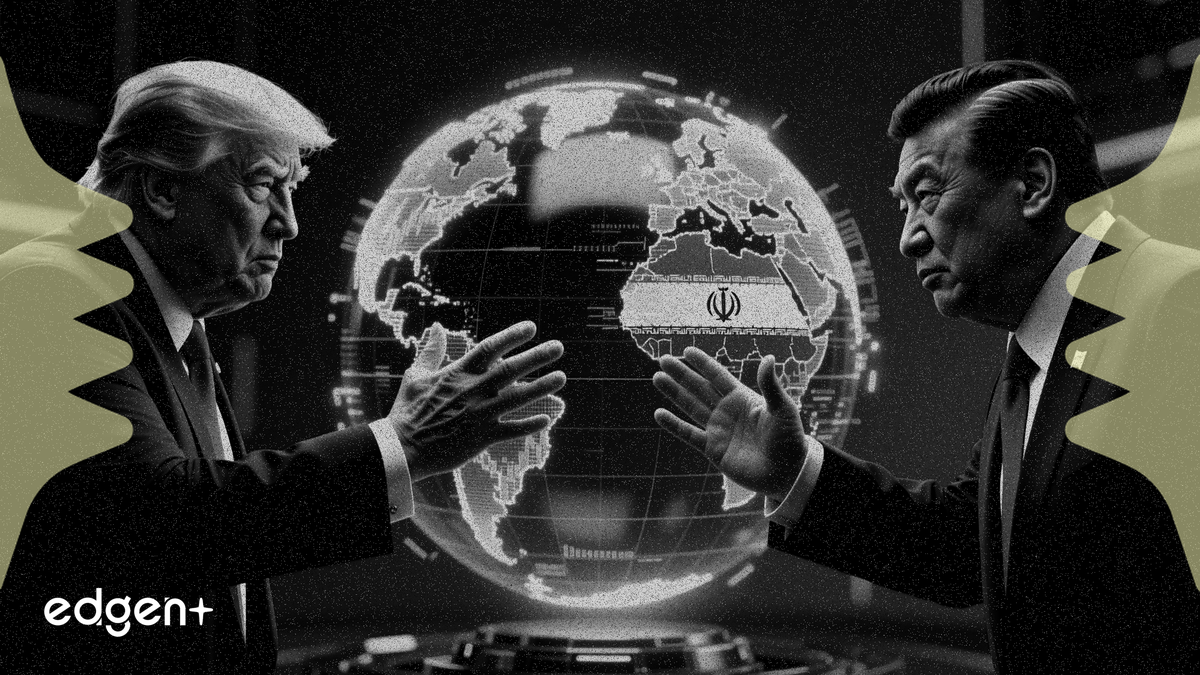
The leaders of the world’s two largest economies meet in Beijing with global markets on edge, as the war in Iran threatens to push energy prices higher and trade disputes continue to simmer.

The leaders of the world’s two largest economies meet in Beijing with global markets on edge, as the war in Iran threatens to push energy prices higher and trade disputes continue to simmer.
US President Donald Trump and Chinese President Xi Jinping began a high-stakes, two-day summit in Beijing on Thursday, with the war in Iran, technology competition, and the status of Taiwan topping a packed agenda that leaves little room for error. The meeting, Trump’s first visit to China since 2017, occurs as spiking energy prices threaten to weaken the U.S. economy ahead of the November midterm elections.
In opening remarks at the Great Hall of the People, Xi stressed that the “common interests” between the two countries outweigh their differences, stating that when the two sides cooperate, both benefit. The White House has signaled it expects tangible results, with spokeswoman Anna Kelly saying, "The American people can expect the president to deliver more good deals on behalf of our country."
The summit’s backdrop is fraught with economic risk. The U.S. and Israel’s war in Iran has effectively closed the Strait of Hormuz, a critical artery for global energy supplies, causing oil and natural gas prices to surge. China, as the largest buyer of Iranian oil, holds a key position in the crisis, and Trump is expected to press Xi to exert more pressure on Iran behind closed doors.
The discussions carry significant weight for global markets, which remain uncertain about the outcome. A positive result that de-escalates trade tensions could fuel a market rally, while any sign of further conflict could trigger a sell-off. The last major trade truce was reached in 2023, and businesses are watching for any extension or new agreements on issues like China’s purchase of U.S. soybeans and beef, or the continued export of rare earth minerals to the U.S.
Looming over the talks is the future of Taiwan, the self-governing island that Beijing claims as its territory. The Trump administration has approved an $11 billion weapons package for Taiwan, a move that has displeased China. The island's dominance in producing the advanced semiconductors essential for artificial intelligence makes its status a critical point of contention, intertwining national security with technological supremacy.
The strategic importance of technology was underscored by the U.S. delegation, which includes a number of high-profile tech executives. Apple’s Tim Cook, Tesla’s Elon Musk, and Nvidia’s Jensen Huang are accompanying Trump, alongside Secretary of State Marco Rubio and Treasury Secretary Scott Bessent. Their presence highlights the administration's focus on securing U.S. access to Chinese markets and addressing the global chip supply chain.
While trade and technology are perennial topics, the immediate crisis in Iran adds a volatile element to the summit. Trump has publicly downplayed the impact of economic pressure on his negotiations with Iran. "I don’t think about Americans’ financial situation. I think about one thing: We cannot let Iran have a nuclear weapon," the president said before leaving for Beijing.
This stance, however, contrasts with efforts by his administration to reassure the public. Vice President JD Vance insisted Trump was "laser focused" on inflation, which is being exacerbated by high energy costs. The divergence highlights the delicate balance the administration is trying to strike between geopolitical objectives and domestic economic stability, a challenge that will be central to the private discussions between Trump and Xi over the next 36 hours.
This article is for informational purposes only and does not constitute investment advice.