
TRON now hosts more than $90 billion in stablecoins and settled $681 billion in transactions over the past 30 days, cementing its role as the dominant settlement layer for digital dollars.
TRON now hosts more than $90 billion in stablecoins and settled $681 billion in transactions over the past 30 days, cementing its role as the dominant settlement layer for digital dollars.
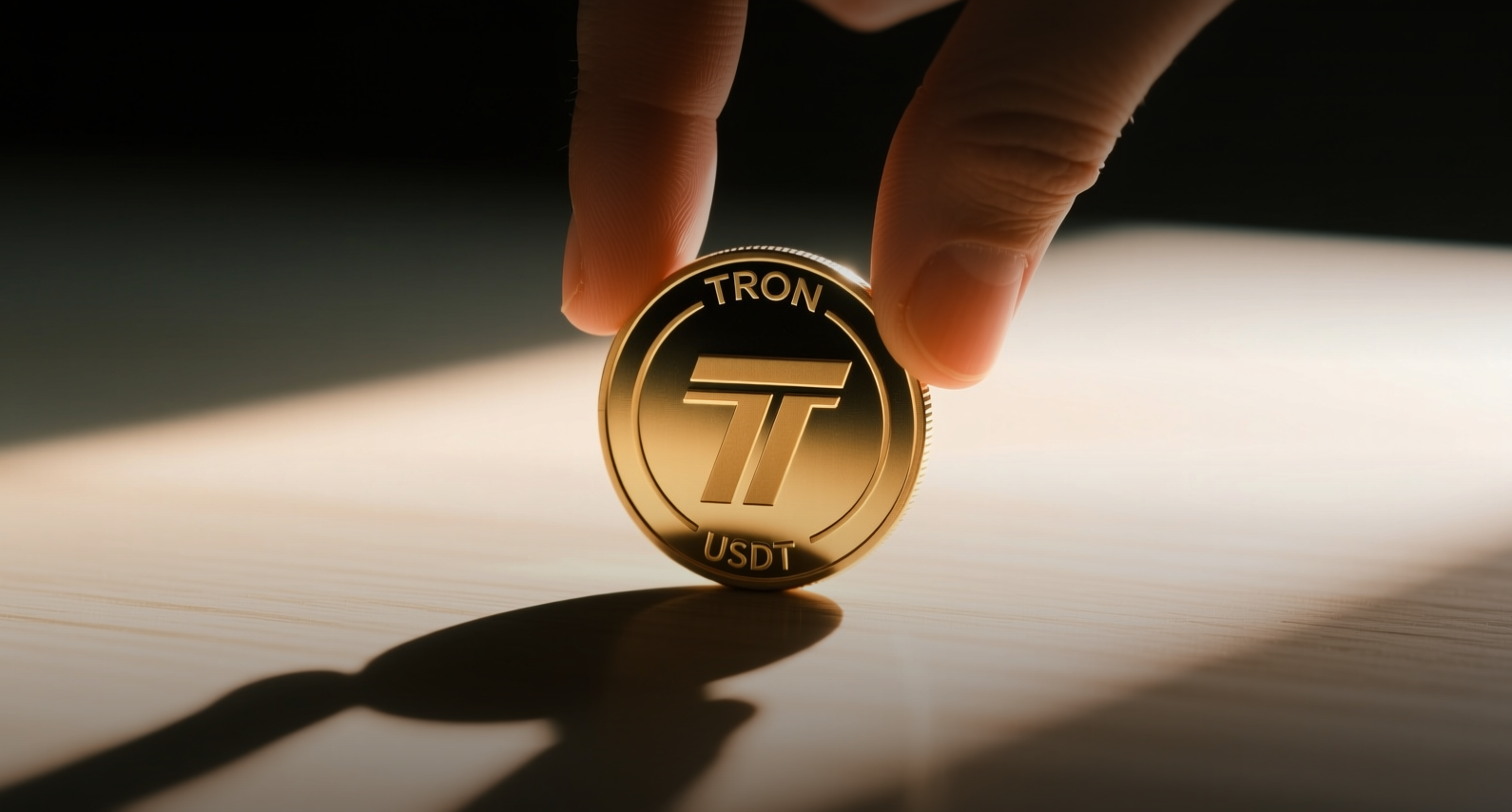
TRON's stablecoin supply crossed $90 billion for the first time, with the network settling $681 billion in transactions over the past 30 days — roughly $23 billion per day — according to Token Terminal data cited by TRON DAO.
"The scale of USDT activity on TRON reflects real demand for blockchain infrastructure that is fast, efficient and accessible," Justin Sun, founder of TRON, said in a statement.
The $90 billion in circulating USDT represents about 29 percent of the global stablecoin market, which sits at roughly $312 billion. Year-to-date USDT transfer volume on TRON has reached approximately $4.2 trillion, according to Token Terminal. The network recorded 26.97 million active accounts in June and processed more than 385 million transactions during the month. TRON now supports more than 74.9 million USDT holding accounts and processes an average of $23.8 billion in daily USDT transfers.
The milestone strengthens TRON's position as financial infrastructure rather than just a blockchain network, but the dominance comes with concentration risk. Nearly all of TRON's stablecoin activity depends on Tether's USDT, leaving the network exposed if regulatory action, depegging events, or issuer preference shifts toward competing chains.
TRON's stablecoin supply has grown from $70 billion in April 2025 to $90 billion today, adding roughly $20 billion over 15 months. The latest leg followed Tether's mint of $1 billion USDT on TRON after a two-month pause, pushing the network past the $90 billion threshold for the first time. The issuance came shortly after Tether burned 2.5 billion USDT on Ethereum, suggesting the issuer is rebalancing supply across blockchain ecosystems based on user demand and network activity, analysts said.
Low transaction fees and high throughput have made TRON the preferred network for stablecoin transfers, particularly in Asia, Latin America, Africa and the Middle East, where users rely on USDT for payments and remittances rather than speculative trading. The network processes more than 12.7 million daily transactions and has surpassed 392 million total user accounts.
Recent integrations suggest TRON is working to convert its retail transfer volume into deeper institutional use. Anchorage Digital added support for the TRON network, expanding regulated custody for TRON-based assets. Securitize also integrated TRON to support tokenized real-world assets, with the Hamilton Lane SCOPE Fund becoming the first Securitize-issued asset available on the network.
The T3 Financial Crime Unit, a joint initiative with Tether and TRM Labs, has frozen more than $450 million in criminal assets across five continents since its launch, according to TRON DAO. That security infrastructure matters as stablecoin networks face increasing scrutiny from regulators and compliance teams tracking illicit finance risk.
For investors watching TRX, growing stablecoin supply on TRON means growing demand for TRX to pay transaction fees and stake for network resources. The correlation has been positive over the past year as supply climbed from $70 billion to $90 billion, though the relationship is not perfectly linear.
This article is for informational purposes only and does not constitute investment advice.
