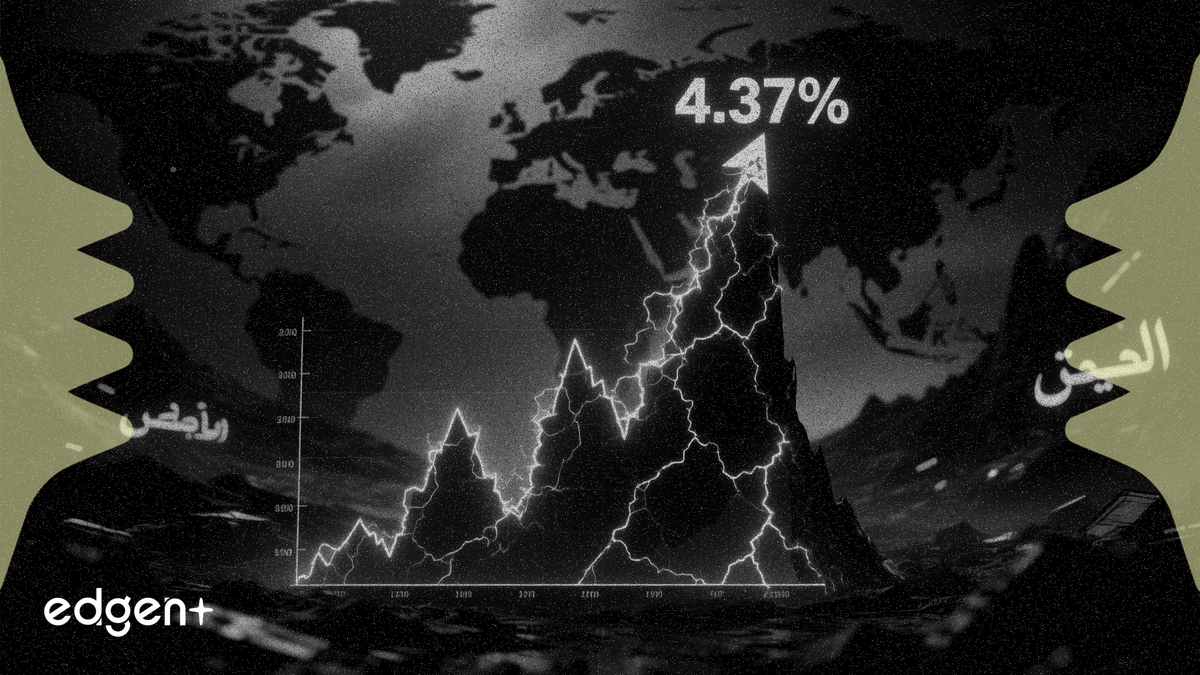
10-Year Yield Climbs to 4.37% on Geopolitical Risk
U.S. Treasury yields increased on Tuesday, March 26, as uncertainty over the Middle East conflict pressured bond markets. The benchmark 10-year Treasury yield rose more than 3 basis points to 4.37%, while the 30-year yield added over 2 basis points to 4.937%. Since the conflict began, the 10-year yield has climbed approximately 36 basis points from its prior level of around 3.97%.
The sell-off in government debt was driven by a rebound in oil prices after an initial slump. Traders grew skeptical of a quick resolution to hostilities following conflicting statements from the U.S. and Iran regarding diplomatic talks. This renewed volatility reinforced fears that sustained disruptions to energy supply could keep inflation elevated, prompting investors to demand higher yields on government bonds.
Bond Volatility Index Signals Spreading Market Stress
The bond market is flashing warning signs of instability that could spill over into other asset classes. The MOVE index, a key gauge of Treasury market volatility, has climbed above its 52-week average to levels consistent with past periods of policy uncertainty. This sharp increase reflects growing investor nervousness about the economic outlook.
The Treasury market is signaling stress.
— Joseph Brusuelas, Chief Economist at RSM.
Economists note that the sustained rise in yields indicates investors are pricing in a higher risk premium for U.S. debt. This not only increases the government's borrowing costs but also signals a broader risk-off sentiment that could challenge credit and currency markets if geopolitical uncertainty does not subside.
Rising Rates Pressure Stocks and Commodities
The impact of higher Treasury yields is reverberating across financial markets, creating significant headwinds for equities. The S&P 500 declined 0.5% in recent trading, while the tech-heavy Nasdaq Composite slipped 0.8%, putting Wall Street on course for a fourth consecutive weekly loss. Higher yields increase borrowing costs for businesses and erode the value of future corporate earnings.
Precious metals also faced heavy selling pressure, with gold posting its steepest weekly decline in decades. Both gold and silver prices fell sharply as expectations of higher global interest rates overshadowed their traditional safe-haven appeal. The broad market reaction underscores a dominant theme where inflation and rate concerns are currently outweighing geopolitical risk in driving asset prices.