Prediction market traders are betting against Iran's timeline for reopening the Strait of Hormuz, even as diplomatic signals point toward a potential US-Iran agreement.
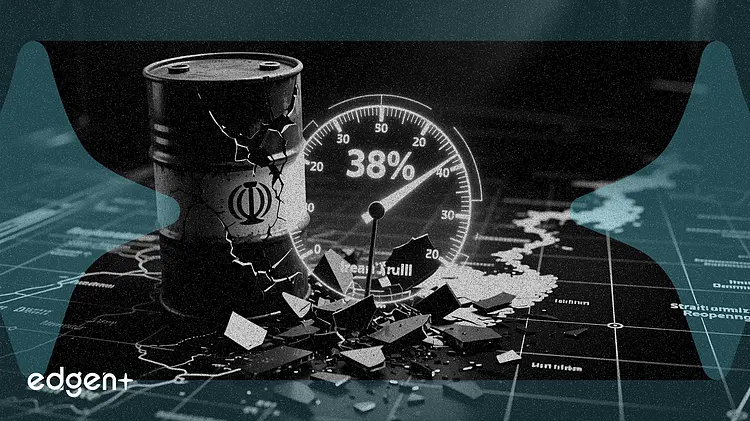
Iran said it could restore the Strait of Hormuz to prewar status within one month of a peace deal with the United States, according to state television reports Wednesday. Traders on Kalshi, a prediction market platform, are skeptical: they place just a 38% chance that normal traffic flows through the waterway will resume by July 1, down from 50% odds over the weekend when a deal appeared imminent.
"The internet restoration data suggests Tehran expects a near-term de-escalation, but prediction markets are pricing in execution risk," said Frank Flight, a strategist at Castle Securities. Flight pointed to NetBlocks data showing Iran's internet connectivity has recovered to about 86% of pre-conflict levels after months of disruption, alongside recent public appearances by senior Iranian military officials — both indicators that the regime views the risk of further escalation or targeted strikes as diminished.
The Strait of Hormuz handles about 20% of the world's oil and gas supply, making its closure one of the most consequential disruptions to global energy markets in decades. The tentative framework, first reported by Axios and confirmed by US sources, includes a 60-day memorandum of understanding under which Iran would not impose tolls on commercial shipping and would begin demining the waterway. In exchange, the US Navy would lift its blockade and Washington would issue sanctions waivers allowing Tehran to sell oil. The deal still requires approval from President Donald Trump and senior Iranian leadership.
Traders are more confident about a longer timeline. Kalshi odds for normal flows by Aug. 1 stand at 60%, up from a 50-50 chance before the latest reports. The White House has denied the existence of any formal framework with Iran, adding uncertainty to the timeline. Castle Securities' Flight said investors may be underestimating the potential for a broad-based market rebound if the strait reopens, as the geopolitical risk premium that has boosted crude prices and shipping costs would unwind rapidly.
What a reopening would mean for markets
A fully operational Strait of Hormuz would remove the single largest geopolitical risk premium embedded in crude prices. Brent crude has traded with a war premium of $8 to $12 per barrel since the conflict began on Feb. 28, according to analysts. A reopening could trigger a sharp decline in oil prices, normalize global shipping costs, and fuel a broad equity market rally as the risk premium unwinds.
Energy stocks, shipping companies, and defense contractors would face the most direct impact. Oil producers with exposure to the Persian Gulf could see revenues squeezed, while shipping lines that have benefited from rerouted cargoes and higher freight rates would lose that tailwind. Conversely, airlines, consumer goods companies, and import-dependent manufacturers would benefit from lower fuel costs and restored supply chains.
Historical precedent for post-conflict rebounds
The last time a major chokepoint disruption ended — the 2019 attacks on Saudi Aramco's Abqaiq and Khurais facilities — oil prices spiked 15% in a single session before giving back all gains within two weeks as supply normalized. A Strait of Hormuz reopening could produce a similar pattern but on a larger scale, given that the waterway carries three times the daily oil volume of those facilities.
The key variable remains timing. If the MOU is signed and demining begins within days, the July 1 target becomes plausible. Each week of delay erodes confidence and keeps the risk premium intact. For now, prediction markets are pricing in a slow return to normal — but the gap between Iran's one-month claim and traders' 38% probability suggests the market is betting on friction between the deal's announcement and its execution.
This article is for informational purposes only and does not constitute investment advice.