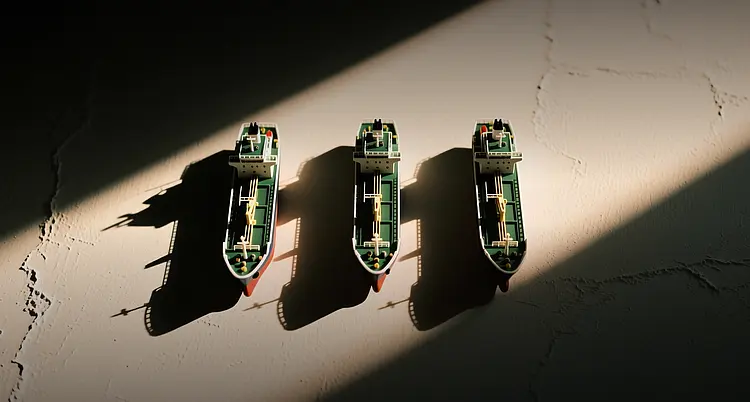
Three Saudi oil tankers hauling 6 million barrels of crude crossed the Strait of Hormuz on Thursday, switching on their transponders for the first time in more than two months after President Donald Trump and Iran signed a deal to reopen the waterway.
"The crossing is a tangible signal that the framework is holding, but the real test will be whether the backlog of nearly 600 vessels can clear without incident," said Helima Croft, head of global commodity strategy at RBC Capital Markets.
The three vessels — among roughly 600 tankers and cargo ships stranded near the chokepoint since late February — turned on their location transmitters before transiting the strait, according to ship-tracking data. Before the conflict, about 130 ships crossed daily, carrying about a fifth of the world's oil and liquefied natural gas.
The resumption of Saudi tanker traffic signals the first concrete step toward restoring Gulf oil flows that were disrupted after the US-Israeli strikes on Iran in late February. But analysts cautioned that a full recovery could take months, with war-risk insurance premiums still at 1% to 4% of vessel value — up from below 0.1% before the war — and naval mines that must still be cleared.
The deal, signed Wednesday in Switzerland by US Vice President JD Vance and Iranian Parliament Speaker Mohammad Bagher Ghalibaf, extends a ceasefire for 60 days while broader negotiations over Iran's nuclear program begin. Trump said the US naval blockade of Iranian ports would be lifted and that the strait would reopen without tolls during the ceasefire period.
"Ships of the World, start your engines. Let the oil flow!" Trump wrote on Truth Social after the signing.
Pakistan Prime Minister Shehbaz Sharif, whose nation mediated the talks, announced the framework Sunday, saying both sides had declared "the immediate and permanent termination of military operations on all fronts."
Clearing the Bottleneck
Shipping industry estimates show nearly 600 vessels remain backed up in the Gulf and Gulf of Oman, according to data from commodity intelligence firm Kpler. About 300 fully loaded ships are sitting in the Gulf, with another 250 empty and awaiting loading, plus 300 empty tankers in the Gulf of Oman waiting for permission to enter.
Jakob Larsen, chief safety and security officer at shipping association BIMCO, said transits through Hormuz remain "very risky" and called for "mine-free routes" to be established. The mine-clearing process could take 40 to 50 days, according to maritime security sources.
Neil Shearing, group chief economist at Capital Economics, projected it would take until the end of September for about 80% of energy flows through Hormuz to resume. Natural gas flows will be slower to return, he said, citing damage to Qatar's Ras Laffan LNG hub where attacks knocked out about 17% of export capacity.
Nuclear Talks and Regional Risks
The preliminary accord leaves unresolved the fate of Iran's enriched uranium stockpile, which includes about 9,000 kilograms, with roughly 450 kilograms enriched to a high level. A person familiar with the matter said Iran has committed not to develop nuclear weapons, with talks on removing the stockpile to follow.
Israel's far-right National Security Minister Itamar Ben Gvir said the agreement "does not bind us" and vowed to continue operations against Hezbollah, raising the risk that unilateral strikes could unravel the fragile framework.
In a joint statement, the leaders of the UK, France, Germany and Italy said Iran "must never acquire a nuclear weapon" and that they were "prepared to lift relevant sanctions in response to clear, verifiable steps by Iran on its nuclear program."
Brent crude fell below $80 a barrel earlier this week as traders priced in the prospect of renewed Gulf supply. The three Saudi tankers crossing Hormuz on Thursday could accelerate the downward pressure on prices as more vessels follow.
This article is for informational purposes only and does not constitute investment advice.