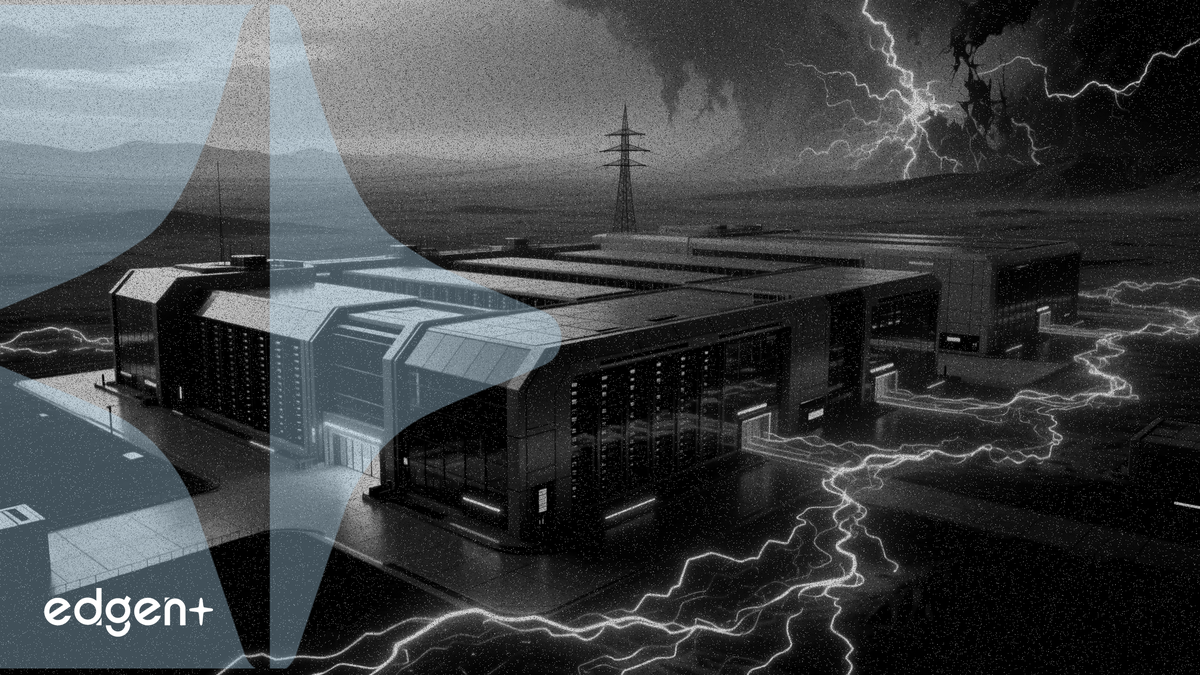
A $1.29 billion joint venture to build a Tier IV data center in Kazakhstan highlights the AI industry’s critical conflict: a race for computing power that is increasingly at odds with its own carbon-reduction goals.
"The joint venture is a dedicated platform focused on developing a phased Tier IV Data Center Campus and integrated sovereign digital infrastructure ecosystem," TGI Group and AMIRON GROUP said in a statement on April 22, 2026.
The project, named TGI AMIRON, will establish a campus in Ekibastuz, Kazakhstan, with an initial capacity of 50 megawatts to 120 MW. While promoted as the anchor for a "Sustainable Eurasian Digital Silk Road," the facility's initial power will come from on-site gas-fired generation, a strategy drawing intense scrutiny across the sector.
The plan exposes a core tension in the global AI buildout. While TGI AMIRON has a long-term roadmap to evaluate Small Modular Reactors (SMRs) and green hydrogen, its immediate reliance on natural gas mirrors a trend that threatens to create a massive new wave of fossil fuel emissions. Eleven new gas projects for data centers in the US alone have the potential to emit over 129 million tons of greenhouse gases annually, according to a recent analysis by WIRED.
The AI Energy Dilemma
The AI industry's voracious demand for power is forcing developers to seek faster energy sources than grid connections can provide. This has led to a surge in "behind-the-meter" gas power plants built solely for data centers. These facilities often run near full capacity, meaning their actual emissions could be closer to the maximum allowed on permits than typical grid-connected plants.
"It's almost like we thought we were on the downside of the Industrial Revolution, retiring coal and gas, and now we have a new hump where we’re going to rise,” Michael Thomas, founder of clean energy research firm Cleanview, told WIRED.
This new "hump" includes projects linked to major tech companies like Microsoft and Meta. For example, three behind-the-meter gas projects in Ohio for Meta could emit a maximum of 5.5 million tons of CO2 equivalents each year. Even at half that level, it would erase over 10 percent of the company's stated greenhouse gas reductions since 2021.
Kazakhstan's 'Gas Bridge' Strategy
TGI AMIRON is positioning its Kazakhstan project as a transitionary model. The plan is to use gas and a 300MW Battery Energy Storage System (BESS) initially, while exploring carbon-neutral sources for the future. The project also incorporates proprietary "DURTEQ" methods to use industrial byproducts for construction, aiming to reduce its carbon footprint.
However, the "gas as a bridge" argument is wearing thin for climate analysts. Critics point out that once the multi-billion dollar infrastructure for gas is built, the economic incentive to retire it diminishes, regardless of long-term green goals. The TGI AMIRON venture, with a projected net present value of $9.72 billion, hinges on the successful and profitable operation of its data centers, which for the foreseeable future will be powered by fossil fuels.
For investors in TGI Group (OTC: TSPG), the project represents significant platform potential but also carries substantial environmental, social, and governance (ESG) risk. As the climate impact of AI becomes a central issue, projects like this one in Kazakhstan will be a key test of whether the industry can power its expansion without derailing global climate targets.
This article is for informational purposes only and does not constitute investment advice.