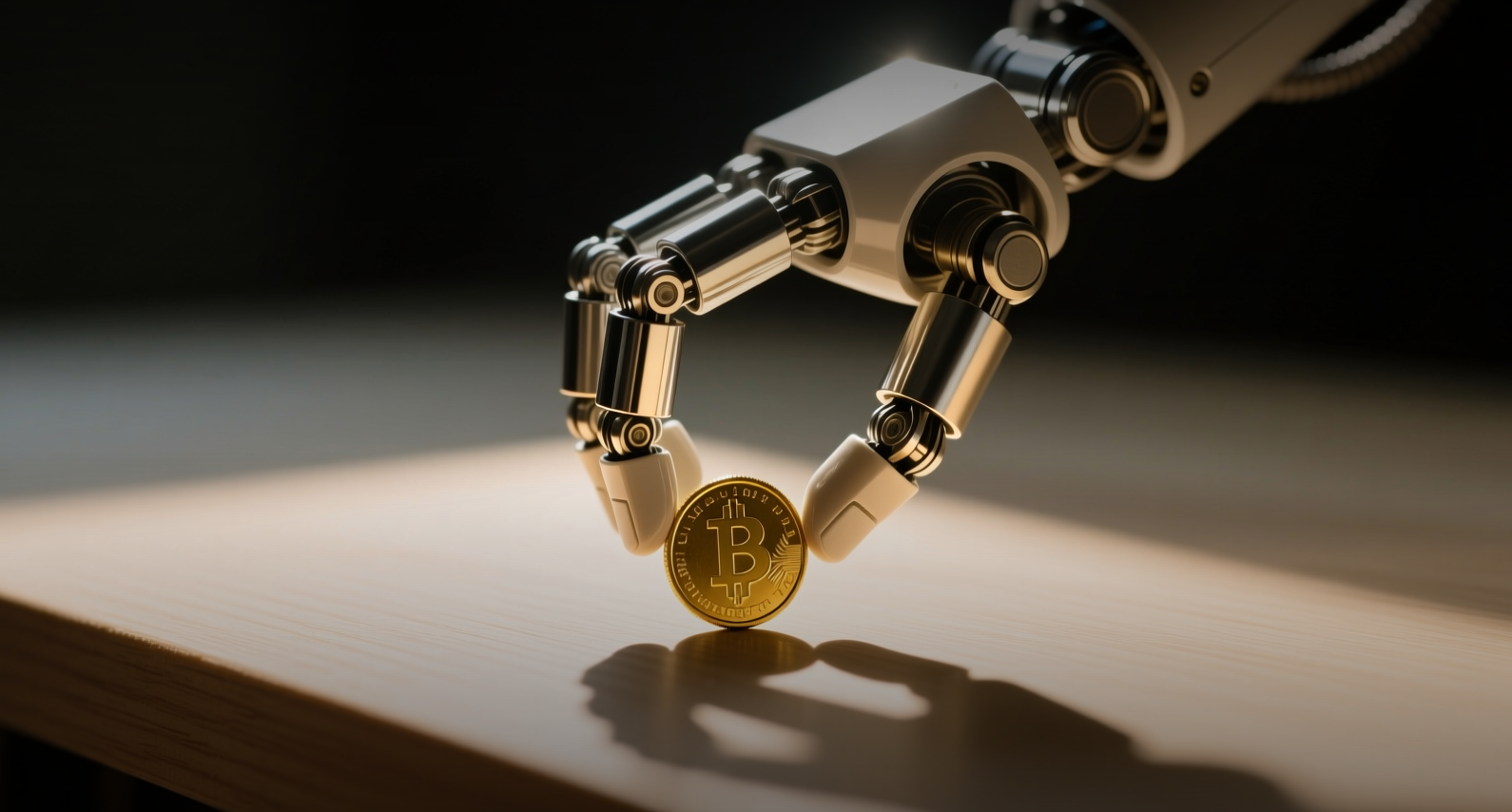
Tether is betting that tomorrow's factory robots will need their own crypto wallets to pay for work.
Tether led a $1.4 billion Series C funding round for German robotics firm Neura Robotics, backed by Nvidia, Amazon, Qualcomm and Bosch, in one of the largest private investments in humanoid robotics on record. The stablecoin issuer will embed its Wallet Development Kit and QVAC edge AI runtime into Neura's software platform, enabling robots to hold self-custodial wallets and transact without human approval.
"We believe physical AI and cognitive robotics will become one of the largest technology shifts of the coming decades, transforming industries ranging from manufacturing and logistics to healthcare, services and household robotics," David Reger, founder and CEO of Neura Robotics, said.
The round values Neura at about $7 billion, a jump from the €120 million Series B it raised in January 2025. Neura said its orderbook and deployment pipeline exceed $1 billion in value. The company plans to increase serial production to multi-million robots by 2030 and expand the Neuraverse, an open shared intelligence database where robots exchange skills and learnings across deployments. Tether, Imec.xpand, Schaeffler, the European Investment Bank, Lingotto Horizon and InterAlpen Partners also participated. No break-out investment details were disclosed.
The deal extends Tether's push beyond stablecoin issuance into AI and robotics infrastructure. Tether posted $1.04 billion in net profit in the first quarter of 2026, giving it the cash to back hardware bets. The company has already invested in Blackrock Neurotech and Generative Bionics as part of a broader robotics strategy.
How robot wallets work
Tether will integrate two technologies into Neura's Neuraverse platform. The first is the Wallet Development Kit, an open-source tool that lets developers build self-custodial wallets into any device. A Neura robot equipped with the kit could receive payment for completing a task — a delivery, an inspection, a weld — and spend that money on its own, such as ordering spare parts, within rules set by its owner.
The second is QVAC, Tether's edge AI runtime. Unlike cloud-based AI systems that require constant internet connectivity, QVAC runs models directly on the robot itself. That design keeps data and decisions on the device, allowing the machine to operate in factories or homes without a stable connection.
"Autonomous machines need to process information locally and make their own decisions," Tether CEO Paolo Ardoino said. "They also need to complete transactions without relying on centralized intermediaries."
The machine economy thesis
Both firms frame the partnership as infrastructure for what they call the machine economy — a system where robots operate, transact and make decisions with greater autonomy than today. In that model, stablecoins serve as the payment layer for machine-to-machine transactions, with robots holding digital wallets and settling payments automatically.
The concept has attracted attention beyond crypto. Payment networks including Mastercard have rolled out stablecoin-based tools for AI agents to make automatic payments. Activity on AI-agent payment systems built on blockchain networks has climbed in recent months.
Whether wallet-equipped robots become a commercial reality at scale remains unproven. No robotics firm has shipped machines with self-custodial wallets. Neura's timeline calls for multi-million unit production by 2030, and its existing deployment pipeline exceeds $1 billion, according to the company.
This article is for informational purposes only and does not constitute investment advice.