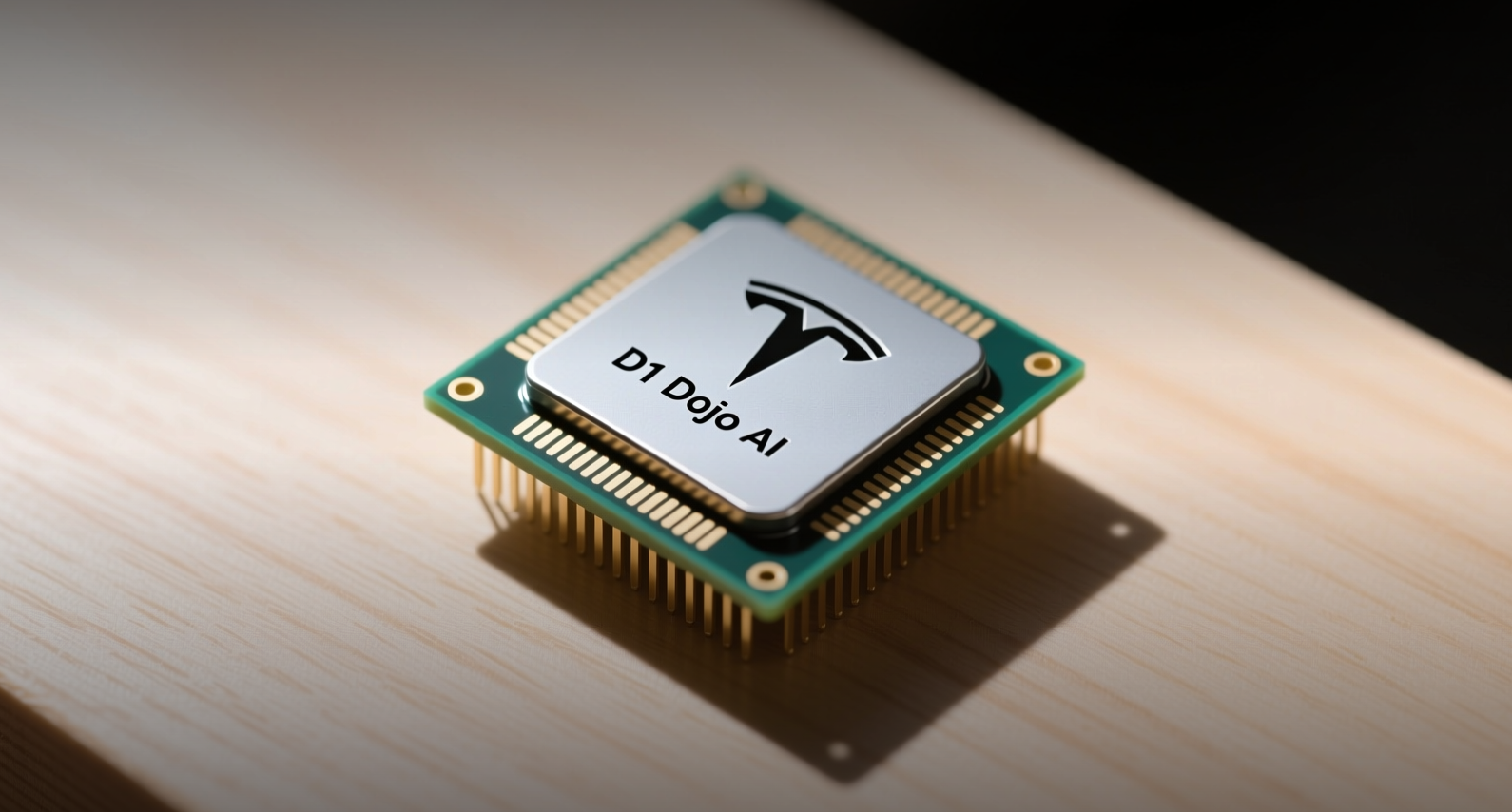
Tesla controls its own AI chips, supercomputers and vehicle hardware — a vertical stack no hyperscaler can match.
Tesla Inc. is building an AI stack spanning custom chips, supercomputers and a finished product, setting it apart from hyperscalers spending nearly $750 billion on 2026 AI capital expenditures with limited returns outside technology.
"AI profit gains outside the technology sector have yet to show meaningful movement," Torsten Slok, chief economist at Apollo Global Management, said in a recent analysis. Implementation costs for enterprise clients are running up to 300% more than replacing human workers, he found.
Amazon.com Inc. leads the Magnificent 7 with a $275 billion cumulative commitment for 2026, followed by Microsoft Corp. at $190 billion, Alphabet Inc. at $190 billion and Meta Platforms Inc. at $145 billion. Tesla, by contrast, has invested billions in its Cortex supercomputer and custom Dojo hardware while designing its own Full Self-Driving chips for vehicles already on the road.
The divergence matters because Tesla's vertical integration — owning the silicon, the training infrastructure and the manufacturing — means every layer it controls is one less layer where profits can leak to a cloud provider. If robotaxis become the first mass-market AI application, Tesla could layer high-margin software revenue on top of vehicles already rolling off production lines.
The Apollo analysis challenges the premise underpinning the hyperscalers' spending spree. Slok's findings suggest AI profit timelines may stretch from five months to five years, a divergence that could trigger selloffs in stocks priced for rapid commercialization. Companies building AI primarily for proprietary products — like Tesla — are relatively insulated, while those relying on business-to-business sales face the most risk.
Tesla's approach differs fundamentally from competitors in autonomous ride-hailing. Waymo must partner with automakers and retrofit existing vehicles with autonomous hardware. Uber Technologies Inc. depends on outside fleets and third-party drivers. Tesla starts with millions of vehicles already designed around its technology, leaving the factory prepared for autonomous capability as software improves.
Texas recently approved legislation creating a statewide framework for autonomous vehicle operations, giving Tesla a larger regulatory runway to expand robotaxi deployments without navigating a patchwork of local approvals. The company's manufacturing scale lowers deployment friction and could allow it to expand faster than rivals that must build or modify vehicles one fleet at a time.
The market still values Tesla largely on vehicle deliveries and automotive gross margins. The stock trades at 15.6 times sales, compared with 0.6 times for the US auto industry and 1.4 times for peers, according to BlackGoat data. That premium reflects expectations for Tesla's AI and robotaxi story rather than its car-making business. A narrative-based fair value estimate of $588.18 per share implies 30.7% upside from the current $407.76, but the valuation leaves little room for execution missteps.
Tesla reported second-quarter deliveries of 480,126 vehicles and production of 451,758 units. The stock has returned 16.85% over the past 90 days and 30.06% over the past year, though it remains down 6.92% year to date. Regulatory approval remains uneven outside Texas, and fully autonomous driving still faces technical and legal hurdles that could delay the robotaxi timeline.
For investors, the key question is whether Tesla is being priced as a car company or an AI platform with manufacturing capabilities. The current valuation suggests the market already prices in significant future growth from high-margin software businesses. If robotaxi adoption accelerates, that premium could prove justified. If timelines slip, the multiple compression could be severe.
This article is for informational purposes only and does not constitute investment advice.