

Elon Musk’s vision for a $250 trillion humanoid robot market is facing its first major test as competitors ramp up ahead of Tesla’s 2026 Optimus reveal.
Elon Musk’s vision for a $250 trillion humanoid robot market is facing its first major test as competitors ramp up ahead of Tesla’s 2026 Optimus reveal.
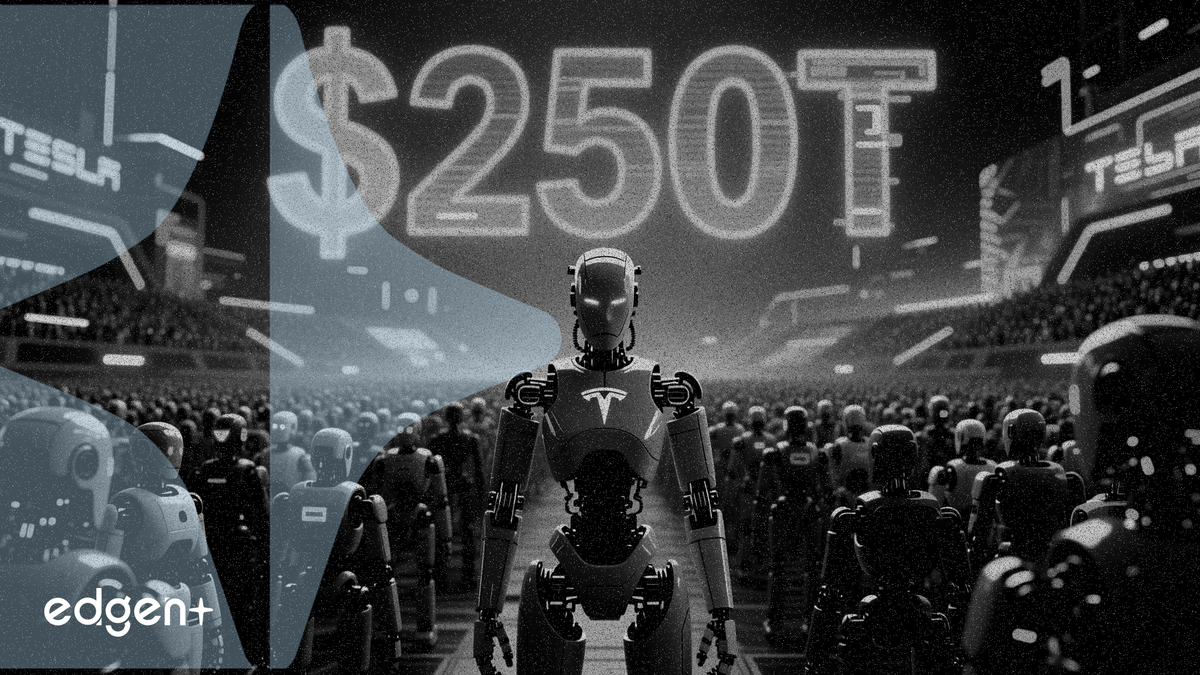
(Bloomberg) -- Tesla’s ambitious push into humanoid robotics faces a rapidly intensifying competitive landscape, with established players and new challengers raising the bar before the company’s next major reveal. While CEO Elon Musk has outlined a vision for a future dominated by billions of Tesla-made robots, rivals like Boston Dynamics and China-based Unitree are demonstrating increasingly sophisticated capabilities, creating a challenging environment for Tesla’s Optimus unit to prove its value.
At the 8th Future Investment Initiative conference, Elon Musk predicted that by 2040 there would be at least 10 billion humanoid robots, with each priced between $20,000 and $25,000. "This technology could be worth $250 trillion by 2040," Musk said, framing the opportunity as larger than the entire automotive industry and central to Tesla's future valuation.
The prediction hinges on Tesla’s ability to not only solve complex engineering problems but also to mass-produce robots at a cost and scale that no other company has yet achieved. The company’s 2026 timeline for revealing its latest progress on the Optimus robot is set against a backdrop of significant advancements from competitors. Boston Dynamics, long the industry benchmark for dynamic stability and mobility, continues to refine its Atlas robot, while Unitree has emerged as a formidable competitor, showcasing robots with impressive agility and speed.
For Tesla, the stakes extend far beyond a new product line. The success of Optimus is critical to justifying the company's high valuation and its narrative as an AI-first technology company, not just an automaker. With the company also developing its "Robotaxi" and "Cybercab" platforms, the robotics division represents a key part of its diversification strategy, but the path to market dominance appears increasingly contested.
While Tesla’s Optimus has shown progress in controlled environments, performing simple factory tasks, the public demonstrations from competitors have set a high bar for real-world application. Boston Dynamics, acquired by Hyundai Motor Group for $1.1 billion in 2021, has decades of research in dynamic balancing and locomotion, giving its robots a clear edge in navigating complex, unstructured environments.
Meanwhile, Unitree has aggressively pushed into the market with a range of quadruped and humanoid robots. Their rapid development cycles and focus on commercial availability present a different kind of threat, potentially capturing market share before Tesla’s manufacturing lines are even operational. The presence of these strong competitors raises the execution risk for Tesla and pressures the 2026 reveal to demonstrate a significant leap in capability, not just incremental progress.
The humanoid robot market is still in its infancy, but the potential for disruption across logistics, manufacturing, and elder care is enormous. For investors, the key question is whether Tesla can translate its manufacturing expertise from the automotive sector into this new domain. The company's ability to leverage its AI work from its Full Self-Driving (FSD) program is a potential advantage, but the physical hardware presents a different set of challenges.
Tesla shares trade at a premium, largely based on the promise of future technologies like Optimus and autonomous driving. While Musk's $250 trillion market forecast is ambitious, even capturing a fraction of that would have a profound impact. However, the growing competition means that this potential is far from guaranteed. The upcoming 2026 demonstration will be a crucial data point for Wall Street to either validate or question the multi-trillion-dollar robotics thesis embedded in Tesla's stock price.
This article is for informational purposes only and does not constitute investment advice.
