

Tencent's Miora AI agent remembers, reasons, and orchestrates sub-agents — challenging Alibaba and Baidu in China's $15 billion AI market.
Tencent's Miora AI agent remembers, reasons, and orchestrates sub-agents — challenging Alibaba and Baidu in China's $15 billion AI market.
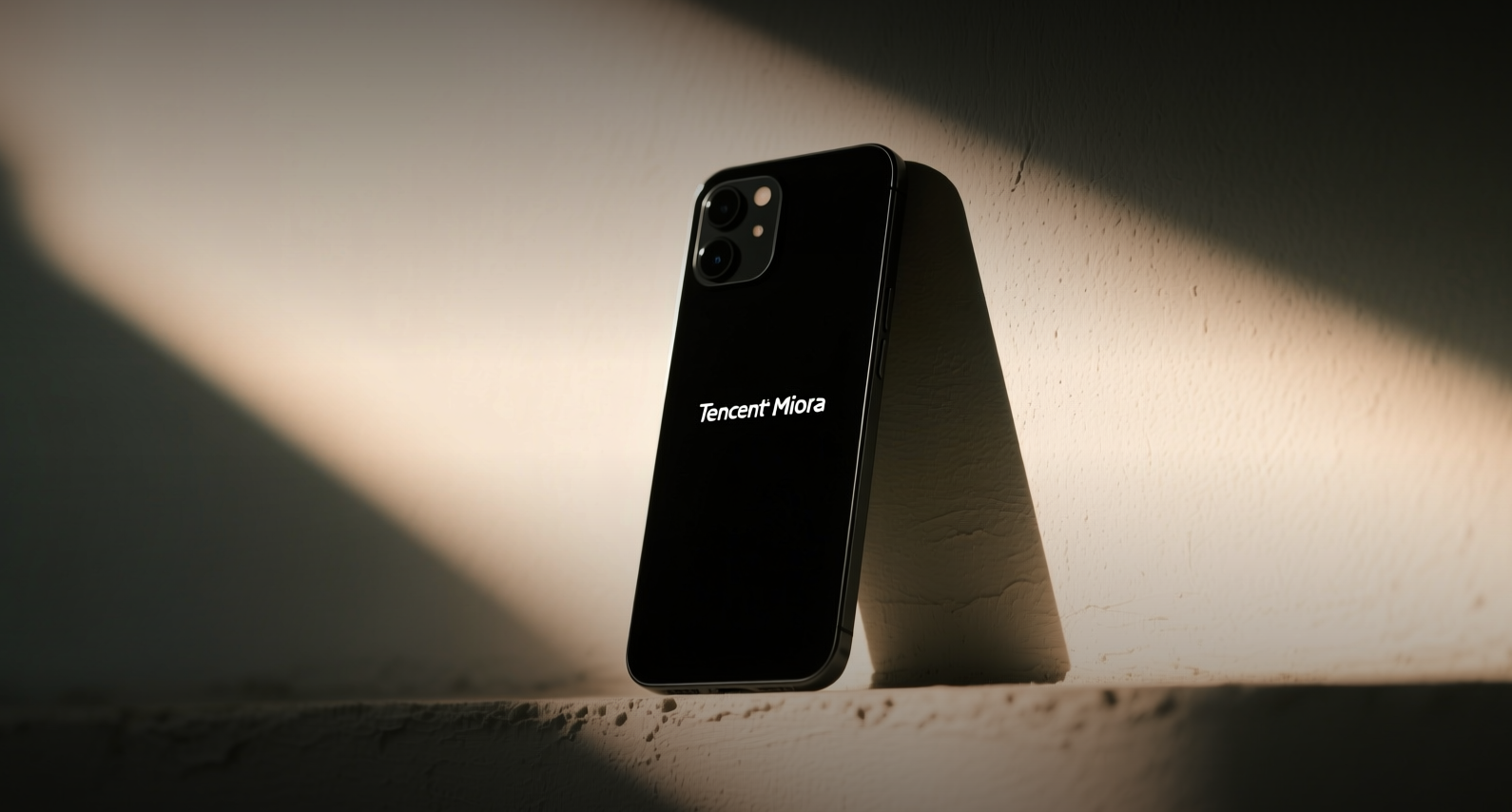
Tencent Holdings launched Miora, an AI creative agent with memory and multi-agent orchestration, on July 22, intensifying competition among China's tech giants for a slice of the country's $15 billion enterprise AI software market.
"Miora represents a shift from single-task chatbots to agents that can maintain context across sessions and delegate sub-tasks autonomously," Wu Yunsheng, vice president of Tencent Cloud and head of the Tencent Cloud Agent Development Platform, said.
The agent can remember past user interactions, interpret complex natural-language requests, and call on multiple specialized sub-agents to complete creative and analytical tasks. It arrives alongside Tencent Cloud ADP 4.0, an enterprise AgentOps platform unveiled at the World Artificial Intelligence Conference in Shanghai on July 21, which offers nearly 40 pre-built Connectors and more than 150 Skills for integrating with systems such as Google Workspace, Confluence, and Jira.
Tencent shares traded at 22 times forward earnings as of July 21. The Miora launch gives the company a consumer-facing AI product to complement its enterprise AgentOps push, potentially unlocking new revenue streams in a market where Alibaba's Qwen and Baidu's Ernie have already established footholds.
The ADP 4.0 platform introduces two headline capabilities — Smart Desk, a unified entry point that lets users build agents with natural language, and Claw Mode, which creates agents that autonomously write and run code in a cloud sandbox for complex, long-horizon tasks. Together, these tools allow enterprises to move AI agents from experimentation into production, addressing what Tencent identified as three critical barriers: difficulty scaling individual pilots, challenges integrating with legacy systems, and lack of security governance and cost control.
Alibaba's Qwen team released Qwen-Image-3.0 on the same day, an image-generation model that accepts prompts of up to 4,500 tokens and renders text as small as 10 pixels. Unlike Tencent's approach, Alibaba did not publish benchmark scores, model weights, or a technical report for the new model — a departure from its earlier practice of releasing open-weights models under Apache 2.0 licenses. The contrast highlights a strategic divergence: Tencent is betting on enterprise-grade agent infrastructure with governance and observability, while Alibaba continues to push foundation-model capabilities.
The Chinese AI market has become a three-way contest among Tencent, Alibaba, and Baidu, each pursuing a different route to monetization. Baidu's Ernie Bot has focused on search integration and enterprise API access. Alibaba's Qwen family spans text, image, and video generation with an open-weights strategy aimed at developer adoption. Tencent's bet on agent orchestration and enterprise tooling — with 40 Connectors, 150 Skills, and end-to-end governance — positions it to capture the fastest-growing segment of enterprise AI spending, which IDC projects will reach $15 billion in China by 2027.
Tencent Cloud ADP has already been deployed across retail, finance, government, and manufacturing, where teams have used AI agents for intelligent Q&A, customer service, marketing content generation, and business analysis. The platform supports multiple entry points — browser, office software, chat channels, and API — embedding agents into daily workflows without requiring existing systems to be replaced.
For investors, the question is whether Tencent's infrastructure-first approach can translate into measurable revenue. The company's cloud business reported revenue of 51.2 billion yuan ($7.1 billion) in the first quarter of 2026, up 12 percent year over year. AI-related workloads remain a small fraction of that total, but the Miora launch and ADP 4.0 upgrade give Tencent a dual product — consumer agent and enterprise platform — that could accelerate adoption on both fronts. Tencent trades at 22 times forward earnings, a discount to Alibaba's 25 times, reflecting the market's wait-and-see stance on AI monetization at China's largest technology companies.
This article is for informational purposes only and does not constitute investment advice.
