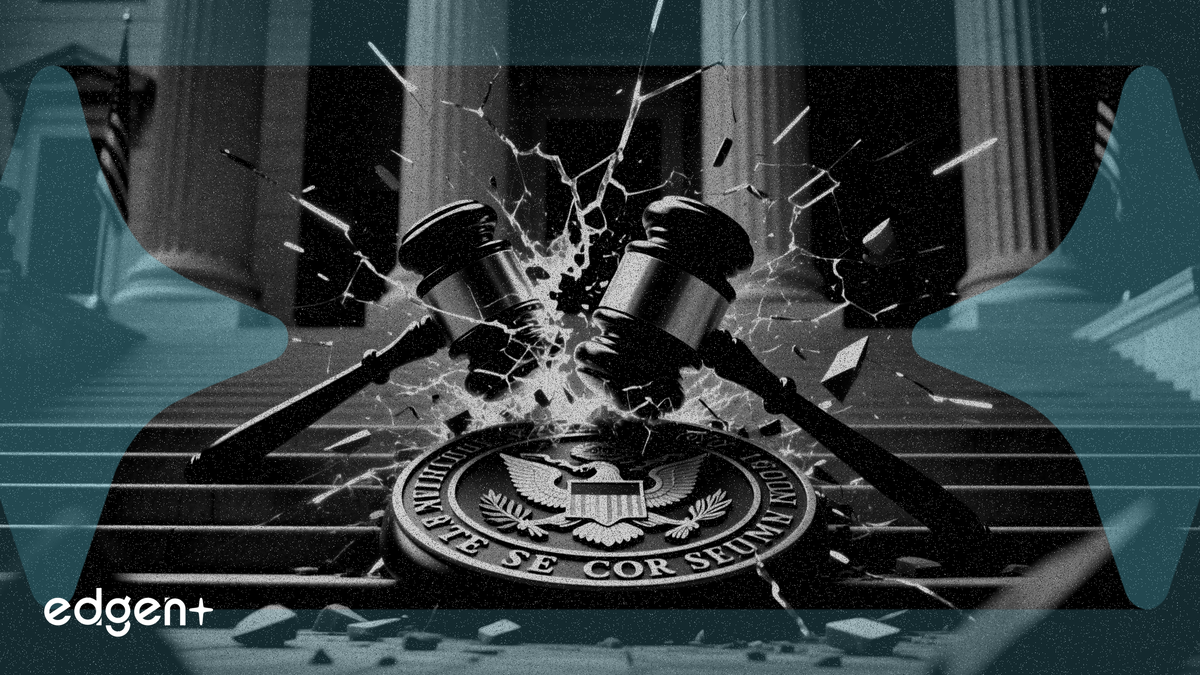
The U.S. Supreme Court's decision on April 6 to overturn Stephen Bannon's conviction injects fresh uncertainty into the political landscape, with potential ripple effects for market stability.
Back
The U.S. Supreme Court's decision on April 6 to overturn Stephen Bannon's conviction injects fresh uncertainty into the political landscape, with potential ripple effects for market stability.

(P1) The U.S. Supreme Court on Saturday approved a request to overturn the 4-month criminal conviction of former White House advisor Stephen Bannon, a move that reverberates through the intersection of law and politics. The decision nullifies a sentence handed down after Bannon was found guilty of contempt of Congress for refusing to comply with a subpoena.
(P2) "This is less about the specifics of Bannon's case and more about what it signals for the perceived strength of institutional checks and balances," a note from political risk consultancy Eurasia Group said. "Markets will interpret this as a test of the guardrails, potentially increasing the risk premium associated with U.S. political outcomes."
(P3) While the direct market reaction is still developing, indicators of future volatility are a key focus. The CBOE Volatility Index (VIX), often called the market's "fear gauge," will be closely watched for any surge from its recent lows. Sectors sensitive to regulatory and political shifts, including technology and energy, may experience heightened investor scrutiny as the implications of the ruling are digested.
(P4) At stake is investor confidence in the predictability of the U.S. legal and political framework. The overturning of a contempt of Congress charge raises questions about the legislative branch's enforcement power, a dynamic that could become a recurring theme. For investors, this introduces a new variable into an already complex equation, potentially impacting capital allocation decisions and weighing on sentiment regarding long-term U.S. political stability.
The case stemmed from Bannon's refusal to cooperate with the congressional committee investigating the Jan. 6, 2021, events at the U.S. Capitol. His conviction for contempt of Congress was seen as a rare instance of the legislature successfully enforcing its subpoena power against a high-profile political figure. The Supreme Court's intervention to overturn it is a significant development that could set a new precedent for future inter-branch disputes.
This legal event is intertwined with broader Trump-related political dynamics. As a former key strategist, Bannon remains an influential figure. The court's decision is being viewed by many as a proxy for ongoing legal battles involving the former President and his allies. The outcome could embolden figures in similar legal standoffs, suggesting a potential shift in the balance of power between the judiciary, executive, and legislative branches.
For financial markets, pronounced political uncertainty often translates into higher volatility. The last time a comparable level of legal-political tension was observed during the 2020 election transition, the VIX saw sustained periods above 25. While the current situation is different, it highlights how non-economic events can materially impact market risk perceptions. Investors may begin to price in a higher probability of contentious legal and political events, which could lead to a risk-off sentiment, favoring safe-haven assets like U.S. Treasuries and gold over equities. The ruling's impact on the perceived stability of American institutions could become a durable factor for investors to consider through the remainder of the year.
This article is for informational purposes only and does not constitute investment advice.