
The race to move power-hungry AI data centers off-planet is heating up as Starcloud becomes Y Combinator's fastest-ever unicorn.
The race to move power-hungry AI data centers off-planet is heating up as Starcloud becomes Y Combinator's fastest-ever unicorn.
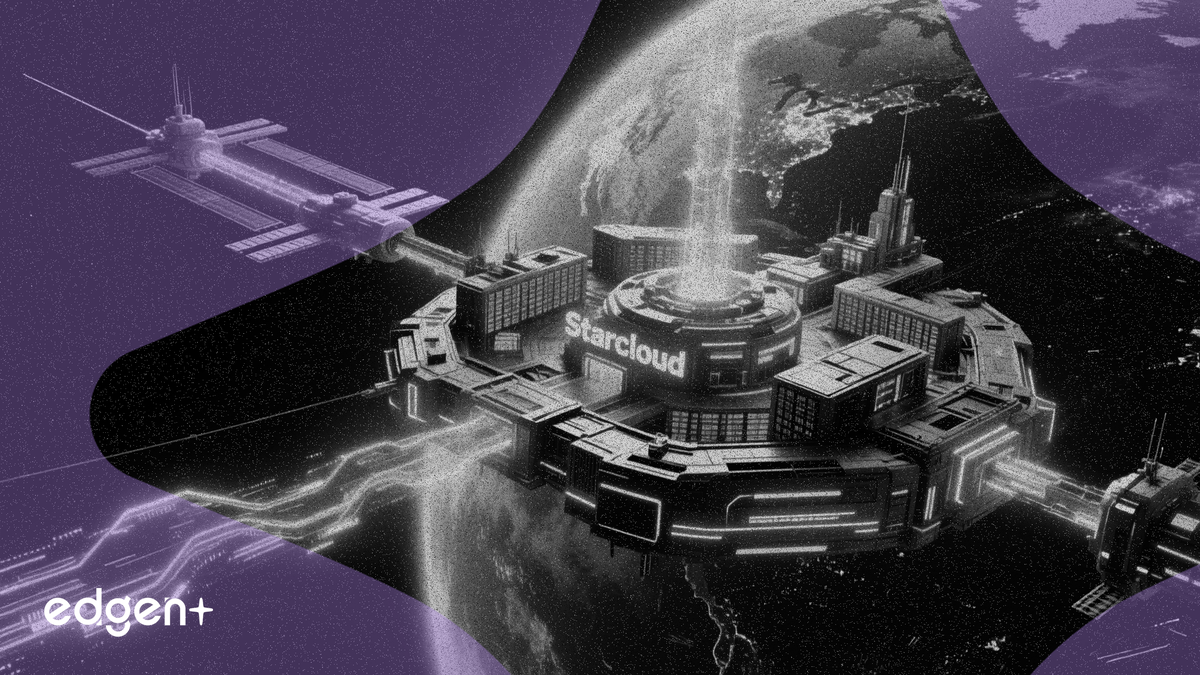
Starcloud, a startup building data centers in low Earth orbit, has raised $170 million in a Series A round at a $1.1 billion valuation, aiming to solve the terrestrial energy bottleneck straining the artificial intelligence industry. The funding round, led by Benchmark and EQT Ventures, makes the Redmond-based company the fastest to reach unicorn status in Y Combinator’s history, just 17 months after its demo day.
"The AI revolution is colliding with the physical limits of our terrestrial energy grid," Philip Johnston, co-founder and CEO of Starcloud, said in a statement. "By moving AI compute to space, we unlock access to unlimited solar power and completely remove the energy bottleneck. This funding allows us to rapidly scale our orbital infrastructure and meet the massive commercial demand for sustainable AI compute."
The new capital brings Starcloud’s total funding to $200 million and will accelerate the development of its next-generation satellites. The company launched its first satellite, Starcloud-1, in November 2025, which carried an Nvidia H100 and became the first to train an AI model in orbit. A second satellite, Starcloud-2, is planned for launch in October 2026 and will feature Nvidia's newer Blackwell architecture and an AWS server blade, running commercial workloads for partners including Crusoe and Google Cloud.
The fundraise highlights intense investor interest in moving power-hungry AI infrastructure into space, where solar power is continuous and cooling is passive. The move pits Starcloud against giants like SpaceX, which acquired Elon Musk’s xAI and has plans for its own orbital compute network, and Blue Origin. Starcloud’s valuation underscores its first-mover advantage, with hardware already in orbit and commercial contracts for customers like Capella Space.
Starcloud's long-term cost-competitiveness hinges on the success of SpaceX's Starship. While the company's initial business model works with current Falcon 9 launch costs, the vision of competing directly with terrestrial data centers requires a significant reduction in launch prices. Johnston projects that Starcloud's third-generation, three-tonne "Starcloud-3" spacecraft will be cost-competitive with Earth-based facilities, but only if Starship brings launch costs down to approximately $500 per kilogram.
The company is planning for commercial Starship flights to be available by 2028 or 2029. A single Starship could deploy about 50 Starcloud-3 satellites, representing roughly 10 megawatts of computing capacity. The new funding will be used to establish a manufacturing facility for these larger satellites. As part of the financing, Benchmark General Partner Chetan Puttagunta, a six-time Midas List investor, will join Starcloud's board.
The strategic landscape for orbital data centers is becoming increasingly crowded. Besides SpaceX and Blue Origin, Google is pursuing "Project Suncatcher," and startups like Aethero and Aetherflux are also attracting capital. The scale of the challenge remains immense; the entire 10,000-satellite Starlink constellation generates about 200 megawatts of power, while over 25 gigawatts of data center capacity are currently under construction in the U.S. alone.
Starcloud, however, is positioning itself as a pure-play infrastructure provider, offering power, cooling, and connectivity for customers to run their own hardware, similar to a terrestrial colocation data center. This differentiates it from vertically integrated players like SpaceX. The company's long-term plans include an 88,000-satellite constellation, a bet on a future where a significant portion of AI computation happens off-world.
This article is for informational purposes only and does not constitute investment advice.