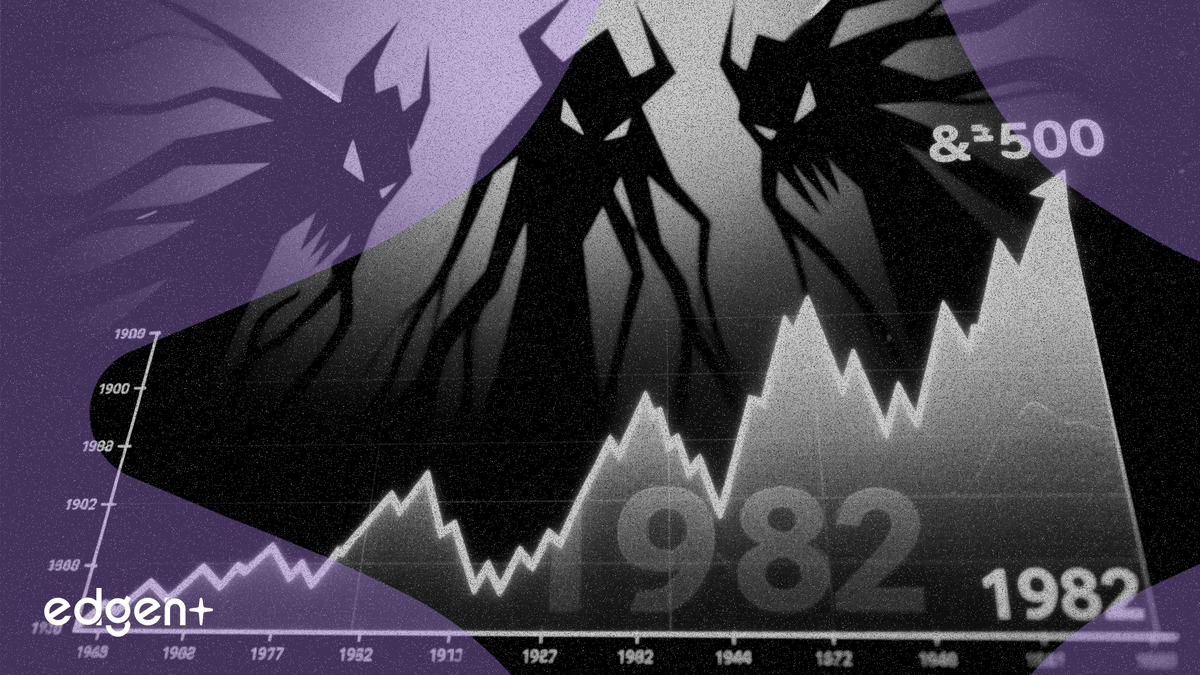
The S&P 500 has staged a blistering rally to erase its losses for the year, but the surge is drawing comparisons to a 1982 bull run that may be difficult to repeat in the current environment. The broad market benchmark is up nearly five percent in 2026, a move that has seen its 14-day Relative Strength Index (RSI) jump from oversold to overbought in just 12 trading days.
"The bull run has been nothing short of historic, conjuring up memories of 1982," Julian Emanuel, a strategist at Evercore ISI, said in a research note. Emanuel noted the rebound has been faster than those seen after the 2020 pandemic lows, the 2009 Great Recession bottom, and the 1987 crash.
The only quicker move from oversold to overbought territory happened in 1982, according to Evercore. Following that technical signal, the S&P 500 rallied another 69 percent over the subsequent 14 months. A similar performance today would theoretically send the index surging past 10,670.
While history offers a tantalizing parallel, the setup for investors is vastly different. The primary contrasts that could limit the market's upside are today's high valuations, geopolitical risks to oil prices, and uncertainty over the Federal Reserve's path for interest rates.
Valuations and Geopolitics Present Headwinds
The most significant difference is valuation. The market escaped a decade-long bear market in 1982 with price-to-earnings valuations at a low of eight times, a level Emanuel calls "unthinkable in today's environment." The S&P 500 currently trades near 25 times earnings, a generational high that offers a much smaller cushion for investors.
Furthermore, the outlook for energy prices has flipped. In the early-to-mid 1980s, oil prices began a significant decline, providing a tailwind for the economy and markets. Today, with the ongoing conflict with Iran, oil prices remain a major question. Iran's ability to influence the Strait of Hormuz, a critical global oil chokepoint, could fundamentally alter the price landscape, creating inflationary pressures that did not exist in the 1982 scenario.
Federal Reserve's Path Remains Unclear
The final differentiating factor is the Federal Reserve. In 1982, both inflation and interest rates had clearly peaked and were on a downward trajectory, giving markets confidence. While it is possible that rates and inflation have peaked in the current cycle, uncertainty persists, particularly with the upcoming end of Fed Chair Jerome Powell's term on May 15. Any conflict surrounding his potential departure and the confirmation of a successor could undermine the central bank's perceived independence and create market volatility.
For investors, the historical echo of 1982 serves as a reminder of the market's potential for powerful rallies. However, the stark differences in valuation and the macroeconomic backdrop suggest caution. Betting on a direct repeat of history is a risky strategy; a more prudent approach for long-term investors may be to practice dollar-cost averaging to smooth out an entry point over time.
This article is for informational purposes only and does not constitute investment advice.