
Key Takeaways:
- Hanwha Aerospace jumped 11.8% and LIG Defense hit the 30% Kospi limit
- Hyundai Rotem gained 12.67% on prospects of a 250-tank export deal to Iraq
- Analysts expect Middle East defense contracts to resume after the Iran war ends
Key Takeaways:
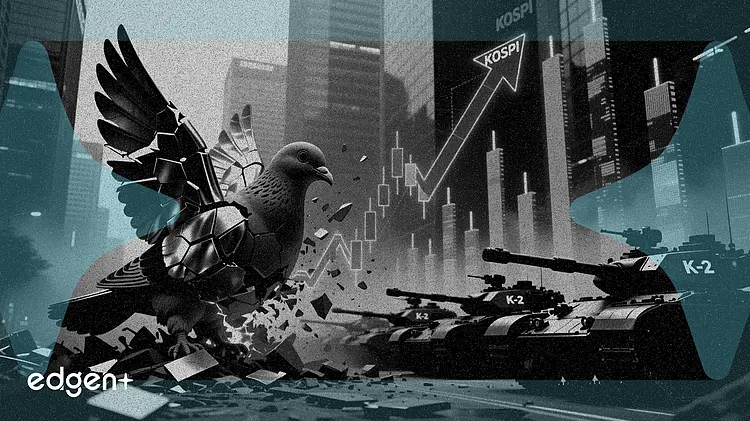
South Korean defense contractors surged on Tuesday as the prospect of an end to the Iran war unlocked billions of dollars in delayed Middle East arms deals.
Hanwha Aerospace jumped 11.8% and LIG Defense & Aerospace hit the 30% daily limit on the Kospi after the US and Iran reached a tentative deal to end their war.
"The end of the Iran war would serve as a positive catalyst for the Korean defense industry," said Kang Tae Ho, an analyst at DS Investment and Securities.
Hyundai Rotem, maker of the K2 Black Panther main battle tank, gained as much as 12.67%, while components maker Firstec also nearly hit the 30% upward limit. Mirae Asset Securities wrote in a June 16 note that investors increasingly expect defense export pipelines to resume and orders from the Middle East to pick up.
Kang pointed to Hanwha Aerospace's suspended negotiations with Saudi Arabia and Hyundai Rotem's talks to export 250 K2 tanks to Iraq as deals that could resume quickly. "Securing orders will become a reality once negotiations resume following the end of the war," he said, adding that a contract for the Middle East-specific K2ME derivative could be signed in the second half of 2026 or the first half of 2027.
LIG manufactures the Cheongung air defense system, also known as the M-SAM, which saw its combat debut in the United Arab Emirates during the Iran war. Analysts have said the Cheongung intercept missile offers similar performance to the US-made PAC-3 interceptor used in the Patriot system — at a third of the PAC-3's reported $4 million price tag.
The rally extended beyond individual stocks to the broader Kospi index, which climbed as oil prices dropped on the prospect of reduced Middle East tensions. The won strengthened against the dollar as risk appetite returned to Asian markets, with investors rotating into export-oriented sectors.
Vikas Pershad, portfolio manager for Asian equities at M&G Investments, said defense spending is increasingly driven by longer-term strategic considerations rather than any single geopolitical event. "Those trends remain intact," he said.
This article is for informational purposes only and does not constitute investment advice.
