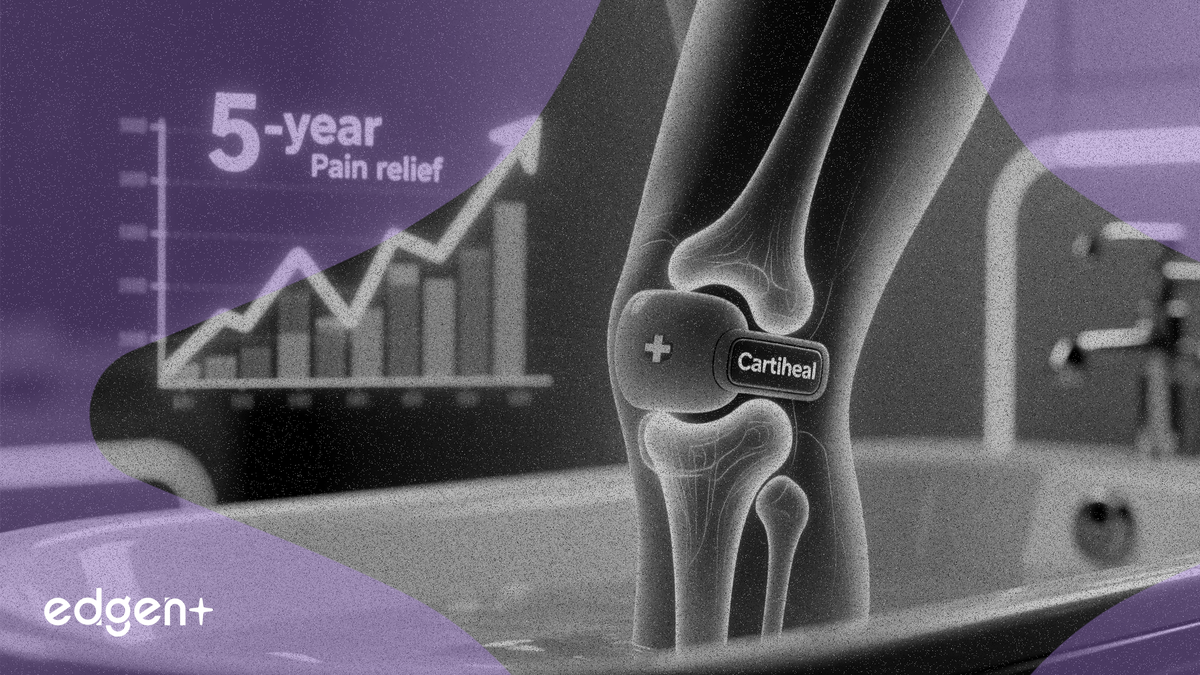
Smith+Nephew (NYSE: SNN), CARTIHEAL AGILI-C implantının çok merkezli, rastgele kontrollü bir çalışmada beş yıllık takibin ardından diz kıkırdağı onarımı için cerrahi standart bakıma kıyasla klinik olarak üstün sonuçlar gösterdiğini bildirdi. American Journal of Sports Medicine'de yayımlanan çalışma, 60 aya kadar tüm zaman noktalarında implant için daha yüksek genel Diz yaralanması ve Osteoartrit Sonuç Skorları (KOOS) buldu.
Çalışmaya katılan Weill-Cornell Tıp Fakültesi Ortopedik Cerrahi Profesörü ve Özel Cerrahi Hastanesi'nde ortopedist olan Dr. Andreas Gomoll, "Özellikle CARTIHEAL hastaları, standart bakıma kıyasla ağrı skorlarında iki kat daha fazla azalma yaşadı" dedi. "Beni daha da heyecanlandıran şey, bu sonuçların hem osteoartrit olan hem de olmayan hastalar için karşılaştırılabilir olmasıdır. Bu, osteoartrit tedavi boşluğundaki hastalar için hayati bir yeni seçeneği temsil ediyor."
Deney verileri, aragonit bazlı implant ile tedavi edilen hastaların beş yıllık süre boyunca önemli ölçüde daha iyi ağrı giderimi ve yaşam kalitesi iyileşmesi bildirdiğini gösterdi. Ayrıca, mikro kırık veya debridman prosedürleri uygulanan hastalara kıyasla iki, dört ve beş yıllık işaretlerde günlük yaşam, spor ve rekreasyonla ilgili aktivitelerde üstün fonksiyonel kazanımlar elde ettiler.
Sonuçlar, 2027'de yürürlüğe girecek olan ve kısa süre önce verilen Kategori I Güncel Prosedür Terminolojisi (CPT) koduyla birleştiğinde, FDA onaylı implantı tarihsel olarak sınırlı etkili seçeneği olan bir hasta grubuna hitap edecek şekilde konumlandırıyor. İmplant, geniş bir kondral ve osteokondral kusur yelpazesi için tasarlanmış olup erken cerrahi olmayan müdahaleler ile tam eklem replasmanı arasındaki boşluğu doldurmaktadır.
Daha Geniş Pazar Erişimi ve Benimsenme
Yeni CPT kodunun, Amerika Birleşik Devletleri'ndeki doktorlar ve hastaneler tarafından daha yaygın benimsenmesi için kritik bir adım olan CARTIHEAL prosedürü için geri ödeme sürecini kolaylaştırması bekleniyor. İmplantın, geleneksel kıkırdak onarımından genellikle dışlanan bir grup olan hafif ila orta şiddette osteoartritli hastalardaki etkinliği, hitap edilebilir pazarını önemli ölçüde genişletiyor.
Humanitas Araştırma Hastanesi'nden Profesör Elizaveta Kon, "Bu yeni 5 yıllık sonuçlar, CARTIHEAL İmplantının vaadini daha da doğruluyor" dedi. "Birçok durumda sınırlı tedavi seçeneği olan geniş bir hasta popülasyonuna nihayet güvenilir, kanıta dayalı bir çözüm sunabileceğimizi gösteriyorlar."
İmplantın kendisi, kıkırdağı onarmaya ve altındaki subkondral kemiği restore etmeye yardımcı olan, doğal olarak oluşan bir kalsiyum karbonat olan aragonitten oluşan bifazik bir iskeledir.
Bu makale yalnızca bilgilendirme amaçlıdır ve yatırım tavsiyesi teşkil etmez.