
Singapore's cabinet adopted new ministerial salary benchmarks that lift the prime minister's annual pay to S$3.6 million, a 64 percent increase and the first adjustment since 2012.
Singapore's cabinet adopted new ministerial salary benchmarks that lift the prime minister's annual pay to S$3.6 million, a 64 percent increase and the first adjustment since 2012.
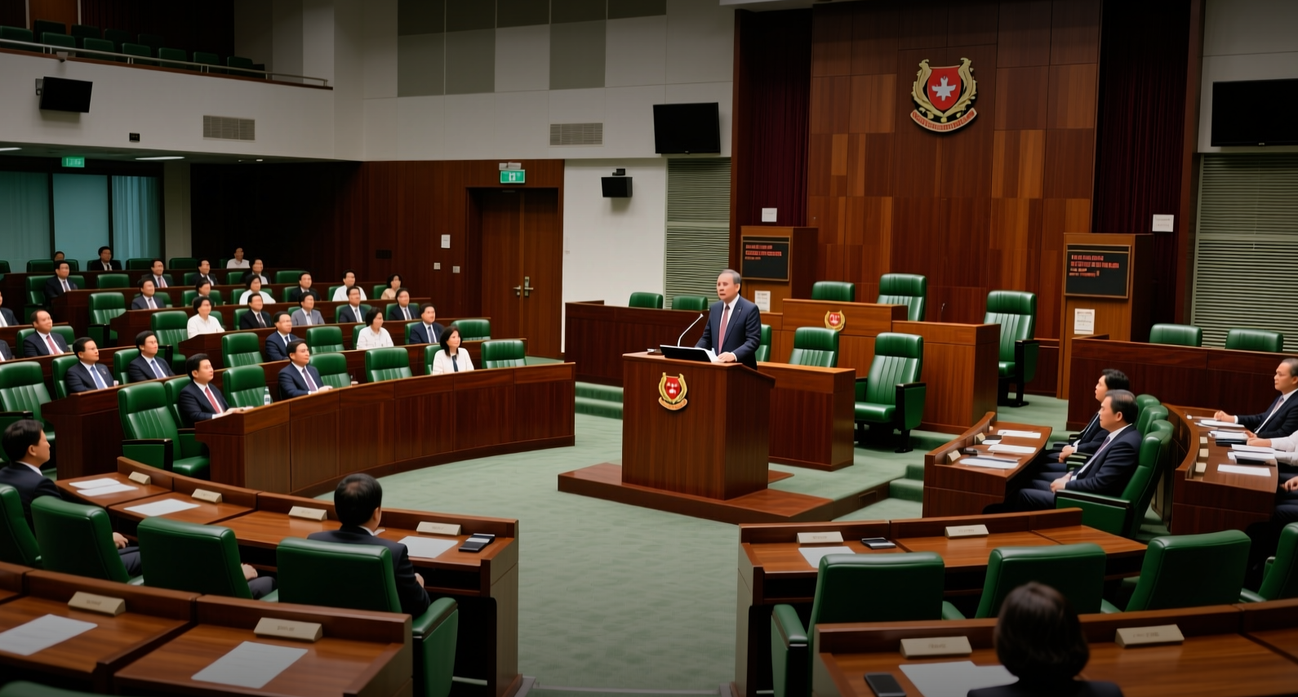
Singapore's government accepted an independent committee's recommendation to raise ministerial salaries by up to 64 percent, lifting Prime Minister Lawrence Wong's annual pay to S$3.6 million ($2.85 million) from S$2.2 million.
"Political salaries are a difficult and emotive issue. The sums involved are more than what most citizens earn, so I understand why Singaporeans scrutinise them closely," Wong told parliament Tuesday in a ministerial statement.
The entry-level benchmark for a Ministerial Grade 4 rises to S$1.8 million from S$1.1 million, pegged to the median annual income of Singapore's top 1,000 private-sector earners, which now stands at about S$3 million, according to Chan Chun Sing, the minister in charge of public services. Existing officeholders receive a one-off adjustment of up to 9 percent from Oct. 15, with most MR4 ministers expected to earn about S$1.35 million by the end of the current term.
The decision marks the first ministerial pay adjustment since 2012, when the People's Action Party cut salaries by 36 percent after its vote share slipped. Wong said he will donate his full S$1.4 million salary increase to charity for five years, a concession that reflects the political sensitivity of the move as Singaporeans face rising living costs against a median monthly income of S$5,775.
The 1994 formula and its limits
Singapore's ministerial pay framework dates to 1994, when the government pegged political salaries to the incomes of the city-state's leading corporate earners, arguing the qualities of the top 1,000 earners "reflect the desired calibre of the people whom Singapore needs for good government," according to the Public Service Division. Junior ministers' salaries are set 40 percent below the median of that group.
The formula has proven politically fraught. In 2012, after the People's Action Party's vote share slipped in a parliamentary election, the cabinet cut ministers' salaries by about 36 percent. Successive PAP governments then declined to raise salaries out of fear of political fallout, Wong acknowledged. A 2017 review committee affirmed the framework remained sound, but the government declined to adopt its recommendation to raise pay.
"Restraint cannot become neglect," Wong said, arguing the government could not affirm a framework in principle while disregarding it indefinitely in practice. He noted salaries in the private sector, civil service, judicial service and public sector had all moved higher since 2012.
Cost-of-living tension
The raises arrive as Singaporeans contend with rising living costs against a median monthly income of S$5,775 in 2025. Wong's new benchmark salary of S$3.6 million compares with the Hong Kong chief executive's $719,000 annual pay, the Swiss president's $606,000, the British prime minister's $230,000 and U.S. President Donald Trump's $400,000, according to data from non-profit PoliticalSalaries.com.
Gillian Koh, a senior research fellow at Singapore's Lee Kuan Yew School of Public Policy, said that in percentage terms, the ministers' raises still lag those for low- and medium-income Singaporeans since 2012. Still, the decision is likely to divide voters, with some seeing the logic of attracting talent and avoiding corruption while others focus on the high headline numbers.
"The challenge is really to ensure that the salaries do not deter people from entering politics," Koh said.
The review was conducted by an eight-member independent committee formed in January after a deferment during geopolitical uncertainty. Reviews are held once every five years, with the latest initially scheduled for 2023. Parliament is set to debate the salary framework on Thursday.
This article is for informational purposes only and does not constitute investment advice.
