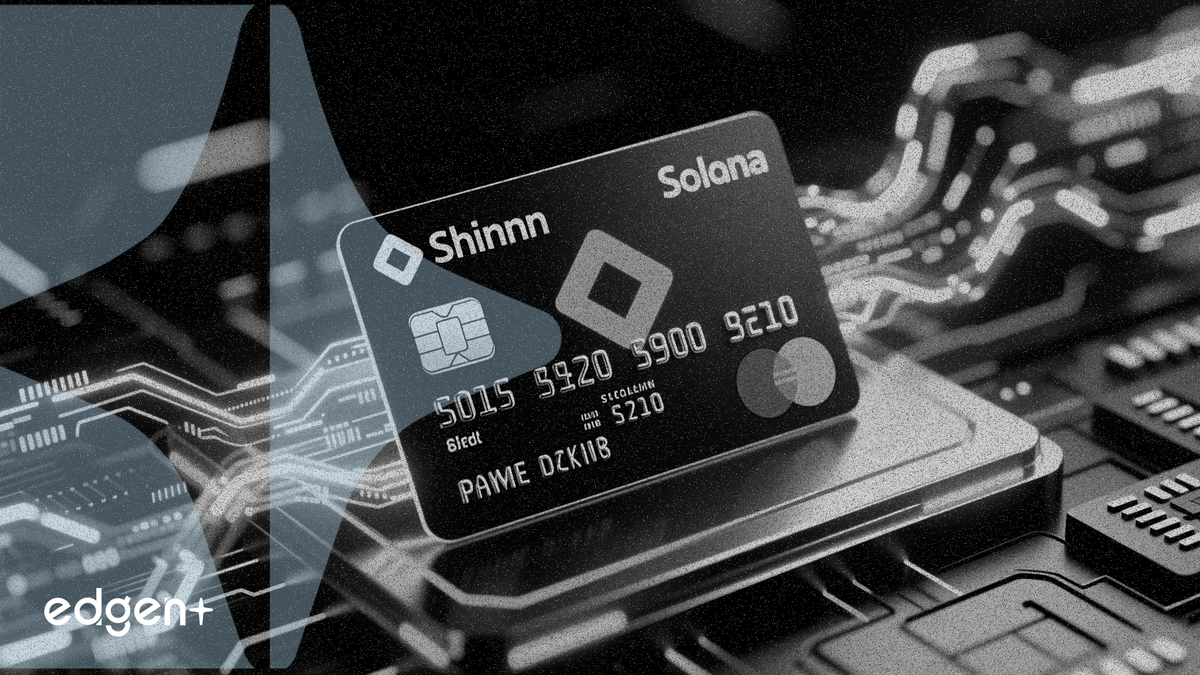
South Korea’s Shinhan Card will partner with the Solana Foundation to pilot a stablecoin payment system, with a proof-of-concept running on Solana’s testnet in 2026.
"Building on Solana, we plan to closely examine the practical applicability of blockchain technology and proactively explore next-generation financial models,” Kim Young-il, executive vice president of Shinhan Card, said in a statement.
The collaboration will focus on testing real-world payment scenarios between consumers and merchants. A key goal is validating the security and stability of non-custodial wallets before any large-scale deployment. The project will use oracle technology to connect real-world transaction data to the Solana blockchain, enabling the use of smart contracts.
This initiative positions Shinhan Card to compete in a rapidly evolving fintech landscape as South Korea prepares to implement its comprehensive Digital Asset Basic Act, expected to be finalized in 2026. The pilot's results will likely inform the company's strategy for complying with the new regulatory framework.
A stablecoin is a type of cryptocurrency whose value is pegged to another asset, typically a major fiat currency like the U.S. dollar, to maintain a stable price. Shinhan Card’s move reflects a growing trend among South Korean financial institutions to integrate blockchain technology.
The announcement follows a similar partnership from KBank, the partner bank for the Upbit crypto exchange, which is working with Ripple to test cross-border remittances. Both deals show that local firms are actively preparing for a more regulated digital asset environment by building technical expertise ahead of the new legislation.
Shinhan Card's proof-of-concept on the Solana testnet allows the firm to stress-test its payment architecture and refine security protocols without exposing consumers to risk. By building its own data-driven foundation now, the company aims to be an early mover once the Digital Asset Basic Act is in effect.
This article is for informational purposes only and does not constitute investment advice.