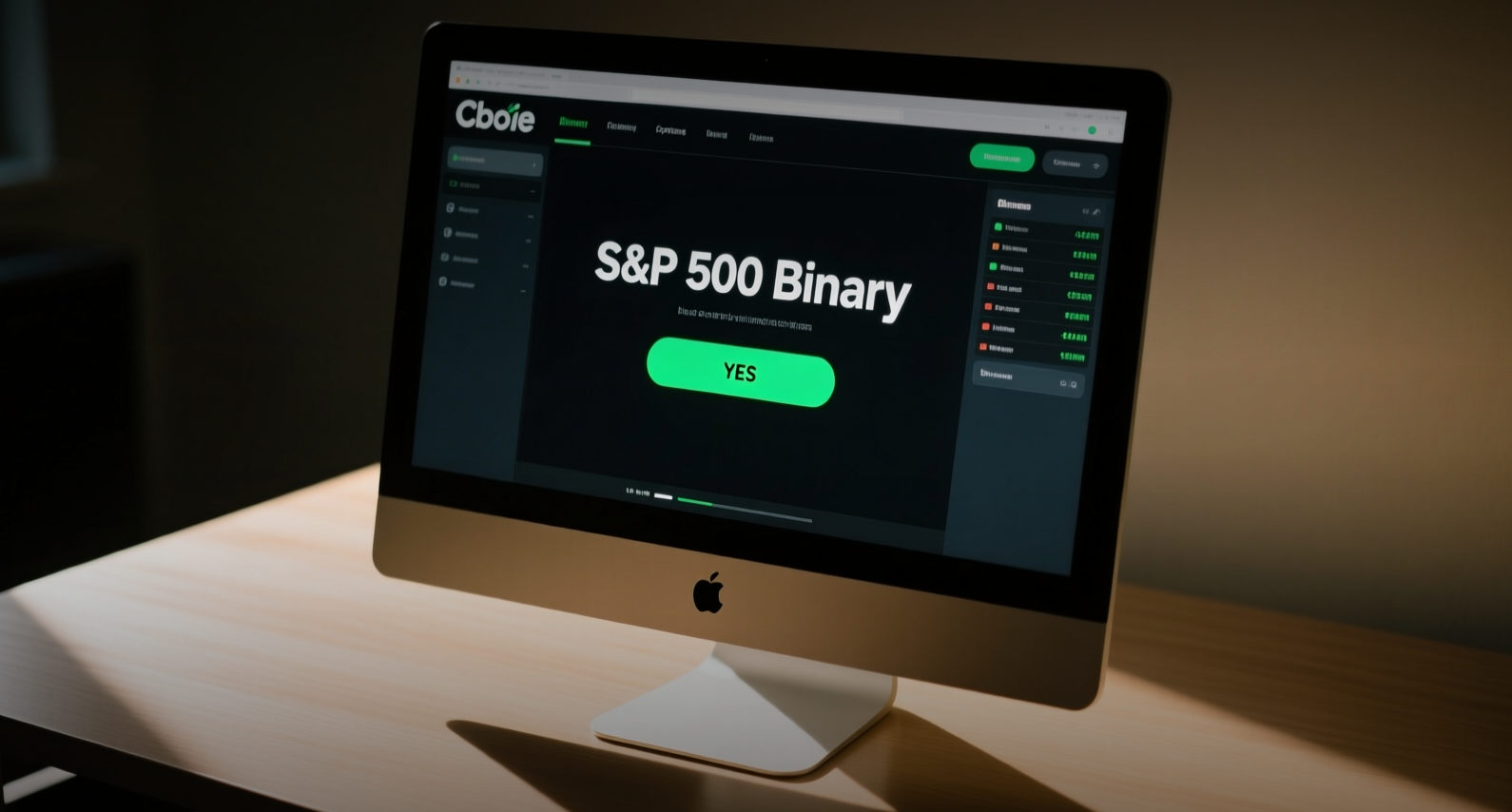
Charles Schwab is partnering with Cboe Global Markets to offer yes-or-no options contracts on the S&P 500, becoming the largest traditional brokerage to enter the prediction market space.
Charles Schwab is working with Cboe Global Markets to launch a new type of options contract that would allow customers to make binary wagers on the performance of the S&P 500, marking the brokerage's first move into prediction markets, according to a Wall Street Journal report. The feature is expected to roll out to Schwab customers in the coming months.
"The binary option structure gives retail investors a straightforward way to express a directional view on the market without the complexity of traditional options," said Tom Brennan, an analyst covering IPOs and M&A. "Schwab's entry validates prediction markets as a legitimate product category for mainstream brokerages."
Unlike platforms such as Polymarket and Kalshi, which offer futures-style contracts tied to event outcomes, Schwab's product would function as a binary option — paying a fixed cash amount or expiring worthless based on whether the S&P 500 closes above or below a preset target price. Schwab and Cboe are also exploring a "Plus Zone" feature that would allow partial payouts when the index finishes close to the target level, even if it does not hit it exactly.
The launch positions Schwab as the latest entrant in a prediction market industry that has drawn growing interest from traders and major financial firms. Coinbase and Robinhood have both introduced prediction market offerings, while dedicated platforms Kalshi and Polymarket have attracted billions in trading volume across events ranging from elections to economic data releases. Schwab, which manages more than $100 billion in client assets, plans to focus exclusively on financial benchmarks with objectively verifiable outcomes, avoiding contracts tied to politics, sports or other real-world events.
A new revenue stream for brokerages
The partnership represents a potential new revenue channel for Schwab at a time when traditional brokerage fee income faces pressure from zero-commission trading and falling interest income. Event-based options generate transaction fees on every contract traded, and the S&P 500 linkage ensures deep liquidity from institutional and retail participants alike.
The companies have discussed expanding the lineup beyond the S&P 500 to other market indexes or financial benchmarks, according to the report. Cboe's Plus Zone feature, if adopted, could differentiate Schwab's offering from binary options available on other platforms by reducing the all-or-nothing risk that has historically deterred some retail investors.
Competitive pressure mounts on dedicated platforms
Schwab's entry intensifies competition for dedicated prediction market platforms that have dominated the space. Kalshi, the CFTC-regulated exchange, has seen trading volumes surge as retail interest in event contracts grows. Polymarket, built on blockchain technology, has processed billions in election-related wagers. Both platforms now face a well-capitalized competitor with an existing retail brokerage base of millions of accounts.
The move also pressures Coinbase and Robinhood, which have each launched prediction market products in recent months. Schwab's brand recognition and regulatory infrastructure could give it an edge in attracting mainstream investors who have been hesitant to use crypto-native or newer platforms.
This article is for informational purposes only and does not constitute investment advice.