Harvard scholar Ruth Wisse argues the political playbook that organized 20th-century grievance against Jews is now being deployed in the United States, posing a direct threat to its democratic foundations.

Harvard scholar Ruth Wisse argues the political playbook that organized 20th-century grievance against Jews is now being deployed in the United States, posing a direct threat to its democratic foundations.
In a recent profile following her Jefferson Lecture, 90-year-old scholar Ruth Wisse outlined a stark warning for the United States: the organization of politics against the Jewish people, a force she says defined 20th-century totalitarianism, is re-emerging on American soil. The Harvard professor emeritus argues that what is now termed anti-Zionism is the modern iteration of this political strategy, one that hijacks liberal values to build coalitions based on grievance and blame, according to a May 23 profile in The Wall Street Journal.
"Know before whom you stand—that should be the political directive of the Jews," Wisse stated, advocating for political realism over accommodation. She argues that accepting any blame from accusers is a losing strategy, comparing it to the predicament of Josef K. in Franz Kafka's "The Trial," who is prosecuted for an unknown crime by an unassailable court.
The trend Wisse identifies is reflected in recent data and events. The Anti-Defamation League reported 8,873 antisemitic incidents in the U.S. in 2023, a 140 percent increase from the prior year, with a significant spike after the October 7 Hamas attack. Wisse points to a statement from 33 Harvard student groups that same day, which held Israel "entirely responsible" for the violence before the nation had even mounted a military response, as a prime example of this political organization in action.
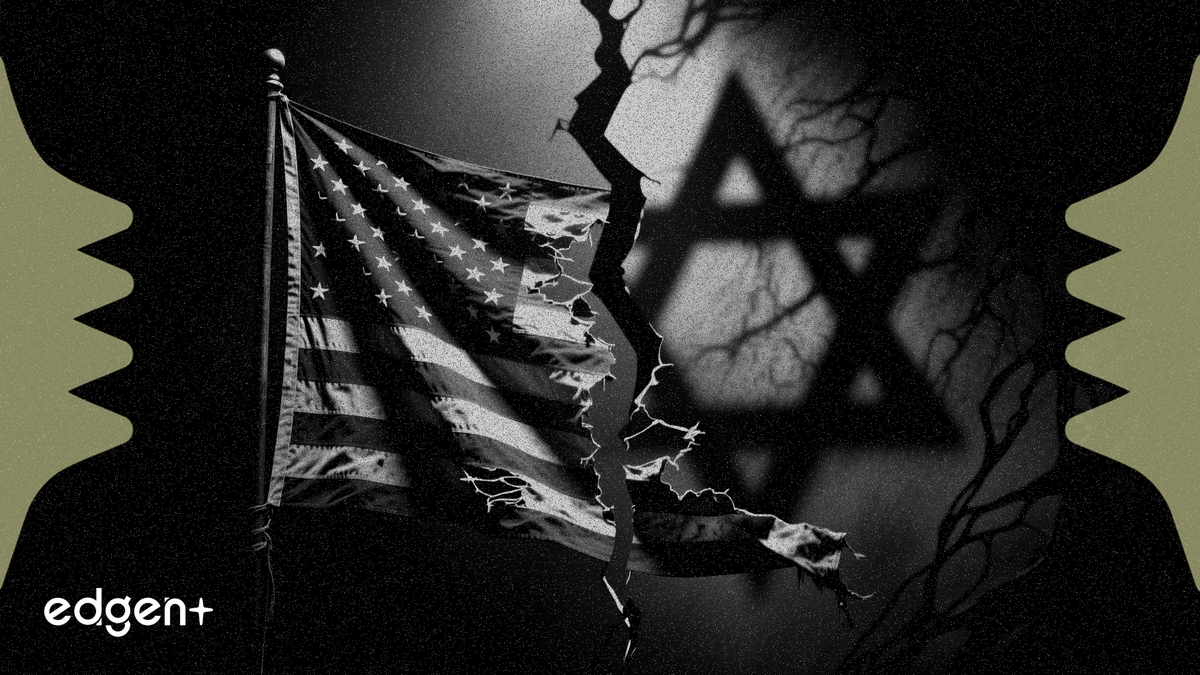
For Wisse, the danger extends far beyond the Jewish community, posing a fundamental challenge to the American system. She contends that this political model works by deforming liberal institutions and convincing a nation to lose its own moral confidence. The ultimate stake, she warns, is not just the security of a minority group, but the resilience of American democracy itself.
Wisse defines the phenomenon not as simple bigotry but as "the organization of politics against the Jews," a tactic she says was perfected by the Soviet Union under the banner of anti-Zionism. This political tool, she explains, builds powerful coalitions by shifting blame onto a convenient scapegoat. This sentiment is echoed in the experiences of many American Jews who feel a profound shift in public discourse. One writer for the Forward described his 93-year-old mother's bewilderment at how prejudice against Jews, when framed as anti-Zionism, can now "pass as a kind of moral sophistication."
This dynamic has created deep fissures within traditional political alliances. American Jews, long a cornerstone of progressive coalitions, increasingly experience hostility from segments of the political left, as noted in a detailed analysis in The Atlantic. This sense of alienation intensified after October 7, when expressions of Jewish grief were often met with suspicion or outright blame, casting victims as perpetrators.
The current campus climate is the primary incubator for this trend, according to Wisse. She notes the irony that while universities once enforced quotas limiting Jewish admission, they are now centers for a political ideology that singles out the Jewish state for demonization. This view is supported by a recent Ohio Advisory Committee report to the U.S. Commission on Civil Rights, which concluded that antisemitic animus in the U.S. is at its highest level in history.
Wisse and other commentators observe a stark double standard. Protests against Israel's military actions in Gaza have dwarfed any public outcry over more than a million civilian deaths in recent conflicts in Syria, Sudan, and Yemen. This, Wisse argues, is not a failure of education but a successful application of a political strategy that frames world affairs through a simplistic and ahistorical lens of oppressor versus victim, with Israel and its supporters uniquely cast in the former role.
Wisse is critical of how Holocaust education has been deployed, suggesting it often focuses on Jewish victimhood—a "crucifixion"—while ignoring the "resurrection." For her, the most important story is the founding of the state of Israel just three years after the Holocaust ended. This, she says, was not a miracle of divine intervention but an act of political will, where "the Jews had to part the waters themselves" by fighting for and winning their independence against five invading armies.
Her ultimate warning is that the playbook used against Jews is a threat to all. "What's at stake is America," she states in the profile. By allowing grievance and blame to deform its institutions and discourse, she fears the country is trading its founding principles for a corrosive political poison. The only defense, in her view, is a clear-eyed realism that recognizes the strategy at play and a renewed confidence in the nation's own story and values.
This article is for informational purposes only and does not constitute investment advice.