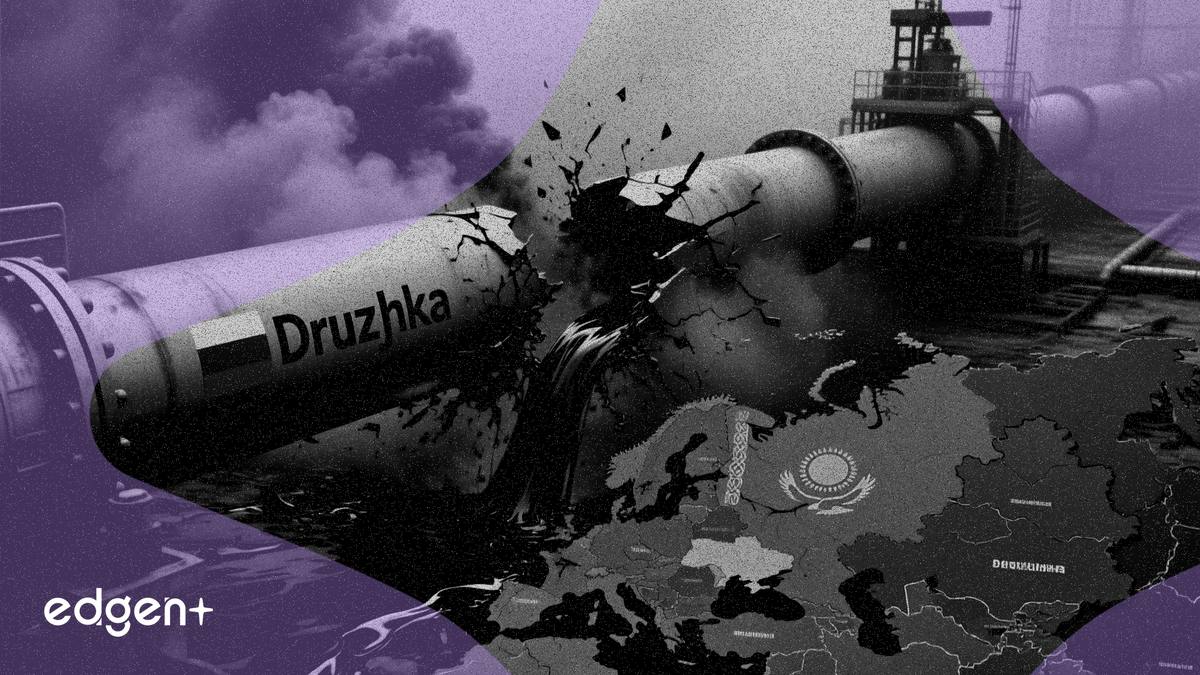
Germany's energy security faces a new test as Russia prepares to cut off a key crude supply route, threatening higher fuel prices in the Berlin region.
Back
Germany's energy security faces a new test as Russia prepares to cut off a key crude supply route, threatening higher fuel prices in the Berlin region.

(P1) Germany faces a significant disruption to its crude oil supply after Russia announced it would halt the transit of 2.1 million metric tons of Kazakh oil via the Druzhba pipeline starting May 1, further straining the nation's energy sector amid ongoing disruptions in the Gulf.
(P2) "It's not critical for us," Kazakhstan's First Deputy Prime Minister Roman Sklyar told reporters, adding that this is only "one of the routes" and that flows would be redirected.
(P3) The decision directly impacts the PCK Schwedt refinery, a primary fuel supplier for Berlin, which processed 2.146 million metric tons of Kazakh crude last year. While German authorities maintain national supply security is not at risk, the economy ministry acknowledged the potential for regional price volatility as the refinery seeks alternative supplies.
(P4) The halt tightens the screws on Germany's energy landscape, already fragile from the Iran war's impact on Middle Eastern oil flows. For the Schwedt refinery, which relies on Kazakh crude for 20-30% of its consumption, the move necessitates a rapid pivot to other sources, likely at a higher cost, potentially feeding into regional inflation.
Kazakhstan's Energy Minister, Yerlan Akkenzhenov, stated the country had received unofficial information from the Russian side citing a "lack of technical capability" for the transport suspension. He confirmed that transit would resume once the technical capability is restored and that, in the interim, crude would be rerouted through the Caspian Pipeline Consortium (CPC) and potentially to China.
Kremlin spokesman Dmitry Peskov declined to comment on the matter, directing questions to the relevant Russian energy companies. The transit of Kazakh oil through Russia is governed by an intergovernmental agreement signed in June 2002, with Kaztransoil and Transneft overseeing the transport to the Adamova Zastava delivery point for its final journey to Schwedt.
This disruption comes at a sensitive time for European energy markets. Germany has been working to reduce its dependence on Russian energy, and this move, while officially technical, will be viewed through a geopolitical lens. The reliance on the Druzhba pipeline, a legacy of the Soviet era, has long been a point of strategic vulnerability for Central and Eastern Europe. The need to secure alternative crude sources will likely lead to increased competition for seaborne crude, adding pressure to a global market already contending with supply chain risks.
This article is for informational purposes only and does not constitute investment advice.