Rivian faces a class-action lawsuit alleging it falsely promised Level 3 autonomous driving for its first-generation R1T and R1S vehicles.
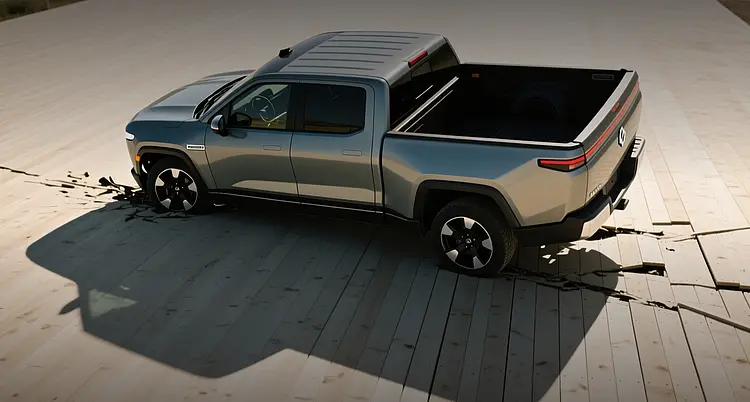
Rivian was sued by owners who allege the EV maker falsely marketed Level 3 autonomous driving for its first-generation R1T and R1S vehicles, hardware the company knew could never support the feature. The complaint, filed Wednesday in the U.S. District Court for the Central District of California, focuses on a five-year marketing campaign that promised hands-free, eyes-off driving capability.
"No software update — no matter how sophisticated — will enable its Gen 1 Vehicles to perform as advertised," the complaint reads. The lawsuit, brought by three named plaintiffs represented by Coleman Law and Tycko & Zavareei, makes claims for fraud, negligent misrepresentation, and unjust enrichment.
Rivian CEO RJ Scaringe's appearance at TechCrunch Disrupt 2022 is cited among the instances where the company made representations about its autonomous driving ambitions. The lawsuit alleges Rivian knew its Gen 1 sensor stack and computing hardware could never achieve Level 3 autonomy — a Society of Automobile Engineers designation where the vehicle handles steering, acceleration, and braking without driver intervention under certain conditions.
The legal challenge comes as Rivian pushes toward its first profit, targeting 2027 after accumulating roughly $30 billion in losses. The company's second-generation R1 vehicles, overhauled in 2024 with the Rivian Autonomy Platform featuring 11 cameras, five radar sensors, and a computer 10 times more powerful than the previous system, do offer hands-free driving. Rivian rolled out "Universal Hands-Free" to Gen 2 vehicles last year, covering more than 3.5 million miles of roads in the U.S. and Canada.
Rivian isn't the only automaker to face legal challenges over self-driving promises. Tesla and its CEO Elon Musk have spent a decade claiming its vehicles would achieve full autonomy through its Full Self-Driving software, leading to lawsuits from owners and regulatory action from the California Department of Motor Vehicles. A judge ruled in the DMV's favor, though the agency opted not to suspend Tesla's licenses after the company stopped using the term "Autopilot" in its California marketing.
The lawsuit adds to mounting pressure on Rivian as it navigates a critical transition. The company laid off hundreds of workers — less than 2% of its workforce — shortly after beginning deliveries of its more affordable R2 SUV, marking at least the fourth round of job cuts since early 2024. Rivian delayed its profitability target in March, citing substantial spending on autonomous vehicle development.
A bright spot came from a partnership with Uber, which plans to invest as much as $1.25 billion in Rivian and purchase up to 50,000 R2 SUVs for use as robotaxis. The deal provides capital and validates Rivian's technology at a time when the company is balancing production scaling with cost control.
Rivian shares face renewed uncertainty as the lawsuit threatens to compound existing concerns about cash burn and execution risk. The company has already settled one class action — a shareholder lawsuit over a sudden 2022 price hike cost $250 million. With a profitability target still more than a year away and autonomous driving development consuming significant resources, the legal overhang could weigh on investor sentiment. Rivian declined to comment on the lawsuit, citing pending litigation.
This article is for informational purposes only and does not constitute investment advice.