

Key Takeaways: Rivian's mass-market R2 SUV has begun reaching customers, sending shares up more than 6% on Friday.
Key Takeaways: Rivian's mass-market R2 SUV has begun reaching customers, sending shares up more than 6% on Friday.
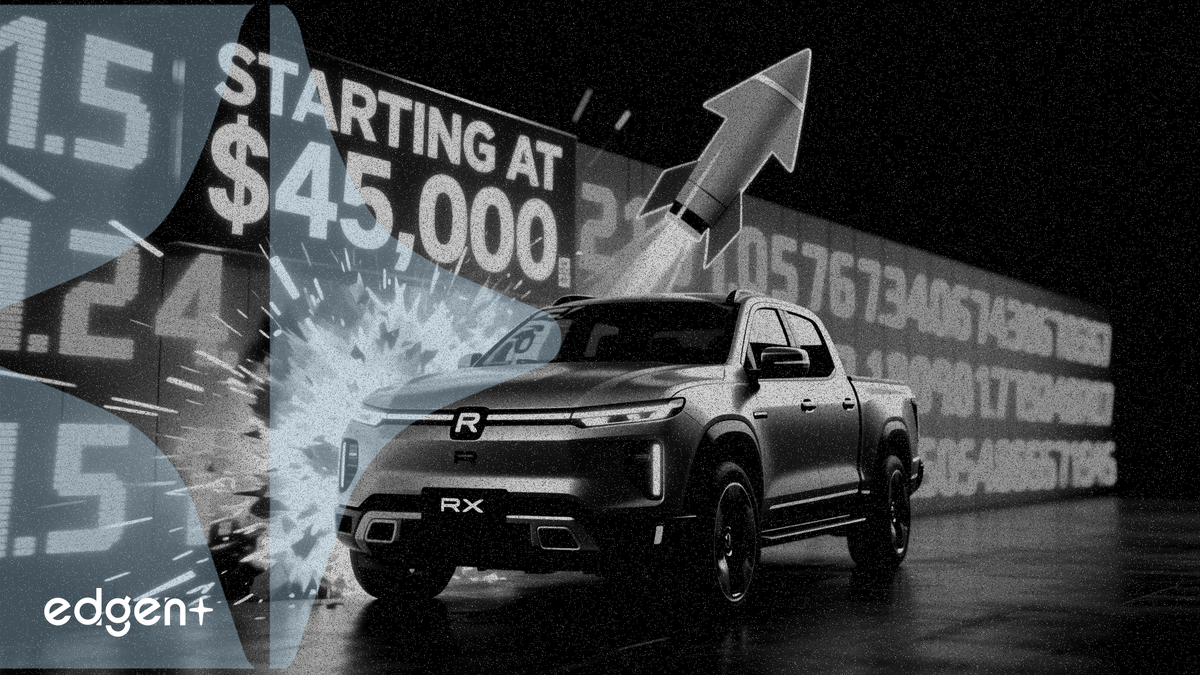
Rivian Automotive Inc. rose more than 6% to about $16.50 on Friday after the electric-vehicle maker began customer deliveries of its $45,000 R2 SUV, the company's first mass-market model and a critical test of its ability to scale beyond the high-end R1 lineup.
"The R2 is going to have a long wait-list for at least the next two years," said Hamid, chief executive of Savvy Trader, on X. "It would easily be the best-selling car in the US if it wasn't constrained by manufacturing capacity."
The launch performance model starts at $58,000 and delivers 656 horsepower with a 0-to-60 time of 3.6 seconds and an estimated range of 330 miles, according to Rivian's published specifications. Premium, Standard Long Range and Standard variants will follow over the next 18 months. Rivian's momentum score jumped to 73.8 from 17.75 a week earlier, Benzinga data show.
The R2 is a make-or-break vehicle for Rivian, which has burned through more cash than most pure-play EV makers over the same period. Success depends on scaling production fast enough to meet what traders estimate could be two years of pent-up demand, while also delivering on promised next-generation autonomous driving technology that won't arrive until later production batches.
Rivian Chief Software Officer Wassym Bensaid said the company is building a fully integrated AI interface that will eventually replace Apple CarPlay and Android Auto. The automaker launched its "Rivian Assistant" AI voice tool in May for Connect+ subscribers, enabling drivers to manage vehicle functions and access navigation through a single voice interface.
Trader Peter DiCarlo noted that Rivian shares have gained 25% since his call two weeks ago, describing the current move as a "parabolic pattern" that has historically led to gains of more than 100% over six to 12 months.
The R2 arrives as Rivian works to reverse reliability concerns. The company ranked last in Consumer Reports' reliability survey last year, though it maintained an 85% customer satisfaction rate. Rivian says it has fixed the issues, but the launch R2s will not include the company's Gen 3 hardware for hands-free, eyes-off driving — that will come in later models.
The R2's $45,000 starting price puts it in direct competition with Tesla Inc.'s Model Y and Ford Motor Co.'s Mustang Mach-E in the midsize electric SUV segment. Rivian's ability to ramp production will determine whether the vehicle can deliver the revenue needed to stem years of cash burn. Simply Wall St data show Rivian trades at a price-to-sales ratio of 3.6 times, compared with 0.6 times for the US auto industry, reflecting the premium investors place on its growth potential.
The stock has returned 11.7% over the past 12 months, though it remains 77% below its initial public offering price of $78 from November 2021. Analysts see a fair value of $18.15 per share, implying roughly 10% upside from current levels, according to Simply Wall St estimates. Rivian also generates software and services revenue through partnerships including a licensing deal with Volkswagen AG, which could open new high-margin revenue streams over time.
This article is for informational purposes only and does not constitute investment advice.
