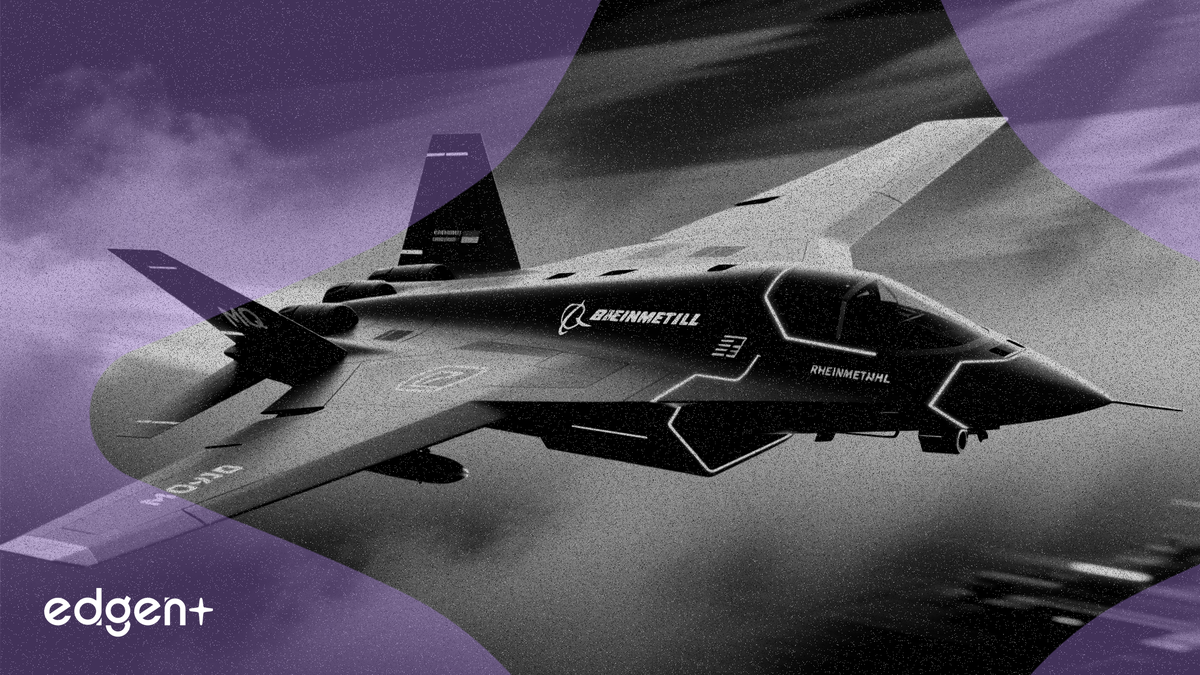
German defense giant Rheinmetall and Boeing have partnered to offer the AI-powered MQ-28 Ghost Bat drone, aiming to secure a major contract from the German Armed Forces by 2029.
Back
German defense giant Rheinmetall and Boeing have partnered to offer the AI-powered MQ-28 Ghost Bat drone, aiming to secure a major contract from the German Armed Forces by 2029.

German arms maker Rheinmetall AG is partnering with Boeing’s Australian business to offer the MQ-28 Ghost Bat combat drone to the German military, a deal that could make Germany the first foreign operator of the AI-powered aircraft. The unmanned system is a leading contender for Germany's planned procurement of "collaborative combat aircraft" by 2029.
"With Boeing Defence Australia as a partner, we are laying the groundwork to optimally tailor the MQ-28 to the Bundeswehr’s requirements,” Rheinmetall AG CEO Armin Papperger said in a joint statement. Brendan Nelson, Boeing’s Global President, added the partnership unites two countries with "a similar strategy for integrating collaborative combat aircraft into their air forces."
The MQ-28, developed for the Royal Australian Air Force (RAAF), has completed more than 150 test flights. The modular drone is designed to act as a "force-multiplier," teaming with manned fighter jets to perform reconnaissance, electronic warfare, and carry weapons systems. Under the agreement, Rheinmetall would serve as the system manager in Germany, handling integration and long-term support.
The partnership positions the Ghost Bat against competitors from Airbus and a German startup, Helsing, for a decision expected to modernize the German air force. This collaboration highlights a growing trend among Western allies to jointly develop and procure advanced autonomous military systems to maintain a technological edge and create interoperable forces. A successful bid would significantly boost Boeing's and Rheinmetall's order books and solidify the MQ-28's position in the global defense market.
The strategic partnership was announced in Berlin, signaling a concrete step forward after Germany’s Defence Minister Boris Pistorius confirmed the MQ-28 was "under consideration" during a visit to Canberra. The move aligns with Germany's broader push to integrate more autonomous systems into its armed forces, known as the Bundeswehr.
The Ghost Bat is considered a mature solution, with Boeing Australia highlighting its years of innovation and investment backed by the Australian government. The drone's ability to team with manned aircraft is seen as critical for future combat in highly contested airspace. Other options being weighed by Germany include a drone from Airbus, which has partnered with U.S. firm Kratos, and a concept from the German defense startup Helsing, though its design is considered unlikely to meet the 2029 target.
While the MQ-28 is a strong contender, the bid comes after Australia's relationship with German defense contractors was strained by issues in an offshore patrol vessel program with Lürssen. However, this new partnership with Rheinmetall, a major player in Germany's defense industry, could smooth the path for the Australian-developed drone. The deal represents a significant export opportunity for Australia's burgeoning defense technology sector and a major win for Boeing's international defense arm.
This article is for informational purposes only and does not constitute investment advice.