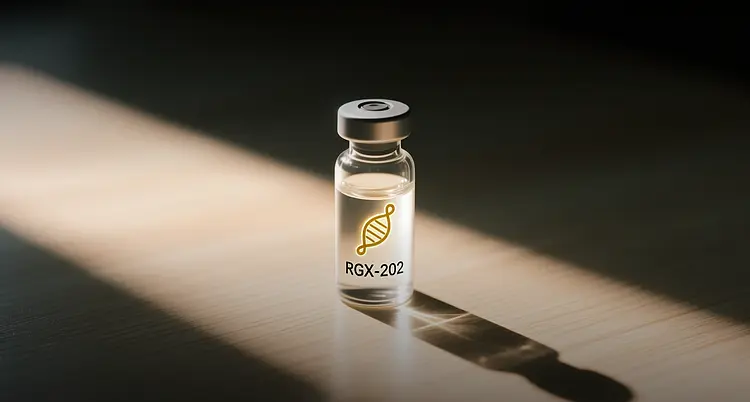
REGENXBIO's gene therapy for Duchenne muscular dystrophy is one step closer to market after the company completed dosing in its confirmatory study ahead of schedule.
REGENXBIO Inc. finished enrolling and dosing patients in the confirmatory study of RGX-202, a potential best-in-class gene therapy for Duchenne muscular dystrophy, completing its registrational development program ahead of schedule on strong patient demand and investigator interest. The Rockville, Maryland-based company plans to submit a Biologics License Application to the FDA in the third quarter of 2026 under the accelerated approval pathway, with potential approval in the second half of 2027.
"The rapid enrollment reflects the urgent unmet need in Duchenne and the confidence investigators have in RGX-202's profile," said a company spokesperson, citing robust investigator interest as a key factor in completing the study ahead of schedule.
RGX-202 is designed to deliver a functional version of the dystrophin gene using REGENXBIO's NAV AAV8 vector, aiming to restore dystrophin protein production in muscle cells. Duchenne muscular dystrophy, caused by mutations in the dystrophin gene, affects approximately one in 3,500 male births worldwide and leads to progressive muscle degeneration. Current standard of care includes corticosteroids, which slow but do not halt disease progression.
The confirmatory study's completion marks a significant milestone for REGENXBIO, which has positioned RGX-202 as a potential competitor to Sarepta Therapeutics' Elevidys, the first gene therapy approved for DMD. Elevidys received accelerated approval from the FDA in June 2023 and was converted to traditional approval in 2024, establishing a commercial benchmark in the DMD gene therapy market.
What the BLA submission means for REGENXBIO
The planned BLA submission under the accelerated approval pathway could shorten the regulatory review timeline, potentially bringing RGX-202 to market by late 2027 if the FDA accepts the application and grants priority review. Accelerated approval allows the FDA to approve drugs for serious conditions based on surrogate endpoints — in this case, likely micro-dystrophin expression levels — while requiring confirmatory data to verify clinical benefit.
REGENXBIO's pipeline includes multiple gene therapy programs across rare diseases, with RGX-202 as its lead DMD candidate. The company has not yet disclosed the exact patient enrollment numbers from the confirmatory study or specific efficacy data, which will be critical for the FDA's review.
The competitive landscape in DMD gene therapy
Sarepta's Elevidys generated approximately $334 million in net product revenue in 2024, according to company filings, underscoring the commercial opportunity in DMD. Pfizer previously had a DMD gene therapy candidate, PF-06939926, but discontinued development after a patient death in a Phase 2 trial, narrowing the competitive field. Solid Biosciences is also developing a DMD gene therapy candidate, SGT-003, currently in early-stage trials.
REGENXBIO's NAV AAV8 vector technology differentiates RGX-202 from Elevidys, which uses a different AAV serotype. The company has not disclosed pricing expectations for RGX-202, though Elevidys carries a list price of $3.2 million per patient, making it one of the most expensive drugs in the US.
REGENXBIO shares, trading on the Nasdaq under RGNX, are likely to see increased investor attention as the BLA submission date approaches. The company's cash position and burn rate will be key factors to watch, as biotech companies typically face significant expenses during the regulatory review process. With a potential FDA decision in late 2027, investors are pricing in roughly 15 months of regulatory uncertainty before a potential commercial launch.
This article is for informational purposes only and does not constitute investment advice.