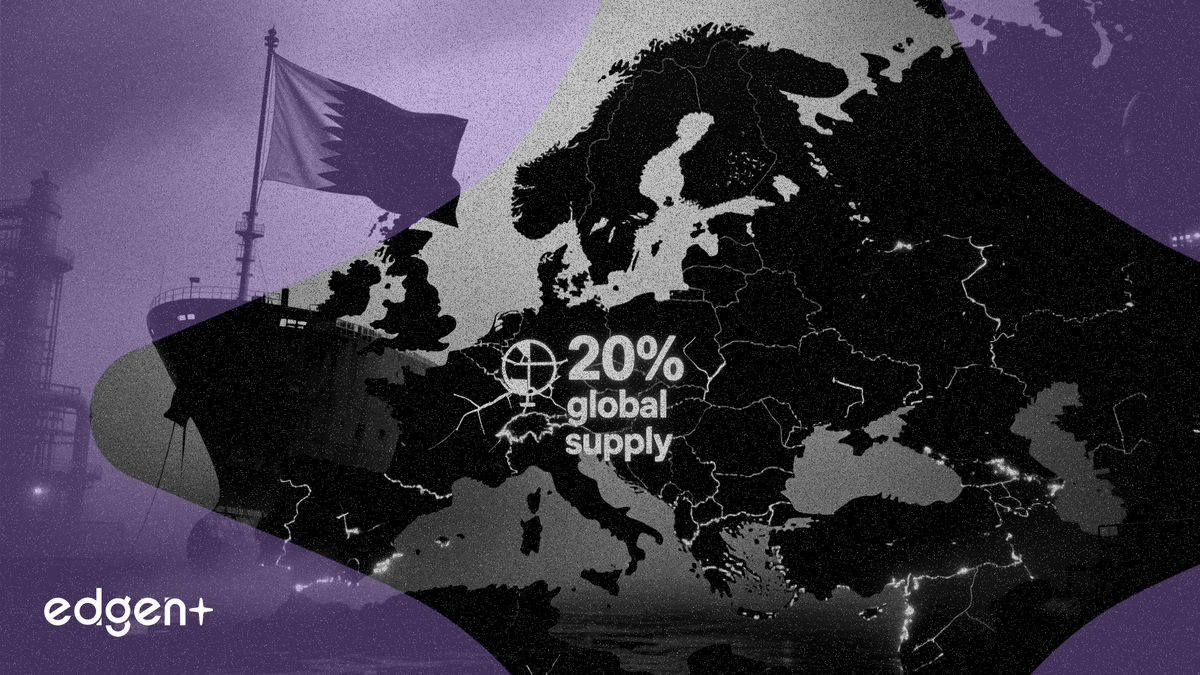
Conflict Halts Qatar LNG, Trapping 20% of World Supply
The U.S.-Israeli war with Iran has brought Qatar's liquefied natural gas (LNG) production to a complete standstill, removing 20% of the global supply from the market and triggering a severe energy crisis. The halt, which began in late February 2026, has trapped exports behind the Strait of Hormuz and sent prices climbing. On March 4, state-owned QatarEnergy declared force majeure, stating it could not fulfill its contracts for LNG and associated products like polymers and methanol, citing extreme external pressures.
The impact is not temporary. Iranian strikes have caused significant damage to Qatar's energy infrastructure, with nearly 40% of its production capacity affected. Two of the country's 14 LNG trains, accounting for 12.8 million tons per year or 17% of its total supply, are expected to be offline for three to five years for repairs. This long-term disruption fundamentally alters the global energy landscape, ensuring elevated prices and supply uncertainty for the foreseeable future.
Europe Seeks Algerian Gas as Prices Surge 35%
European nations, which grew heavily reliant on LNG to replace Russian gas after 2022, are now dangerously exposed. Italy, the largest European importer of Qatari LNG, faces what one energy analyst called a "real, serious emergency." Before the conflict, Qatar supplied around 10% of Italy's natural gas. In response, Italian Prime Minister Giorgia Meloni and Spain's foreign minister traveled to Algeria in late March to secure alternative pipeline gas supplies.
Algeria is stepping into a critical role, with its pipeline exports to the European Union having already increased 22% in January 2026 compared to the previous month. The country is now a primary supplier for both Italy and Spain, which sourced over 29% of its gas from Algeria in early 2026. However, Algeria's capacity to increase output is limited by infrastructure and rising domestic demand, meaning it can only partially offset the massive loss of Qatari supply.
Supply Crisis Spreads to Helium and Manufacturing
The disruption extends beyond energy, creating a critical shortage of helium. Qatar is responsible for approximately one-third of the world's helium production, which is a byproduct of LNG processing. The production halt has crippled supply of the gas, which is essential for cooling the superconducting magnets in MRI machines and for manufacturing semiconductors.
This secondary crisis creates a competitive imbalance. Industries like chip manufacturing have the financial resources to outbid the healthcare sector for the limited available supply. The cascading effect threatens to delay medical diagnostics and disrupt the production of electronics, demonstrating the war's far-reaching economic consequences.