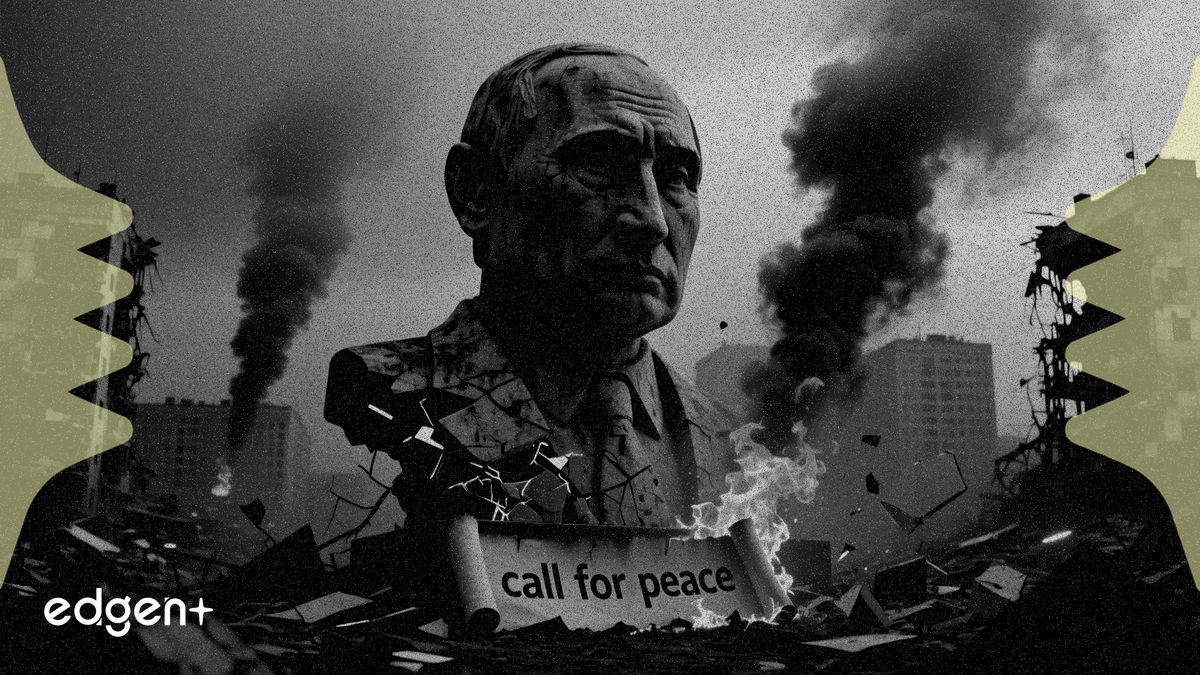
Significant voices within Russia's political and intellectual establishment have begun publicly urging President Vladimir Putin to end the war in Ukraine, warning that Moscow lacks the capacity for outright victory — yet the Kremlin has responded with the heaviest aerial bombardment of Ukrainian cities in months, killing 22 civilians on June 2.
"The professionals in creating an alternative reality have convinced not just the population, but also themselves, that the illusion that they have invented is in fact reality," Oleg Tsaryov, a former Ukrainian lawmaker who fled to Russia in 2014 and was once Putin's top candidate to lead a puppet regime in Kyiv, wrote on Telegram last month. "Sooner or later, these worlds of illusion and reality must clash."
Russia launched 73 missiles and 656 drones against Kyiv, Dnipro, Kharkiv and other Ukrainian cities overnight on June 2, according to Ukraine's air force. The barrage included 33 ballistic missiles and eight Zircon hypersonic missiles — the largest single deployment of such weapons since the invasion began in February 2022. At least 18 people were killed and more than 100 wounded, with a four-story apartment building partially destroyed in Dnipro and nine high-rise buildings damaged in Kyiv. Ukrainian air defenses intercepted 40 missiles and 602 drones, though the air force did not list any of the Zircon missiles among those shot down.
The escalation follows weeks of growing public dissent within Russia's elite over the war's trajectory. Aleksey Chadaev, a historian and former Kremlin official who runs the Ushkuynik drone-warfare research center, warned that pursuing the current course "is not just a path to 'non-victory,' but to a full-scale defeat" and called for a pause to reorganize. Vasily Kashin, director of the Center for Comprehensive European and International Studies at Moscow's Higher School of Economics, published a widely circulated analysis arguing that Ukraine will remain an anti-Russian, pro-Western country and that installing a friendly regime in Kyiv — one of Putin's original war objectives — is no longer realistic.
Elite Dissent Meets Escalation
The disconnect between elite sentiment and Kremlin action has widened as Ukraine's drone campaign disrupts Russian logistics in occupied territories. Middle-range strike drones, often using artificial intelligence, have targeted fuel trucks and military convoys on roads linking Russia to Crimea and front-line bases. Fuel rationing has been imposed in Luhansk and Donetsk, and supplies have run out in Crimea, according to Russian military commentators. Ukraine also struck the Ilsky oil refinery in Russia's Krasnodar region and an oil terminal in St. Petersburg, just as Putin's hometown hosted the opening of an annual economic conference.
Putin framed the June 2 bombardment as retaliation for Ukraine's May 22 drone strike on a teachers college dormitory in Starobilsk, in the Russia-controlled Luhansk region, which Moscow said killed 21 people. Ukraine said it hit a Russian drone pilot training center. The Kremlin warned last week of "systematic" strikes on Kyiv and urged foreign diplomats to leave the capital.
"War is the modus vivendi of this regime; it's like riding a bicycle — if they stop, they fall," said Pavlo Klimkin, a former Ukrainian foreign minister, when asked whether Putin would heed calls for restraint.
Stalled Diplomacy, Rising Costs
U.S.-led peace efforts have stalled. Ukrainian President Volodymyr Zelensky accepted an unconditional ceasefire demanded by U.S. President Donald Trump, but Putin refused. Russian officials say they are ready to consider ending the war only if the U.S. forces Ukraine to surrender the heavily defended belt of cities in northern Donetsk — territory Moscow has failed to capture militarily despite months of grinding advances.
"Peace talks have been stalled and haven't really delivered any results because the Russians are waiting for the Americans to deliver their maximalist demands around the negotiation table, that they haven't achieved militarily," Kaja Kallas, the European Union's top foreign affairs official, said. "Of course, that is something that Ukraine cannot accept."
The economic toll is mounting. Ukraine's drone campaign against Russian oil infrastructure threatens revenue that funds Moscow's war effort, while Western sanctions continue to constrain Russia's access to global markets. The last time Russia faced a comparable stalemate — the 1904-05 war against Japan — defeat triggered domestic unrest and political reform. Pro-Kremlin newspaper Moskovski Komsomolets deleted a much-discussed article last month that drew that exact parallel.
For markets, the widening gap between elite pragmatism and Kremlin escalation introduces a binary risk: either Putin eventually pivots toward a negotiated settlement, potentially easing energy supply fears and reducing defense-spending premiums, or he doubles down, prolonging the conflict's drag on European growth and keeping the risk premium embedded in oil and gas prices. Brent crude has traded in a $10 range over the past month as traders weigh Ukrainian supply disruptions against the risk of a broader escalation that could tighten global energy markets further.
This article is for informational purposes only and does not constitute investment advice.