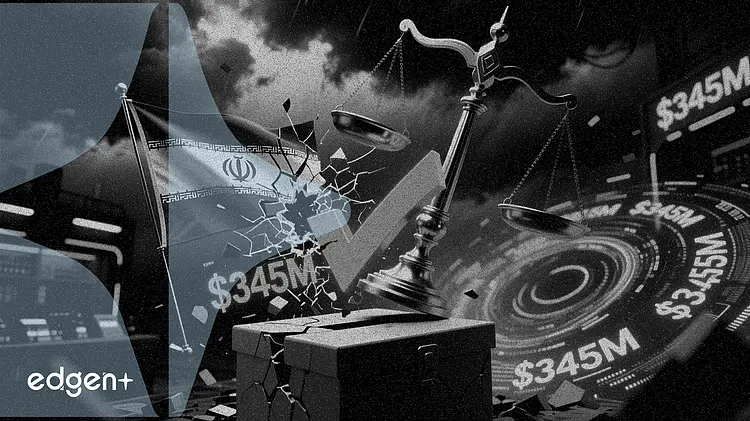
Polymarket's $345 million in Iran peace deal wagers hang in the balance as UMA token holders debate whether a 60-day ceasefire qualifies as "permanent."
Polymarket is facing its largest-ever contract dispute, with more than $345 million in wagers on a US-Iran peace deal contract awaiting resolution after the two countries announced a 60-day framework agreement. The contract's terms require any deal to explicitly state that military hostilities "have ended or will permanently stop," according to Polymarket's rules, and the temporary nature of the accord has split users.
"Both sides have declared the immediate and permanent termination of military operations on all fronts, including in Lebanon," Pakistan Prime Minister Shehbaz Sharif, the lead mediator, said, according to the Wall Street Journal. Iran's deputy foreign minister, Kazem Gharibabadi, said "the text of the memorandum of understanding has been finalized."
The 60-day timeline for reopening the Strait of Hormuz has led some users to argue the deal falls short of the permanent cessation threshold, while others point to Sharif's characterization as sufficient. One contract tracking whether a peace deal would be reached by Monday attracted $66 million in trading volume alone. No formal document has been signed yet, with a signing ceremony expected Friday in Switzerland.
The dispute puts Polymarket's governance model under scrutiny as nine wallet addresses control more than half of the UMA tokens used to adjudicate such conflicts, according to Bloomberg. A final vote is expected this week, with the outcome potentially redistributing hundreds of millions of dollars and setting a precedent for how the platform handles ambiguous real-world events.
UMA Governance Under Fire
The controversy has reignited criticism of Polymarket's reliance on UMA token holders to resolve contract disputes. Under the current mechanism, UMA holders debate in online chat rooms before voting on contract outcomes, a process that does not require participants to disclose their identities or potential conflicts of interest. During the dispute resolution period, the contracts remain open for trading, allowing investors to effectively bet on the outcome of the adjudication itself rather than the original event.
What's at Stake Beyond Polymarket
The uncertainty extends beyond the prediction market. The US-Iran framework agreement, which includes reopening the Strait of Hormuz and lifting the US naval blockade of Iranian ports, does not address Iran's nuclear program or broader sanctions relief. Israel, which was not party to the talks, has signaled it does not feel bound by the agreement. Defense Minister Israel Katz said Israeli forces would remain in occupied Lebanese territory and continue demolishing homes there.
The International Energy Agency has called the disruption to oil and gas flows through the strait "the greatest threat to global energy security in history." ExxonMobil Senior Vice President Neil Chapman warned in late May that inventory levels could fall so far within weeks that oil prices would run to $150 to $160 a barrel.
This article is for informational purposes only and does not constitute investment advice.