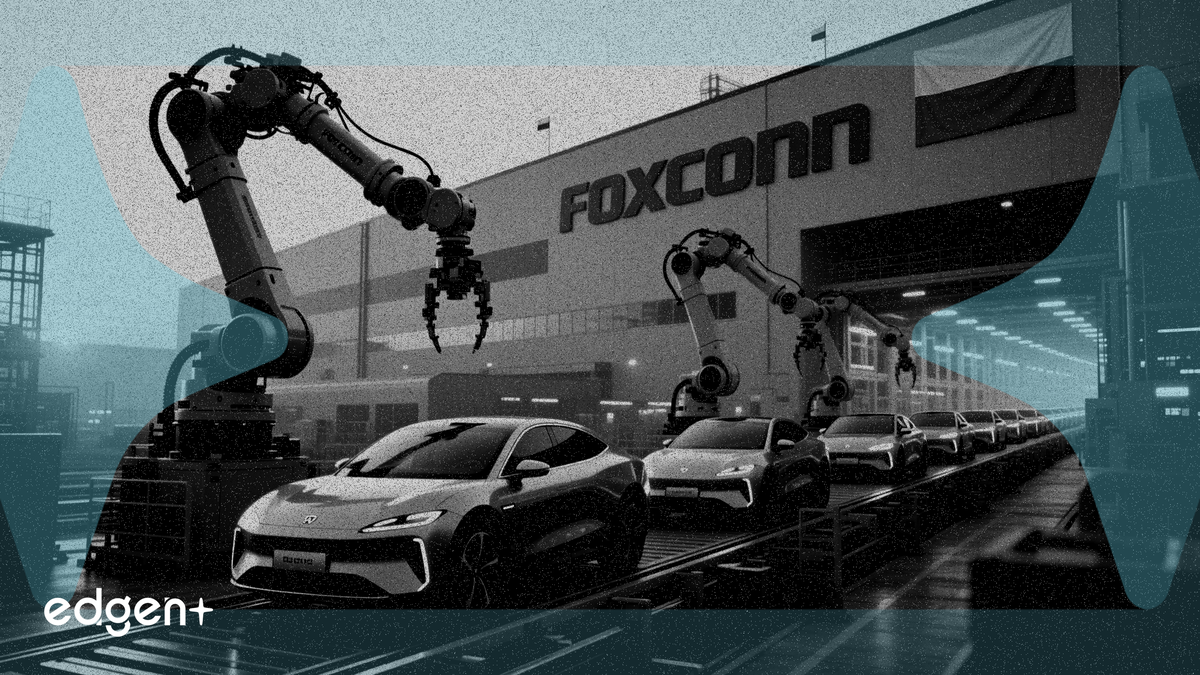
State-backed ElectroMobility Poland is partnering with Taiwan's Foxconn to establish a major electric vehicle production and research hub, aiming to produce the first car by 2029.
Back
State-backed ElectroMobility Poland is partnering with Taiwan's Foxconn to establish a major electric vehicle production and research hub, aiming to produce the first car by 2029.

(P1) State-backed ElectroMobility Poland will partner with Taiwan’s Foxconn to develop a major electric vehicle production and research hub in southern Poland, a strategic move to create a domestic EV champion as European demand for electric cars continues to surge.
(P2) "From the outset, we have designed this project around the need for a partner that combines industrial scale with technological depth," EMP CEO Cyprian Gronkiewicz said, highlighting Foxconn's commitment to technology transfer and the use of local suppliers.
(P3) The partnership, set for binding agreements in the second half of 2026, will establish a factory in Jaworzno with an initial annual capacity of 100,000 vehicles. The first car from a new local Polish brand is expected to roll off the line in 2029, with plans to expand output to as much as 400,000 units annually.
(P4) This venture represents a significant push by Poland to capture a share of the booming European EV market, where battery EV sales jumped by a third in the first quarter, according to industry association ACEA. For Foxconn, it deepens its pivot into EV contract manufacturing, challenging established players and diversifying its revenue beyond consumer electronics.
The collaboration with Foxconn's EV subsidiary, Foxtron Vehicle Technologies, could include a formal joint venture. The project aims to launch a new Polish automotive brand, starting with three distinct models targeted for the broader European market. This move positions Poland as a key future player in the continent's automotive landscape, directly competing with EV manufacturing giants in Germany and France.
"We will be the center not only of production, but also of distribution of these cars to the entire European market," Minister of State Assets Wojciech Balczun said at the announcement.
The planned factory in Jaworzno is comprehensive, including body and paint shops, assembly for batteries and electric drives, and final vehicle assembly. This vertical integration is designed to maximize efficiency and control over the production process. The initial output of 100,000 cars is a significant starting point, comparable to the initial capacity of some of Tesla's Gigafactories.
Beyond manufacturing, the hub will feature a new research and development center focused on software, data analytics, and digital mobility solutions. This signals an ambition not just to assemble vehicles, but to own the technology stack that defines modern electric cars, a crucial element in competing with established automakers like Volkswagen and Stellantis, who are investing billions in their own software platforms.
The project will receive funding from Poland's National Recovery Plan and the Reprivatisation Fund, which recapitalized EMP in December 2025. Foxconn is expected to contribute both technology and capital to the venture. This public-private partnership structure is designed to de-risk the ambitious project, which has faced delays since EMP's formation in 2016 by four state-controlled utilities.
For Foxconn, best known as the primary assembler of Apple's iPhone, this partnership is a cornerstone of its strategy to become a major force in the global EV market. The company aims to replicate its success in consumer electronics contract manufacturing in the automotive sector, offering a platform-based approach that can lower costs and speed up development for new and existing car brands.
The Polish facility provides Foxconn with a critical manufacturing footprint inside the European Union, allowing it to serve the continent's growing market without facing potential tariffs. It follows other EV-related investments by the Taiwanese giant, including a partnership with Lordstown Motors in the US and the development of its own MIH open EV platform. The move puts Foxconn in more direct competition with other automotive contract manufacturers like Magna Steyr, which builds vehicles for brands such as Fisker and Jaguar.
This article is for informational purposes only and does not constitute investment advice.